Lacquered vs. Unlacquered Brass: The Architectural Living Finish Guide
The definitive architectural guide comparing static polyurethane-coated lacquered brass with authentic solid living unlacquered brass. Why top architects and luxury interior designers have abandoned synthetic clear-coats for generational living metals.
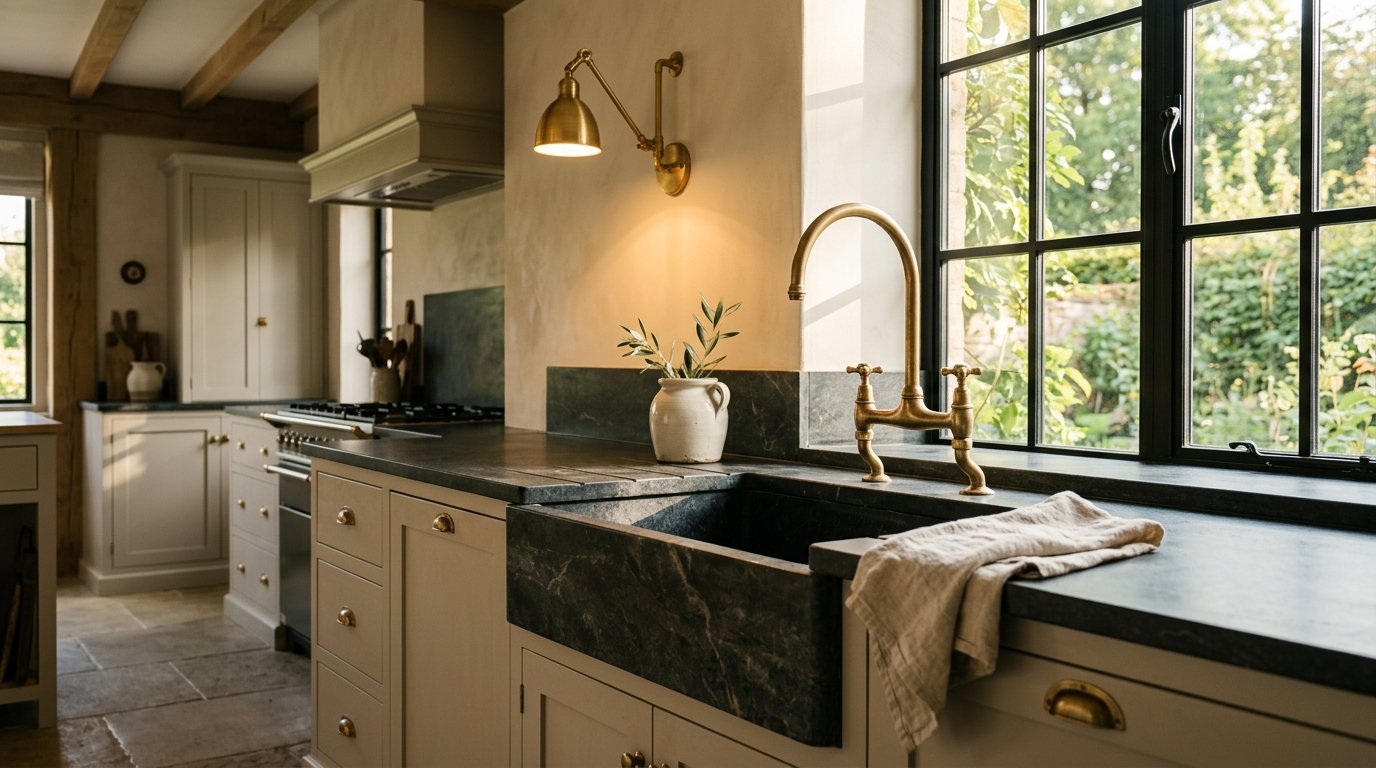
The Core Metallurgical Difference: Plastic Coat vs. Pure Alloy
Lacquered brass is treated with a synthetic polyurethane, cellulose, or baked acrylic clear-coat designed to freeze the metal in an artificial high-gloss state. While it appears shiny out of the box, it behaves like plastic because you are physically touching polyurethane rather than raw metal.
Solid unlacquered brass (an authentic 65% copper, 35% zinc architectural alloy) receives zero artificial sealants. The bare metal interacts naturally with atmospheric oxygen, ambient humidity, and human touch, allowing it to develop a living, organic patina unique to your residence.
The Polyurethane Trap: Why Lacquered Hardware Inevitably Fails
In high-traffic kitchens, entryways, and bathrooms, daily friction from fingernails, wedding rings, and keys creates microscopic hairline fractures in the lacquer coating.
Ambient humidity, water droplets, and oxygen seep into these hairline breaches, oxidizing the brass underneath the sealed plastic. This produces cloudy spiderweb tarnish and milky discoloration that is physically impossible to wipe away because the oxidation is trapped under the lacquer layer. Restoring the hardware requires removing each piece and submerging it in hazardous acetone or lacquer-thinner baths.
What Is Living Brass? The Cuprite Passivation Layer
Unlike iron, which creates destructive, flaking rust, raw architectural brass forms an organic cuprite (copper-oxide) passivation layer upon atmospheric exposure. This microscopic layer acts as a natural protective shield, halting corrosive degradation while developing visual depth.
In historic European townhouses and Moroccan riads, unlacquered brass hardware has survived over a century of continuous daily handling without degrading. High-contact touchpoints stay warm and luminous, while recessed arabesque carvings deepen into dark caramel and regal antique bronze.
The 30-Second Mirror Reset Advantage
Perhaps the single greatest architectural advantage of unlacquered solid brass is its infinite restorability. Because the metal is solid throughout, you can never "wear through" a plating layer.
If a homeowner or prospective buyer ever prefers the brilliant, sunlit gold appearance of Day 1, applying a dime-sized dab of metal polishing paste (such as Cape Cod, Flitz, or Brasso) dissolves surface patina in under 30 seconds. With unlacquered brass, the choice between antique patina and high-gloss glamour is always entirely in your hands.
Conservator's PrincipleNever introduce abrasive steel wool or caustic ammonia-based bathroom cleaners to raw unlacquered brass. Warm water with natural soap cleans dirt without stripping accumulated antique patina; a 30-second wipe with jeweler’s rouge or brass paste resets to Day 01 mirror gold anytime.
Frequently Addressed Inquiries
Why do architects and luxury interior designers avoid lacquered brass?
Lacquered brass is sealed beneath an artificial polyurethane or acrylic clear-coat. Over 3 to 5 years, daily abrasion from rings, keys, and cleaning chemicals causes micro-cracks in the lacquer. Moisture seeps beneath the plastic film, creating irreversible milky-white splotches and spiderweb tarnish that cannot be cleaned without toxic chemical strippers.
Does unlacquered brass require high maintenance?
No. Unlacquered brass is remarkably low maintenance because it is designed to age naturally. Everyday palm contact actively burnishes contact surfaces into a warm golden luster, while recessed details darken into antique bronze. If you ever desire a uniform high-shine mirror finish, a 30-second wipe with metal polish resets the surface completely.
Is solid unlacquered brass more cost-effective over a home's lifespan?
Yes. While solid architectural brass commands a higher initial price due to 100% metal density, it lasts 50 to 100+ years without peeling, flaking, or needing replating. Lacquered brass fixtures typically require full replacement within 7 to 10 years once the clear coat breaks down.
Handcrafted Brass Featured in This Study


