Is Brass Safe & Hypoallergenic? The Lead, Nickel & Food Safety Guide
From kitchen faucets and prep sinks to heirloom door knobs, homeowners often ask whether brass contains allergens or toxic metals. Explore the metallurgy of architectural brass: its naturally nickel-free composition, modern lead-free potable water certifications, and culinary safety rules.
Nickel Content: Why Binary Brass is Naturally Nickel-Free
Contact dermatitis from metal hardware affects up to 15% of the population, leading many renovators to question whether brass poses an allergic risk. The critical metallurgical fact is that pure architectural brass contains zero nickel.
Binary brass is produced solely from high-purity copper and zinc ingots. Nickel is only introduced in distinct specialized alloys—such as cupronickel or "nickel silver" (which contains zero silver and is actually 60% copper, 20% nickel, 20% zinc). In mass-market hardware, allergic reactions occur when low-grade plated fixtures chip, exposing a hidden electroplated nickel barrier layer beneath.
With solid sand-cast unlacquered brass, there are no barrier layers or electroplated chemicals—only pure, biocompatible copper and zinc.
Potable Water & Lead Standards: NSF/ANSI 61 & 372 Compliance
Historically, trace amounts of lead were added to brass (up to 2-3%) to improve high-speed machinability in commercial valve factories. However, architectural plumbing has undergone a complete metallurgical revolution over the last two decades.
Under the US Federal Safe Drinking Water Act and international standards NSF/ANSI 61 and NSF/ANSI 372, all fixtures specified for human water consumption must be certified "lead-free", defined as containing no more than 0.25% weighted average lead on wetted surfaces.
Artisan foundries achieve precision casting and machinability using advanced silicon, bismuth, or modern unleaded brass formulations that ensure drinking water and cooking water from pot fillers remain pure and pristine.
Skin Reactions vs. Harmless Copper Carbonate
Occasionally, homeowners notice a faint green tint on their skin after handling raw copper or brass hardware on humid summer days. It is vital to understand that this is not an allergic reaction or toxicity symptom.
When natural amino acids in human sweat interact with copper molecules on unlacquered metal, they form micro-traces of copper carbonate. This water-soluble compound washes off instantly with regular hand soap and water and is entirely harmless to biological tissue.
Unlike true nickel dermatitis—which causes itching, redness, hives, and peeling—copper oxidation does not provoke an immune or histaminic response.
Culinary & Bar Guidelines: When Unlined Brass is Safe
Brass accents bring warmth and European sophistication to culinary spaces, but proper usage follows simple biochemical rules:
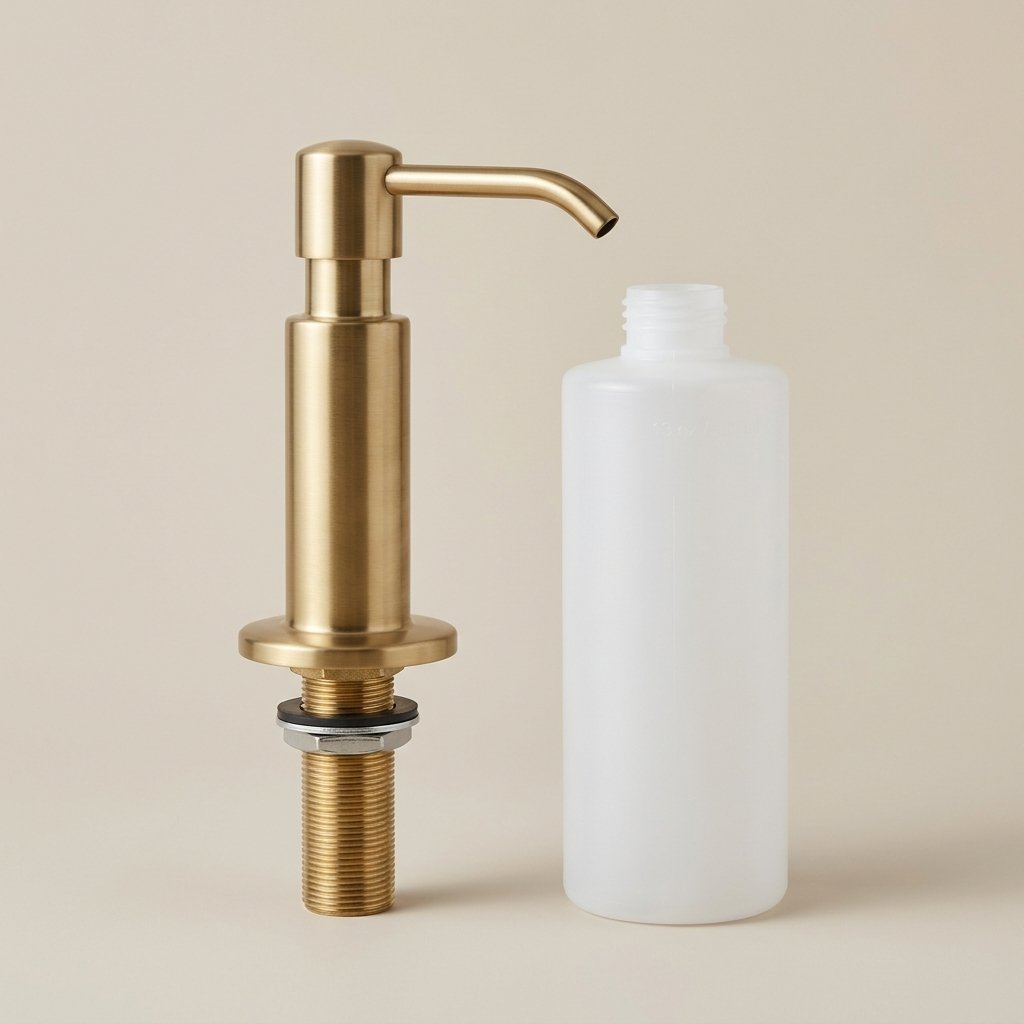
• Safe Applications: Countertop soap dispensers, bar rail trims, prep sink basins, bread baskets, wine coolers, ice buckets, and dry spice containers.
• Acidic Caution: Do not store citrus juice, salad dressings, vinegar, or cooked tomato sauces inside unlined brass vessels for extended periods. Acidity below pH 6 reacts with surface copper, causing an unpleasant metallic taste and potential digestive upset. Traditional French brass jam pans are used for boiling high-sugar fruit preserves, where high sugar concentrations prevent acid reaction during rapid cooking.
Kitchen Sanitation: Nature's Oligodynamic Self-Disinfection
Beyond safety, solid unlacquered brass actively enhances kitchen hygiene through the oligodynamic effect. Because raw brass contains ~65% copper, its exposed ions naturally rupture bacterial cell membranes and destroy viral RNA.
Peer-reviewed public health studies demonstrate that methicillin-resistant bacteria and foodborne pathogens (including E. coli and Salmonella) die off on solid brass within 90 to 240 minutes. Unlike synthetic stainless steel or lacquered coatings that require harsh chemical sanitizers, living unlacquered brass cleanses itself continuously.
Conservator's PrincipleNever introduce abrasive steel wool or caustic ammonia-based bathroom cleaners to raw unlacquered brass. Warm water with natural soap cleans dirt without stripping accumulated antique patina; a 30-second wipe with jeweler’s rouge or brass paste resets to Day 01 mirror gold anytime.
Frequently Addressed Inquiries
Does architectural solid brass have nickel in it?
No. Authentic architectural binary brass is composed strictly of copper (~65%) and zinc (~35%) with zero added nickel. Nickel is only present if an item is made of "nickel silver" (German silver) or if commercial chrome/brass plating used a cheap nickel underplate.
Is solid brass lead-free and safe for kitchen drinking water faucets?
Yes. Modern architectural and plumbing brass must comply with strict Federal Safe Drinking Water Act standards (NSF/ANSI 61 and NSF/ANSI 372), mandating a maximum weighted average lead content of less than 0.25% across all wetted surface areas.
Is solid brass hypoallergenic for people with sensitive skin?
Yes. The vast majority of metal contact allergies are triggered by nickel ions. Because pure architectural sand-cast brass contains zero nickel, it does not provoke allergic contact dermatitis. Hand contact with solid brass is entirely safe and naturally antimicrobial.
Can you safely serve food and drinks in brass vessels?
Brass is completely safe for dry foods, cocktail garnishes, bread service, and ice bowls. However, unlined brass should not be used to store or simmer highly acidic liquids (such as citrus juices, vinegar dressings, or tomato sauces) for prolonged hours, as acids can leach copper ions into food.
Handcrafted Brass Featured in This Study


