Does Brass Rust? The Truth About Corrosion, Patina & Water
No, authentic solid brass cannot rust. Chemically, rust is hydrated iron oxide — because architectural brass contains zero iron, it is physically incapable of rusting, even in 100% humidity steam showers and busy kitchen sinks. Discover the scientific difference between destructive flaking rust and protective living patina.
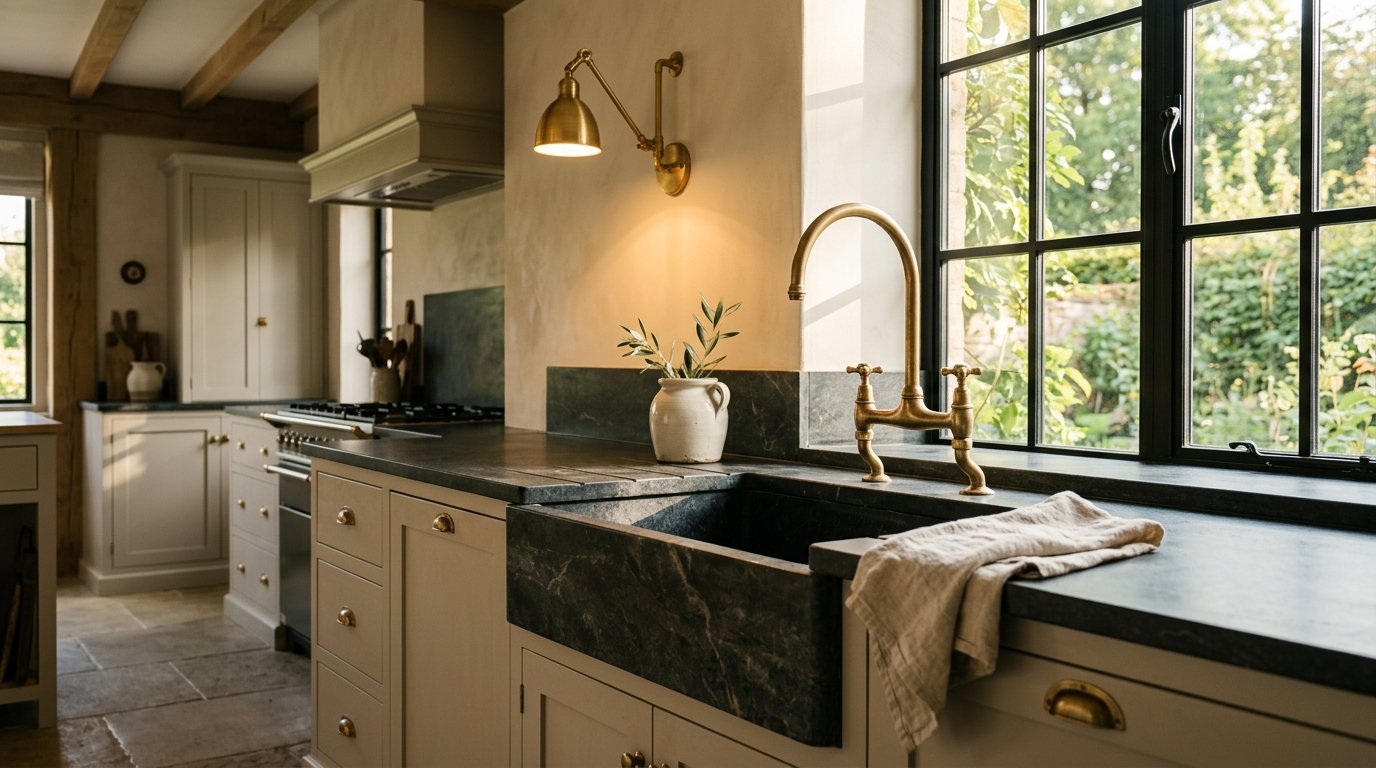
The Chemistry of Rust: Why Iron-Free Brass Cannot Rust
In metallurgical chemistry, the term "rust" refers exclusively to the oxidation of iron and iron-based alloys (such as carbon steel). When iron is exposed to moisture and oxygen, it converts into hydrated iron(III) oxide (Fe2O3·nH2O).
Crucially, iron oxide has a crystal lattice volume significantly larger than the underlying iron metal. This volumetric mismatch creates immense internal stress, causing the oxidized crust to blister, flake off, and expose fresh iron to further destruction until the metal is eaten through.
Solid architectural brass (an alloy of 65% copper and 35% zinc) contains zero iron. It is fundamentally immune to this destructive flaking degradation.
Living Patina vs. Destructive Rust: The Cuprite Shield
While solid brass cannot rust, it does oxidize. When bare brass encounters ambient oxygen, copper atoms at the surface form a microscopic layer of cuprite (copper(I) oxide, Cu2O).
Unlike iron rust, the cuprite film is tightly adherent, non-porous, and self-limiting. It passivates the metal, creating an invisible protective barrier that halts deeper chemical corrosion.
Visually, this passivation layer is what architects and luxury interior designers celebrate as "living finish." It evolves into rich honey, caramel, and warm antique bronze tones that become more beautiful with age.
Bathroom & Kitchen Performance: Steam, Soap, and Water Exposure
Because sand-cast unlacquered brass cannot rust, it is the premier heritage material for wet environments, including master steam showers, vessel sinks, and pot filler stove backsplashes.
In high-steam bathrooms, shower mist accelerates the cuprite formation, allowing the hardware to develop antique depth in roughly half the time required in a dry corridor. Even when subjected to daily splashes, the solid metal retains complete mechanical integrity.
Furthermore, because there is no synthetic lacquer or plastic clear-coat to crack, unlacquered brass eliminates the milky bubbling and peeling that plagues mass-market lacquered fixtures.
Aesthetic Freedom: Restoring Day 1 Mirror Brilliance
Unlike plated metals where buffing strips off the paper-thin decorative layer, solid sand-cast brass is genuine alloy throughout its entire cross-section.
Whether your hardware has patinated for 6 months or 60 years, applying a dime-sized amount of brass polishing cream (such as Flitz, Cape Cod, or Brasso) gently lifts surface oxidation in 30 seconds, restoring the virgin 18k golden luster.
With solid unlacquered brass, you are never locked into a single look: enjoy the organic, living antique character today, or reset to brilliant golden shine at any moment.
Conservator's PrincipleNever introduce abrasive steel wool or caustic ammonia-based bathroom cleaners to raw unlacquered brass. Warm water with natural soap cleans dirt without stripping accumulated antique patina; a 30-second wipe with jeweler’s rouge or brass paste resets to Day 01 mirror gold anytime.
Frequently Addressed Inquiries
Does brass rust in water or high humidity?
No. Water and humidity cannot trigger rust on solid brass because rust requires iron atoms. Instead, moisture acts as a mild natural catalyst for copper oxidation, forming a micro-thin cuprite patina that seals the surface against deeper atmospheric corrosion.
Why do some hardware items labeled "brass" develop reddish flaking rust?
If you observe red, brown, or bubbling rust flakes on your fixtures, the product is counterfeit brass. It is hollow steel or pot metal dipped in an ultra-thin yellow electroplate. When that micro-coating scratches, the iron in the steel core reacts with moisture and rusts from within.
What is green verdigris, and will it form inside my home?
Green crust (verdigris or basic copper carbonate) requires continuous exposure to acidic rain, industrial sulfur, or marine salt spray over many years. Normal indoor residential environments lack these acidic catalysts, meaning indoor brass matures into a warm golden-caramel amber, never green crust.
Can water droplet marks on unlacquered brass be cleaned or blended?
Yes. Water droplet marks on raw brass are temporary localized oxidation zones. Daily touch and handling naturally blend these marks into the surrounding patina within two weeks. If an immediate uniform surface is desired, a 30-second wipe with metal polishing paste dissolves all water marks instantly.
Handcrafted Brass Featured in This Study


