Brass Melting Point & Density: The Definitive Metallurgy Guide
Solid architectural brass features an exceptional melting threshold of 1,650°F to 1,725°F (900°C to 940°C) and a dense atomic structure of 8.40 to 8.73 g/cm³. Learn why these physical properties make solid sand-cast brass immune to high-BTU kitchen heat and how density verifies authentic solid metal.
The Melting Point of Brass: Solidus vs. Liquidus Temperatures
Pure chemical elements like copper melt at a precise isothermal point (copper melts at 1,984°F / 1,085°C, while pure zinc melts at 787°F / 419.5°C). However, when copper and zinc are fused into architectural brass, the resulting binary alloy melts over a temperature gradient called the melting range.
For standard C26000 and sand-casting architectural brass (65% copper and 35% zinc), this range is precisely defined:
• Solidus Temperature (the point at which melting begins): ~1,650°F (900°C)
• Liquidus Temperature (the point at which the alloy is completely molten): ~1,725°F (940°C)
Because its melting point exceeds 1,650°F, authentic brass retains extreme structural rigidity in demanding architectural environments.
Density Comparison: Authentic Sand-Cast Brass vs. Substitutes
Density—mass per unit of volume—is the most reliable non-destructive indicator of genuine solid brass hardware. Architectural brass has an average density of 8.50 g/cm³ (approximately 530 lbs/ft³).
Compare how solid architectural brass compares against commonly substituted commercial materials:
• Solid Sand-Cast Brass: 8.40 – 8.73 g/cm³ (heavy, solid, zero void space)
• Commercial Cast Iron: 7.10 – 7.30 g/cm³
• Die-Cast Zinc / Zamak Pot Metal: 6.60 – 6.80 g/cm³ (~25% lighter than brass)
• Cast Aluminum: 2.70 g/cm³ (nearly 70% lighter than brass)
When grasping a genuine Marrakech sand-cast wall hook or cabinet pull, the high mass-to-volume ratio creates an unmistakable tactile sensation of permanence and quality.
Stovetop Backsplash Resilience: Why Pot Fillers Require Solid Brass
In luxury kitchen design, wall-mounted pot filler faucets are installed directly above high-output gas ranges producing up to 60,000 total BTUs. The ambient temperature against the backsplash tile frequently fluctuates between 200°F and 450°F.
Plated plastic faucets or zinc alloy handles expand, crack, and fail under these rapid thermal cycles because plastic and zinc have low thermal tolerances and mismatched thermal expansion rates.
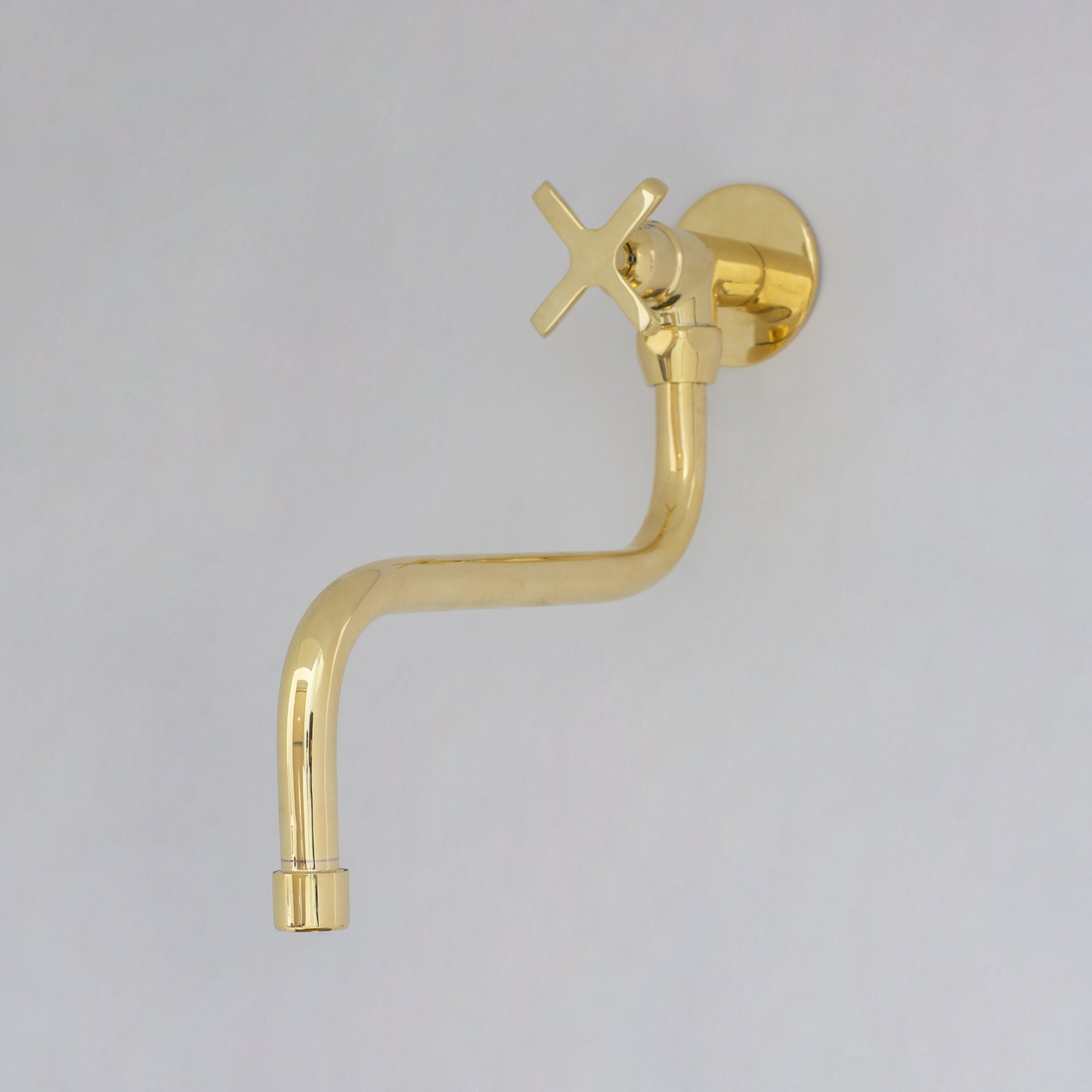
Solid unlacquered sand-cast brass is unaffected by stovetop heat. With a melting threshold over 1,650°F and superior thermal conductivity, solid brass pot fillers absorb and dissipate heat smoothly without valve binding or finish blistering.
Marrakech Foundry Heritage: Pouring at 1,800°F
In our Marrakech artisan foundry, Master Karim Benali begins each casting cycle by superheating virgin copper and zinc ingots inside heavy graphite crucibles to 1,800°F (982°C)—well above the alloy's liquidus point.
The glowing golden molten brass is hand-skimmed to remove surface dross and poured immediately into compacted silica sand flasks. As the alloy cools and solidifies within the sand, it forms the dense, crystalline microstructure that gives Medina Brass hardware its generational strength.
Conservator's PrincipleNever introduce abrasive steel wool or caustic ammonia-based bathroom cleaners to raw unlacquered brass. Warm water with natural soap cleans dirt without stripping accumulated antique patina; a 30-second wipe with jeweler’s rouge or brass paste resets to Day 01 mirror gold anytime.
Frequently Addressed Inquiries
What is the exact melting point of architectural brass?
Architectural binary brass (65% copper, 35% zinc) does not melt at a single fixed temperature because it is a solid-solution alloy. It softens at its solidus temperature of approximately 1,650°F (900°C) and becomes completely liquid at its liquidus temperature of approximately 1,725°F (940°C).
What is the density of solid sand-cast brass?
The density of authentic architectural solid brass ranges between 8.40 and 8.73 g/cm³ (0.303 to 0.315 lbs/in³). This high density gives handcrafted brass its signature heavy, substantial heft in the palm.
Can heat from a 60,000 BTU stove warp or damage a brass pot filler?
No. Stovetop radiant heat on a backsplash typically peaks between 250°F and 450°F during intensive cooking. Because solid brass has a melting threshold above 1,650°F, commercial range flames cannot warp, soften, or structurally affect solid sand-cast pot fillers.
How does density reveal cheap pot metal and hollow knockoffs?
Mass-market hardware is often fabricated from cheap die-cast zinc (pot metal, density ~6.6 g/cm³) or cast aluminum (density ~2.7 g/cm³). By measuring an item's weight and water displacement, any homeowner can verify its exact density against the 8.5 g/cm³ solid brass standard.
Handcrafted Brass Featured in This Study


