Wall-Mount Brass Faucets: Culinary & Bathroom Rough-In, Spout Reach & Vanity Pairing
Wall-mounted brass faucets elevate kitchen backsplashes and bathroom vanities by freeing countertops from deck penetrations. Mastering wall-mount installations requires precise coordination between rough-in plumbing depth, finished wall thicknesses, spout reach projection, and basin center alignment.
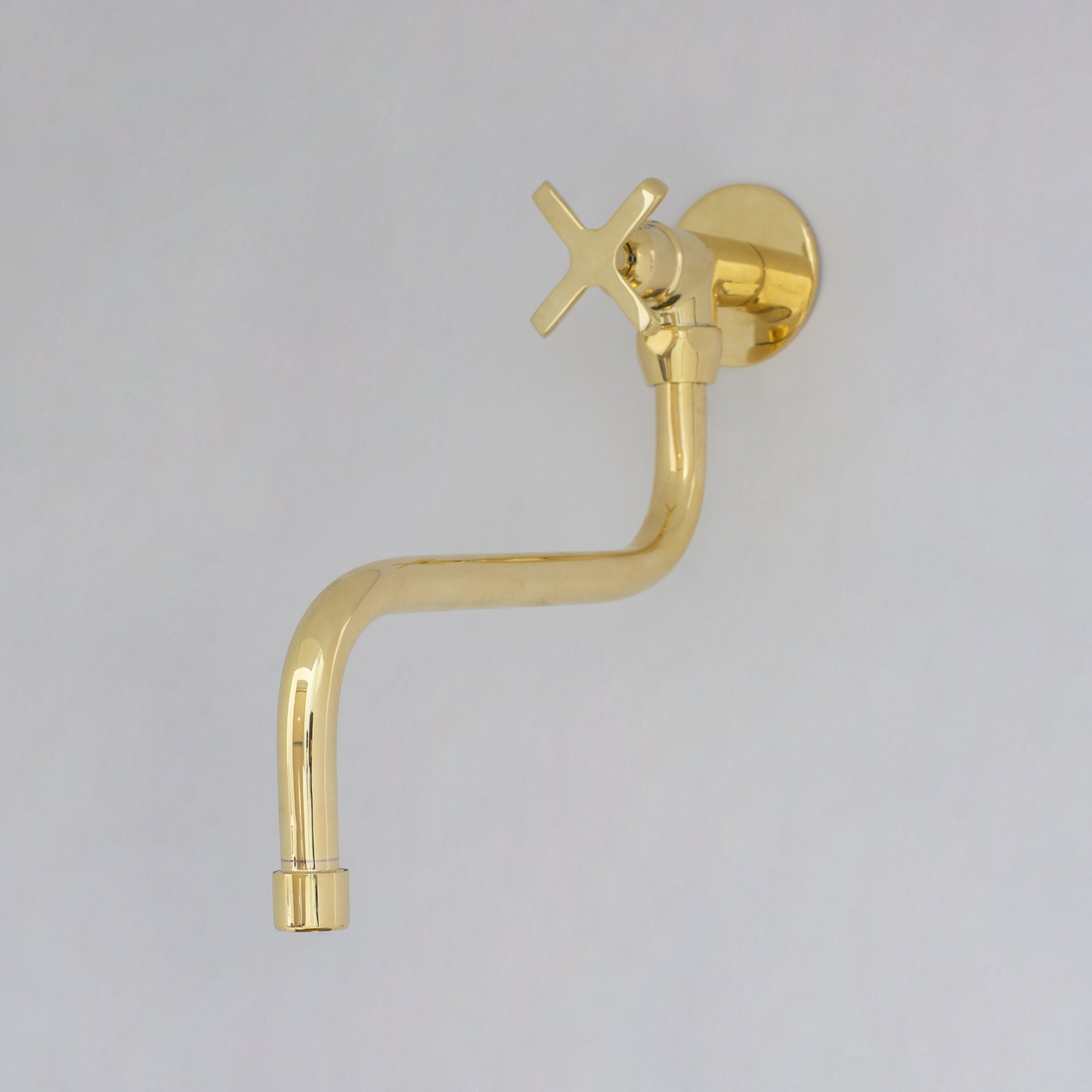
The Minimalist Floating Deck: Zero Countertop Penetrations
Few architectural choices create as dramatic an impact in kitchens and master baths as a wall-mounted brass faucet. By shifting the entire plumbing manifold off the countertop deck, wall faucets unlock clean, uninterrupted stone surfaces.
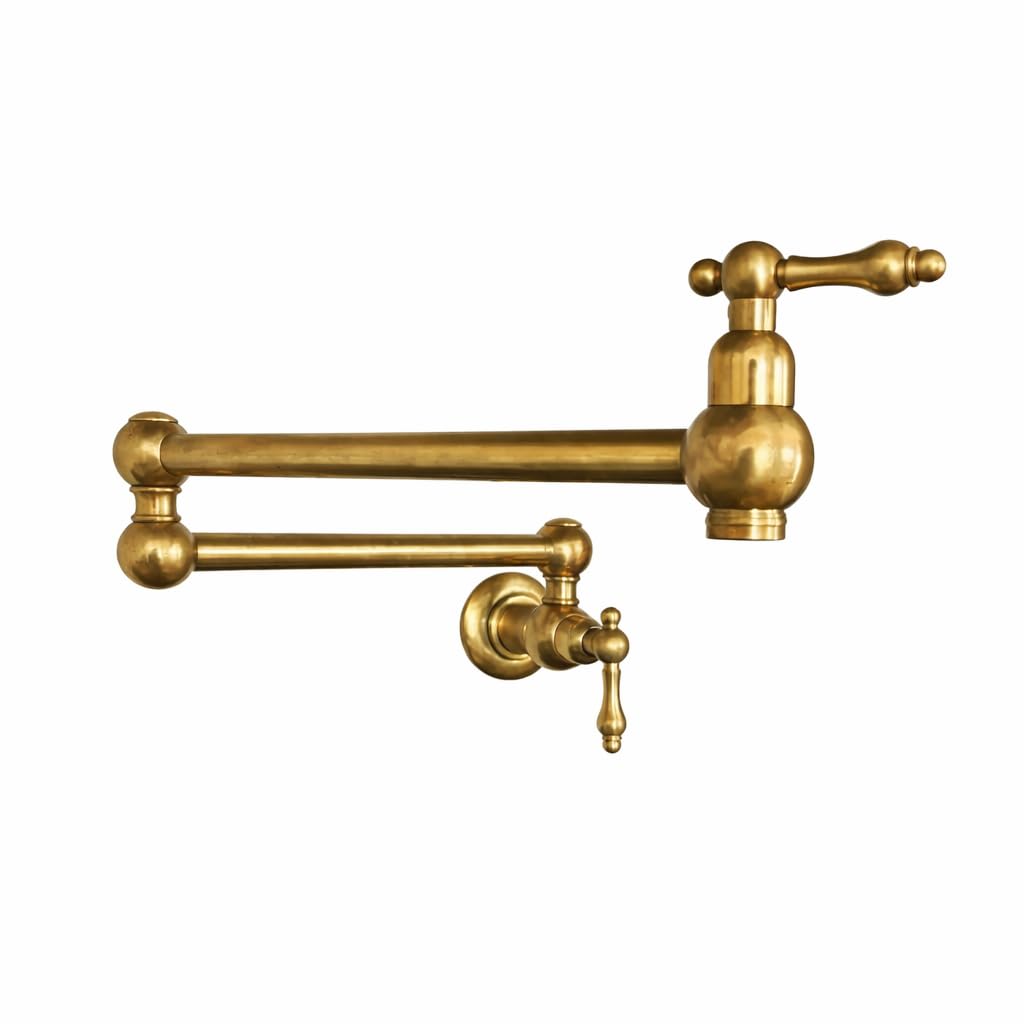
In culinary applications over farmhouse apron sinks, a wall mount kitchen faucet allows chefs to slide cutting boards and prep trays freely behind the basin without encountering faucet stanchions.
In powder rooms and luxury spas, wall-mounted basin taps transform floating marble or concrete vanities into minimalist sculptural art pieces.
Rough-In Depth Coordination: Tile, Slab Backsplash & Drop-Ear Framing
Unlike standard deck faucets installed after countertop templating, wall-mount fixtures demand early architectural coordination during initial plumbing rough-in.
The plumber must know the precise thickness of the finished wall assembly—including framing drywall, cement backer board, mortar, and finished tile or 2cm/3cm stone slab—before mounting the in-wall valve body.
The valve manifold must be solidly anchored to horizontal 2x4 blocking. If the rough-in is set too deep, decorative trim sleeves cannot engage; if set too shallow, the brass escutcheons will not seat flush against the tile.
Spout Reach Mathematical Calculation: Hitting the Drain Target
Spout reach is the most critical functional metric for wall-mounted faucets. A spout that is too short causes water to strike the rear curved slope of the basin, creating constant splashback against the mirror or backsplash.
A spout that is too long projects water over the front edge of shallow bowls.
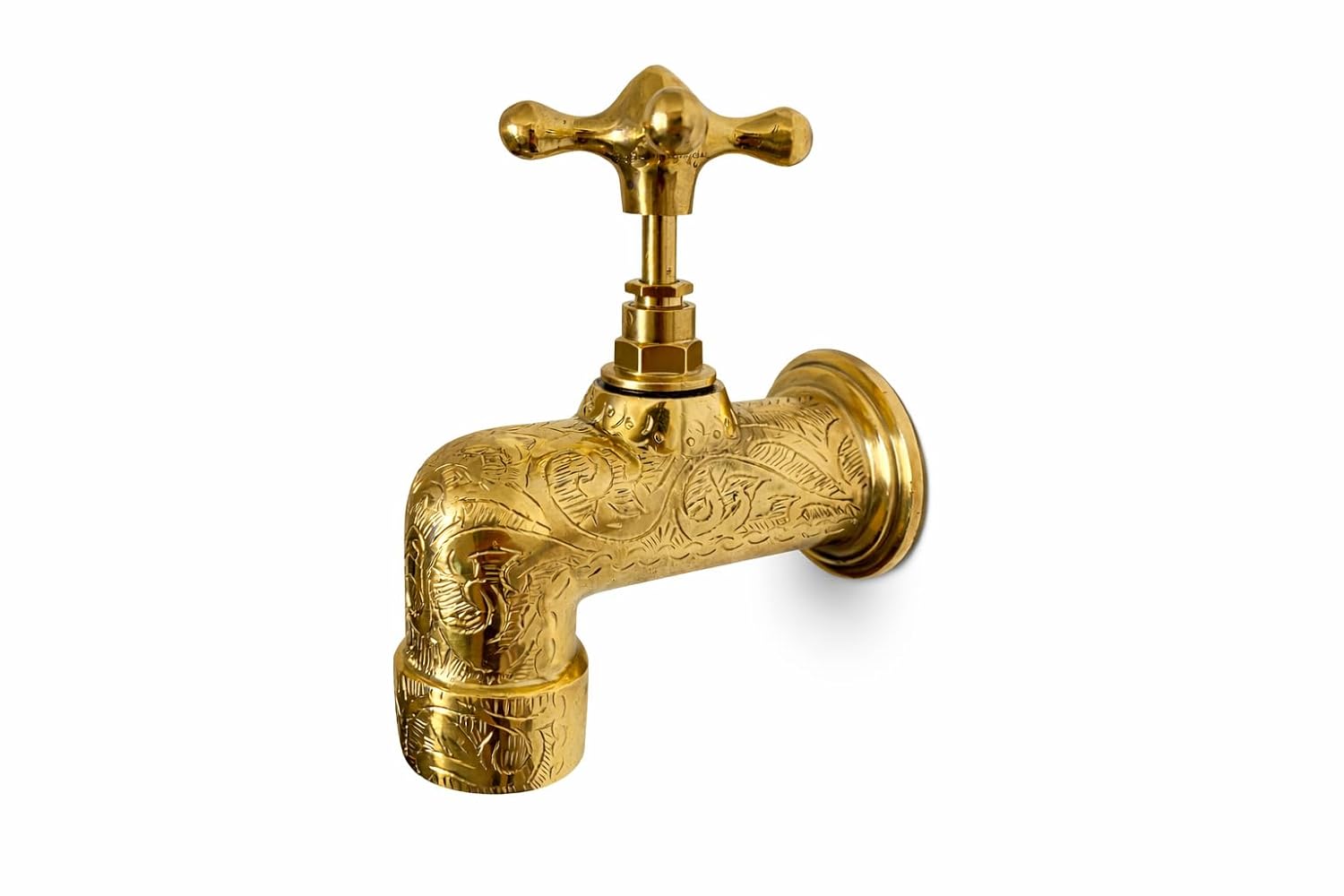
To determine required spout projection: add the backsplash thickness (typically 3/4" to 1-1/4") to the distance between the wall and the center of your sink drain. For standard 18"x14" undermount bathroom basins, an 8-inch to 9-inch wall spout delivers an ideal water trajectory.
Vessel Sink vs. Undermount Vanity Alignment
Mounting height varies significantly depending on your sink topology:
• Undermount Sinks: Position the faucet centerline 4 to 6 inches above the countertop deck, allowing generous clearance to wash hands and face without splashing.
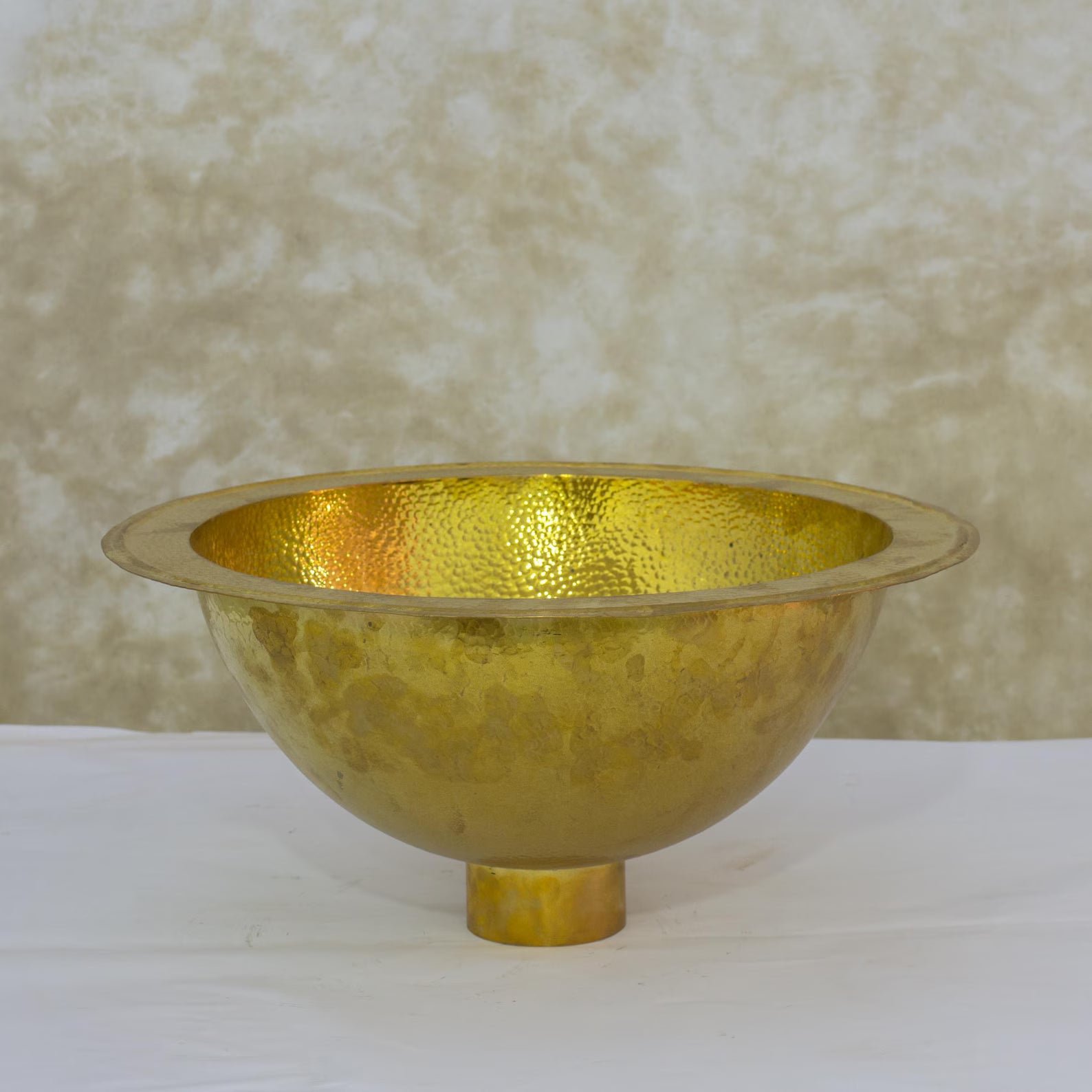
• Above-Counter Vessel Basins: Measure the vessel height (typically 4 to 6 inches tall), then rough-in the faucet 4 to 6 inches above the vessel rim (10 to 12 inches above countertop level).
• Farmhouse Apron Kitchen Sinks: Mount 8 to 10 inches above the sink rim to ensure deep stockpots and Dutch ovens fit comfortably beneath the aerator.
Dual Lever vs. Cross Handle Wall Controls
Wall-mounted fixtures offer two primary ergonomic control styles:
• Symmetrical Cross Handles: Provide classic Old World Mediterranean and French bistro charm with engraved hot and cold indicators.
• Architectural Levers: Offer effortless wrist-flick activation, essential in busy prep kitchens when fingers are coated in dough or marinade.
Both styles utilize precision ceramic disc stems engineered to operate smoothly without dripping or handle play.
Conservator's PrincipleNever introduce abrasive steel wool or caustic ammonia-based bathroom cleaners to raw unlacquered brass. Warm water with natural soap cleans dirt without stripping accumulated antique patina; a 30-second wipe with jeweler’s rouge or brass paste resets to Day 01 mirror gold anytime.
Frequently Addressed Inquiries
What is the primary design advantage of a wall-mounted faucet?
Mounting the faucet directly into the wall clears the entire countertop surface behind the sink. This creates a clean minimalist aesthetic, showcases unbroken stone slabs or tile backsplashes, and makes wiping down counters completely effortless without working around faucet base rings.
How do I calculate the proper spout reach for a wall-mount faucet?
Measure from the finished wall surface (including tile or stone slab thickness) to the center of the sink drain. The ideal spout reach projects water directly into or slightly ahead of the drain center (typically 7 to 9 inches for lavatories and 8 to 11 inches for kitchen basins) to prevent splashback against the rear sink wall.
How high above the sink basin should a wall faucet be installed?
For undermount bathroom sinks, install the faucet centerline 4 to 6 inches above the sink rim. For vessel sinks that sit on top of the counter, mount the faucet 4 to 6 inches above the top vessel rim (typically 8 to 12 inches above countertop height).
Can wall-mount faucets be serviced without tearing out tile or drywall?
Yes. Quality wall-mount fixtures utilize in-wall rough-in valve bodies where cartridges, check valves, and decorative trim escutcheons are serviceable directly from the front face of the finished wall without disturbing tile work.
How do unlacquered brass wall faucets age around backsplash tile?
Because the spout and handles project outward from the vertical wall, they experience less standing water pooling than deck-mounted taps. High-touch lever handles stay softly polished, while the wall rosettes and spout barrel develop rich, velvety bronze undertones over time.
Handcrafted Brass Featured in This Study