Vintage-Style Brass Faucets: Century-Home & Historic Brownstone Renovation Guide
Restoring a historic brownstone, Victorian, or early 20th-century Craftsman? Learn how to specify authentic unlacquered living brass kitchen and bath taps that honor historical architectural fabric while delivering commercial 500k-cycle ceramic disc performance.
Shop Featured Solid Unlacquered Brass Fixtures From This Study
1. The Preservation Paradox: Historic Beauty vs. Modern Code Compliance
Preserving the architectural soul of a Victorian brownstone, Edwardian townhouse, or 1920s Craftsman requires meticulous attention to period hardware. While original salvaged fixtures offer undeniable charm, they frequently present dangerous lead contamination, corroded valve seats, and non-standard pipe threads that master plumbers refuse to install.
Medina Brass resolves the preservation paradox by hand-casting fixtures using traditional Marrakech sand molds, achieving the exact monolithic heft and living patina of 19th-century brassware while engineering internal waterways to strict US residential plumbing standards.
Artisan Solid Living Brass Featured in This Study
2. The Problem with Mass-Market "Vintage Reproduction" Faucets
Big-box home improvement stores market countless "antique brass" faucets designed to look vintage. However, these fixtures are almost universally manufactured from lightweight zinc alloy with an artificial tinted lacquer coat that cannot age or heal.
In a thoughtfully curated century home, artificial faux-finishes look stark and discordant against original plaster, reclaimed pine, and restored woodwork. Authentic unlacquered brass breathes with the home, developing rich honey, amber, and deep bronze undertones unique to your microclimate.
3. Architectural Silhouette Guide: Bridge Mixers, Cross Handles & High Arcs
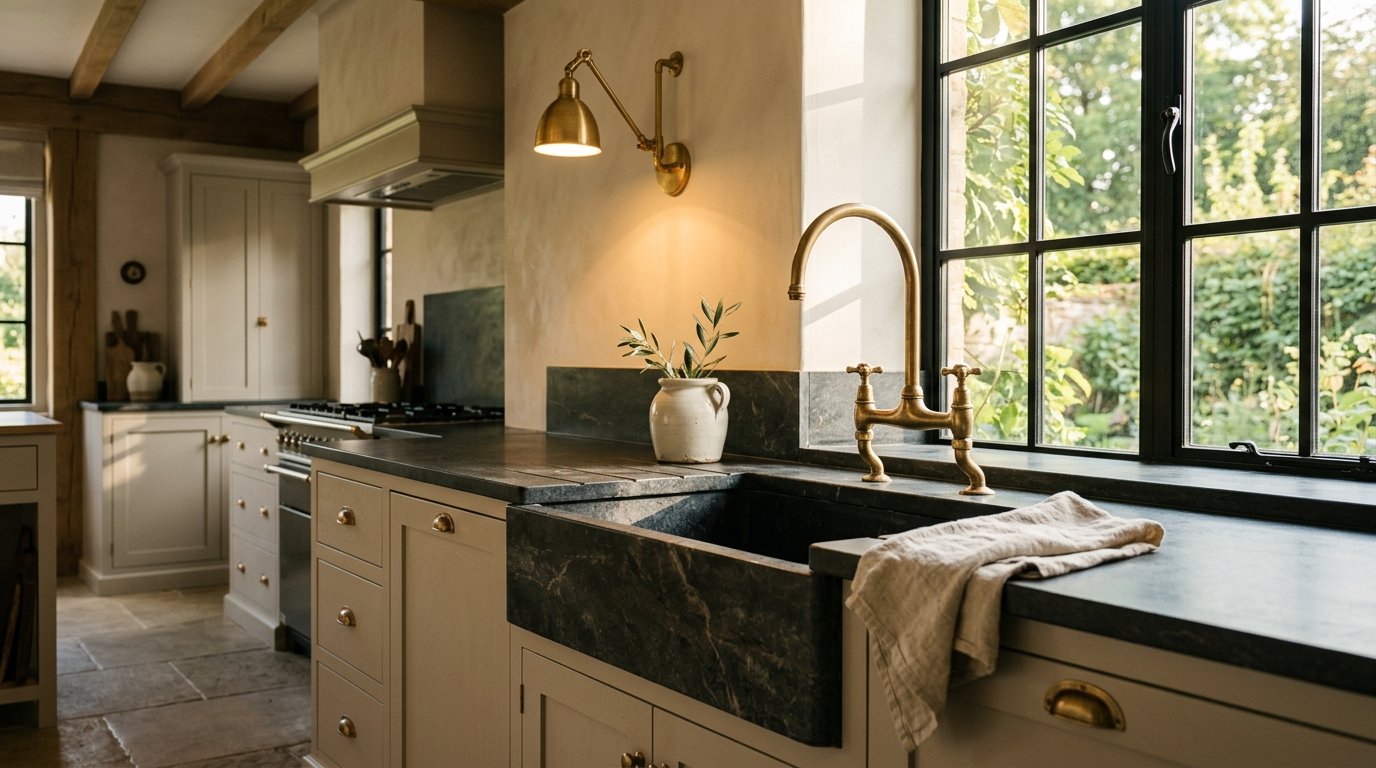
When designing a historic scullery, handle and spout silhouettes dictate the era. For late Victorian and Edwardian kitchens, an exposed 8-inch deck-mount bridge faucet with four-point cross handles (Model MB-KBF-009 or the Malmo Bridge) pays homage to early exposed municipal plumbing.
For 1920s and 1930s Arts & Crafts or Colonial Revival kitchens, our clean single-lever gooseneck tap (Model amz-faucet-01) provides timeless architectural restraint paired with a deep fireclay or soapstone basin.
4. Lead-Free Potable Water Metallurgy in Historic Plumbing Systems
Historic homes often contend with legacy galvanized or lead piping. Replacing supply risers with lead-free brass fixtures is essential for safe drinking water. Medina Brass fixtures are smelted strictly from certified binary 65/35 virgin brass ingots containing 0% post-consumer scrap lead.
Every fixture fully complies with Section 1417(d) of the US Safe Drinking Water Act and California AB 1953 low-lead standards, ensuring pure cooking and drinking water for growing families.
5. Sourcing Complementary Architectural Hardware for Period Restorations
Achieving architectural cohesion in historic renovations requires extending the living brass finish beyond the sink. Coordinate your kitchen faucet with our hand-cast mudroom wall hooks, solid brass cafe curtain rods, and exposed bottle P-traps for a unified, period-accurate restoration.
Conservator's PrincipleNever introduce abrasive steel wool or caustic ammonia-based bathroom cleaners to raw unlacquered brass. Warm water with natural soap cleans dirt without stripping accumulated antique patina; a 30-second wipe with jeweler’s rouge or brass paste resets to Day 01 mirror gold anytime.
Frequently Addressed Inquiries
Can you install unlacquered brass faucets in landmarked historic district homes?
Yes. Architectural review boards and historic preservation commissions in historic districts (such as Brooklyn Heights, Boston Beacon Hill, and Charleston) strongly favor solid unlacquered living brass because it develops a natural antique bronze patina that mirrors historical 19th-century metallurgy.
Why avoid mass-market "antique brass" finishes for century-home renovations?
Mass-market antique brass is typically an artificial brown chemical dye sprayed over pot metal and sealed beneath a glossy plastic varnish. It looks artificial, reflects light unnaturally, and begins peeling within a few years near steaming water, ruining the period character of the home.
How do you clean vintage unlacquered brass without removing its natural patina?
For everyday historic care, wipe surfaces with warm water and a soft cotton cloth. Never use harsh chemical spray cleaners. If acidic stains occur, allow them to re-patinate naturally, or lightly buff with diluted lemon juice and baking soda to blend the tones.
Will Medina Brass bridge mixers fit antique cast iron and fireclay apron sinks?
Yes. Our 8-inch bridge mixers feature generous mounting clearances and extra-long solid brass threaded shanks that pass easily through thick backsplash rims of antique cast iron high-back sinks and fireclay apron basins.
Authoritative Standards, Codes & Technical References
Primary metallurgical benchmark for solid 65/35 copper-zinc binary alloy density (8.53 g/cm³), tensile yield, and natural cuprous oxide passivation.
North American mechanical engineering standard governing US 1/2" NPT thread geometry, hydrostatic burst pressure (500 PSI), and 500,000-cycle ceramic disc valve endurance.
Museum and historic preservation protocol for non-abrasive cleaning, microcrystalline wax sealing, and organic patina stabilization on unlacquered architectural brass.
Federal clinical registration confirming uncoated solid brass and copper alloys continuously eliminate 99.9% of surface bacteria within 2 hours.
Handcrafted Brass Featured in This Study
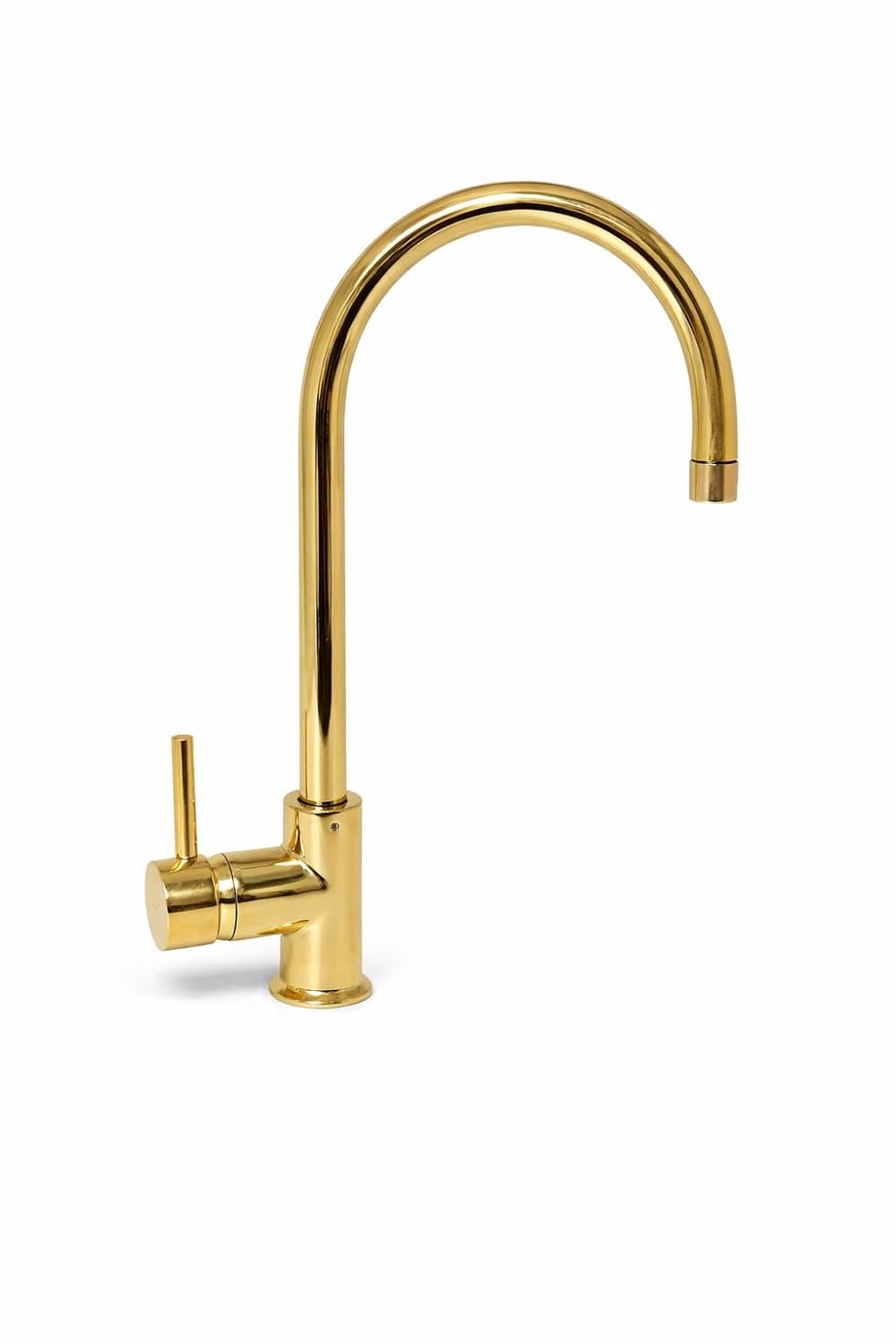
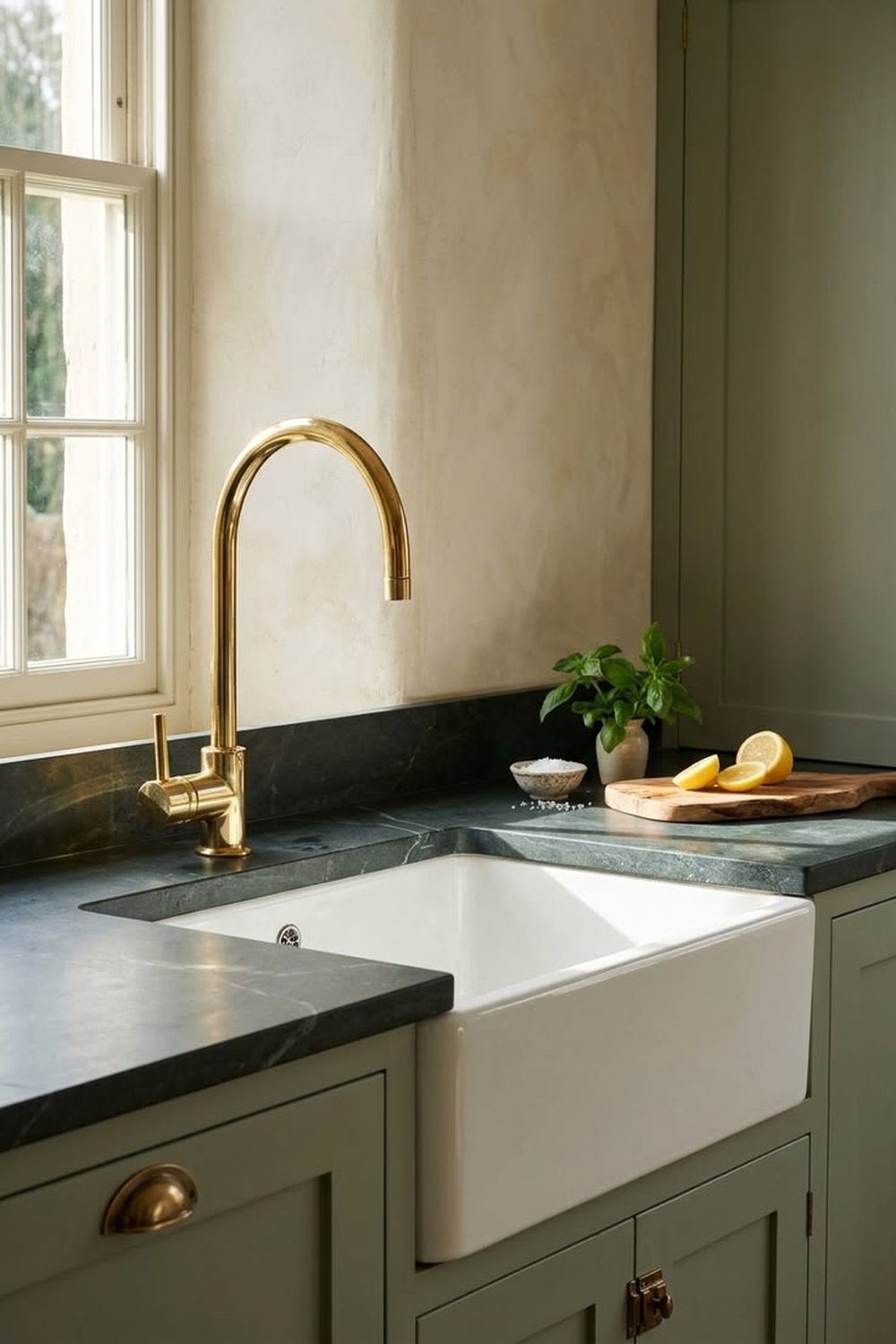
Unlacquered Brass Kitchen Faucet — Solid Brass Gooseneck Tap (Single Lever)
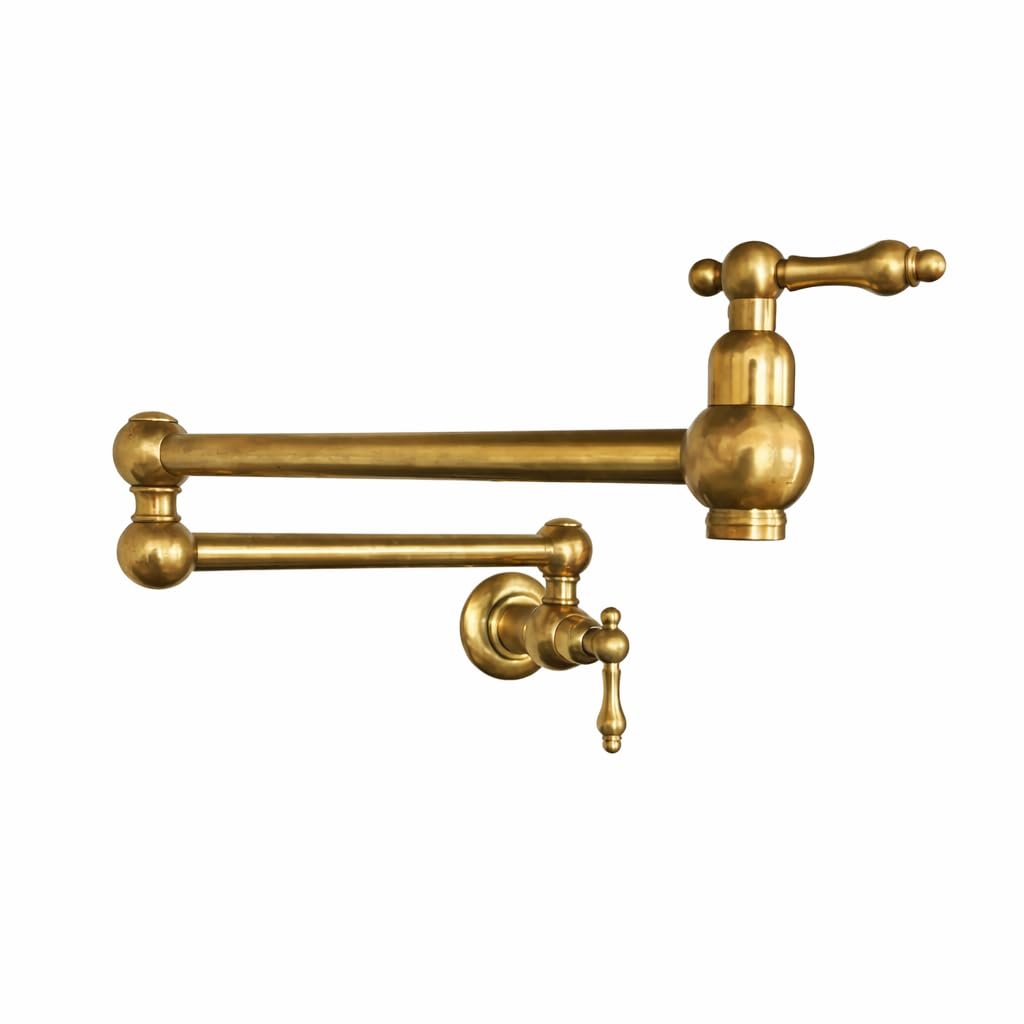
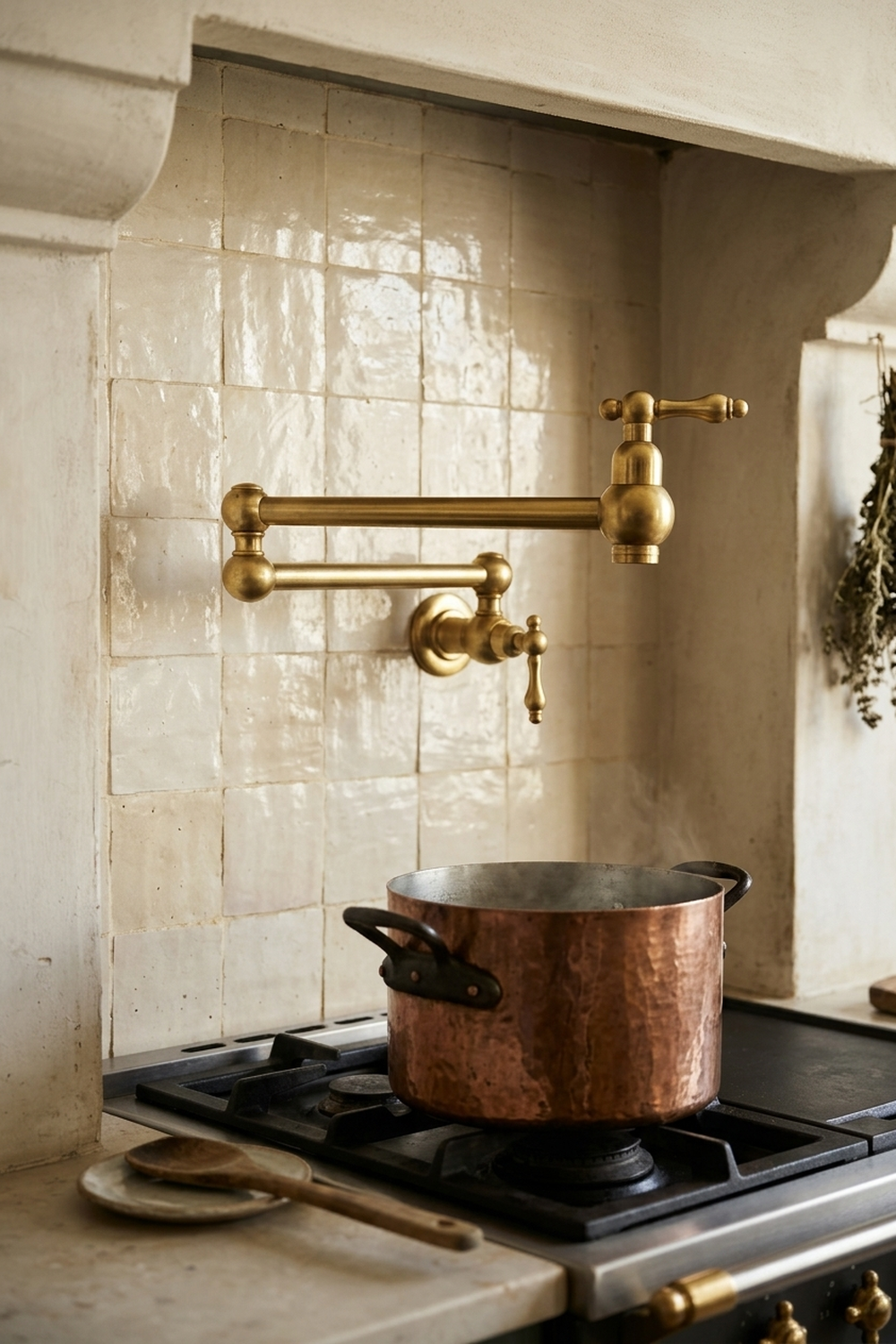
Solid Brass Pot Filler Faucet — Wall-Mounted Dual Articulating (24" Reach)
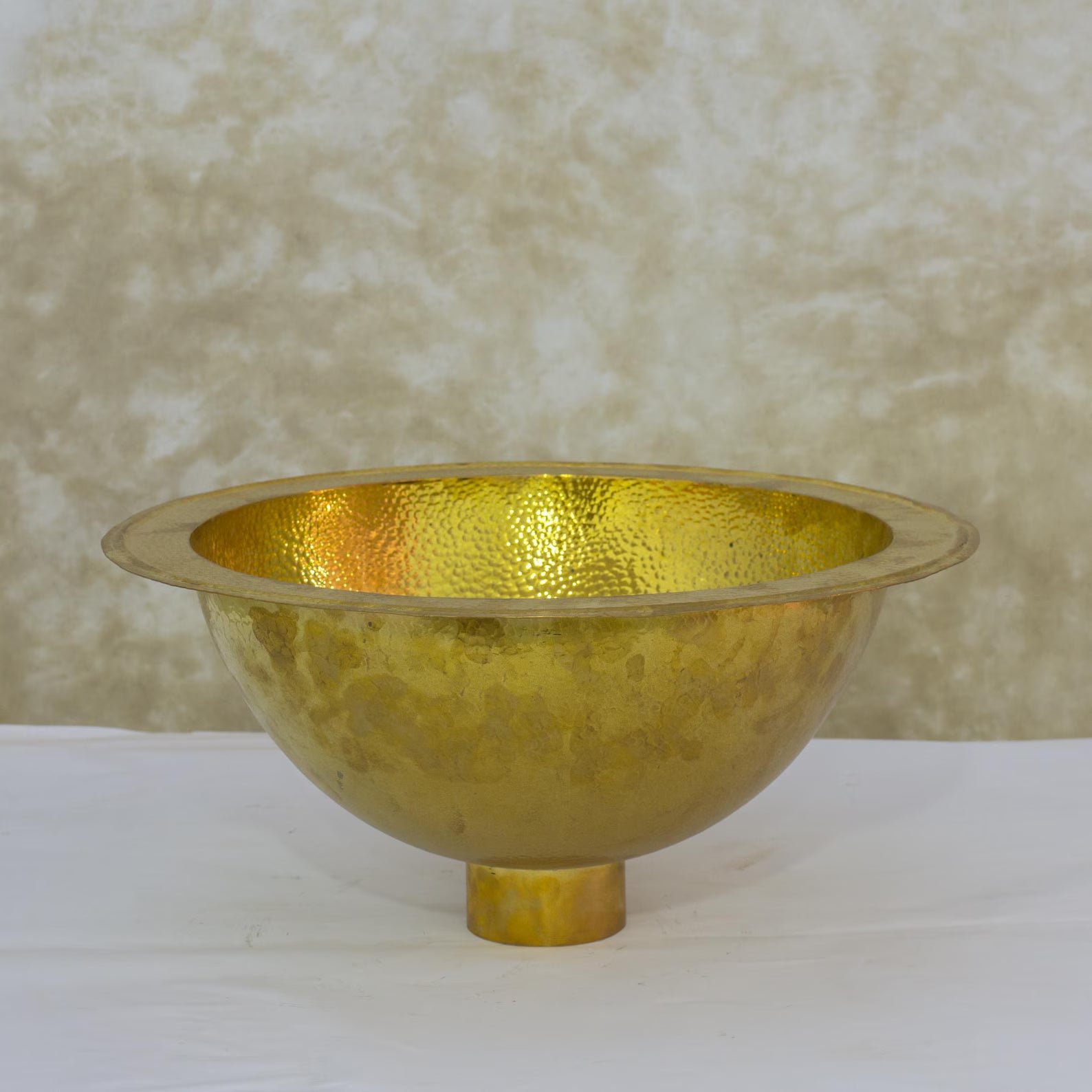
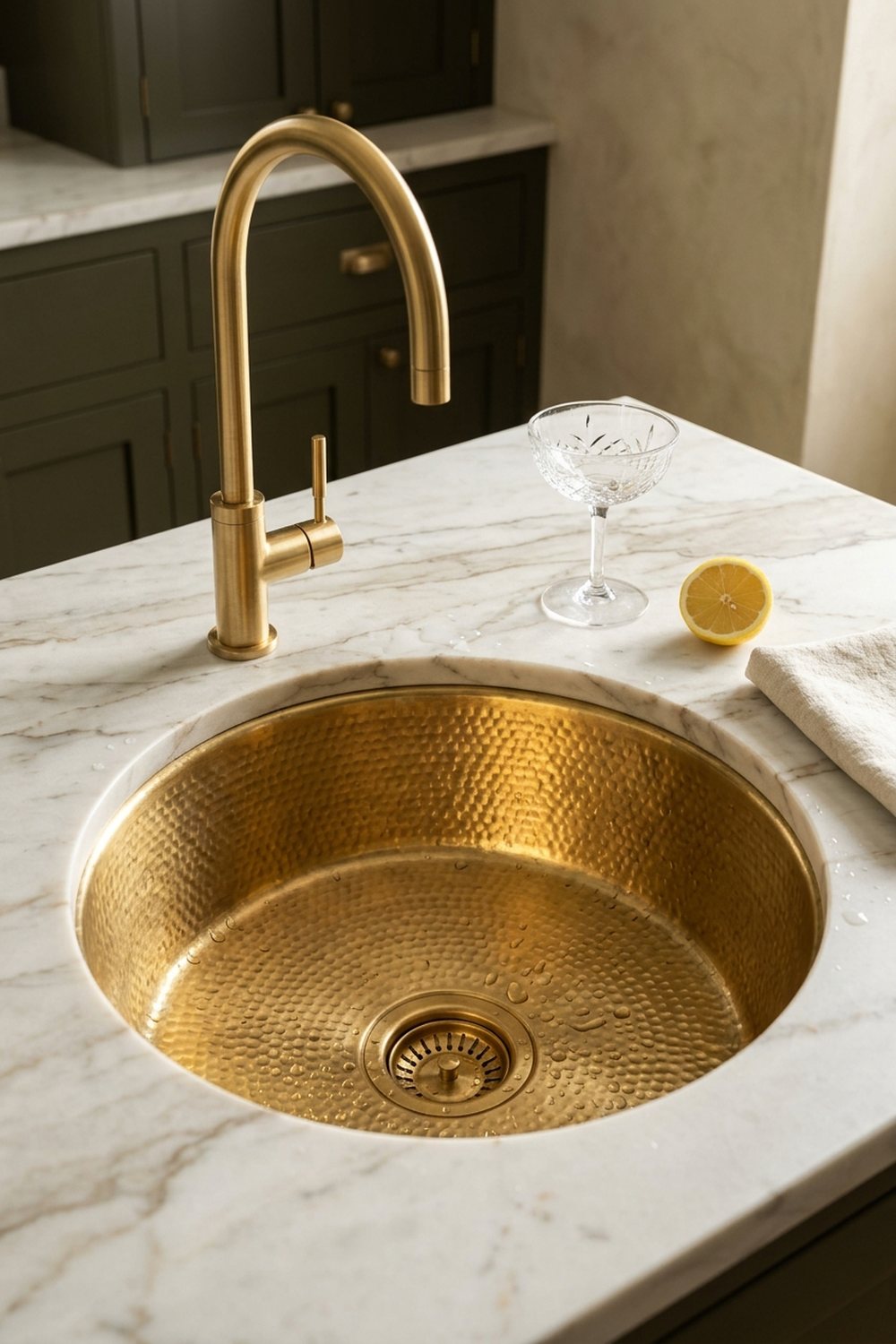
Solid Brass Kitchen & Bar Sink — 15" Hand-Hammered Unlacquered Prep Basin
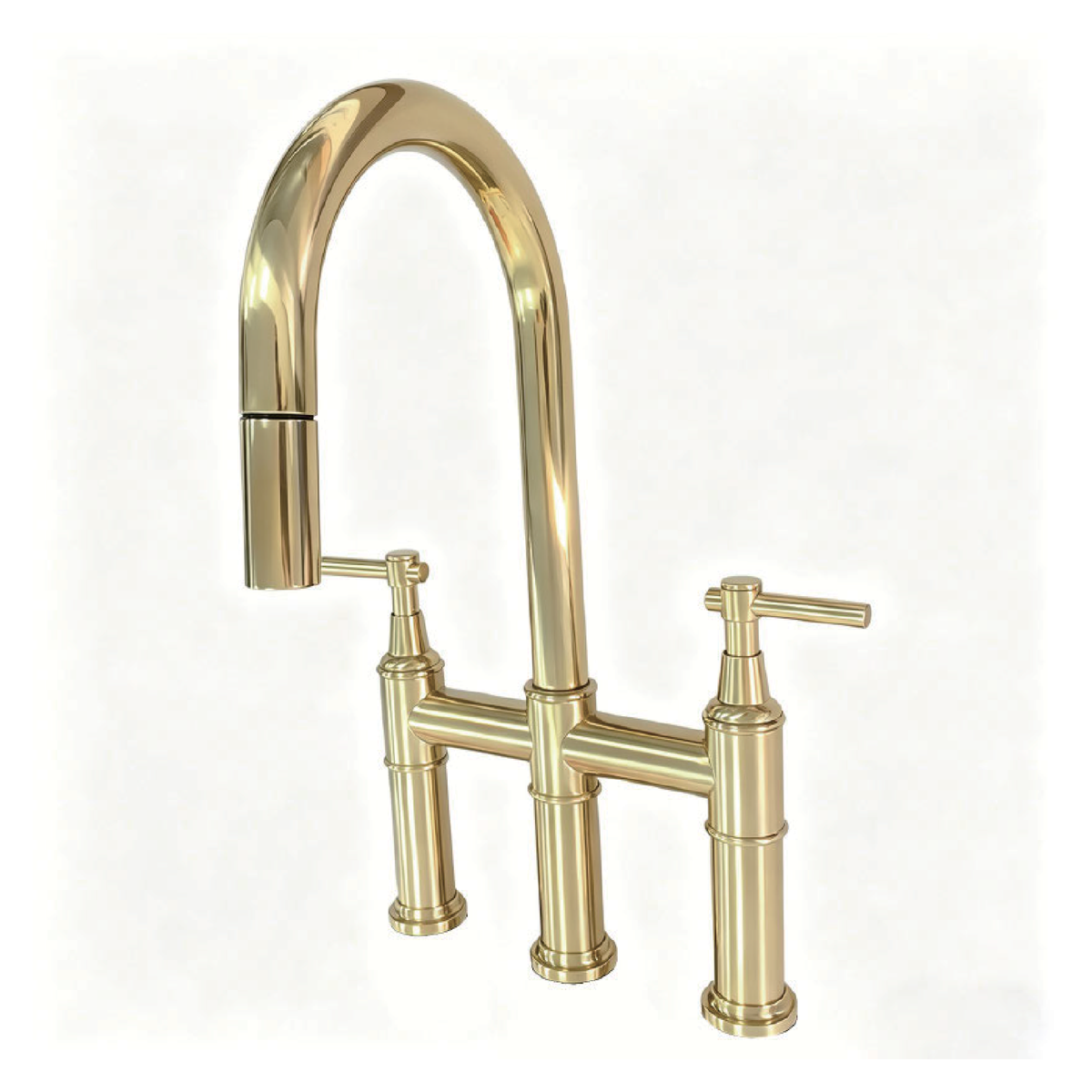
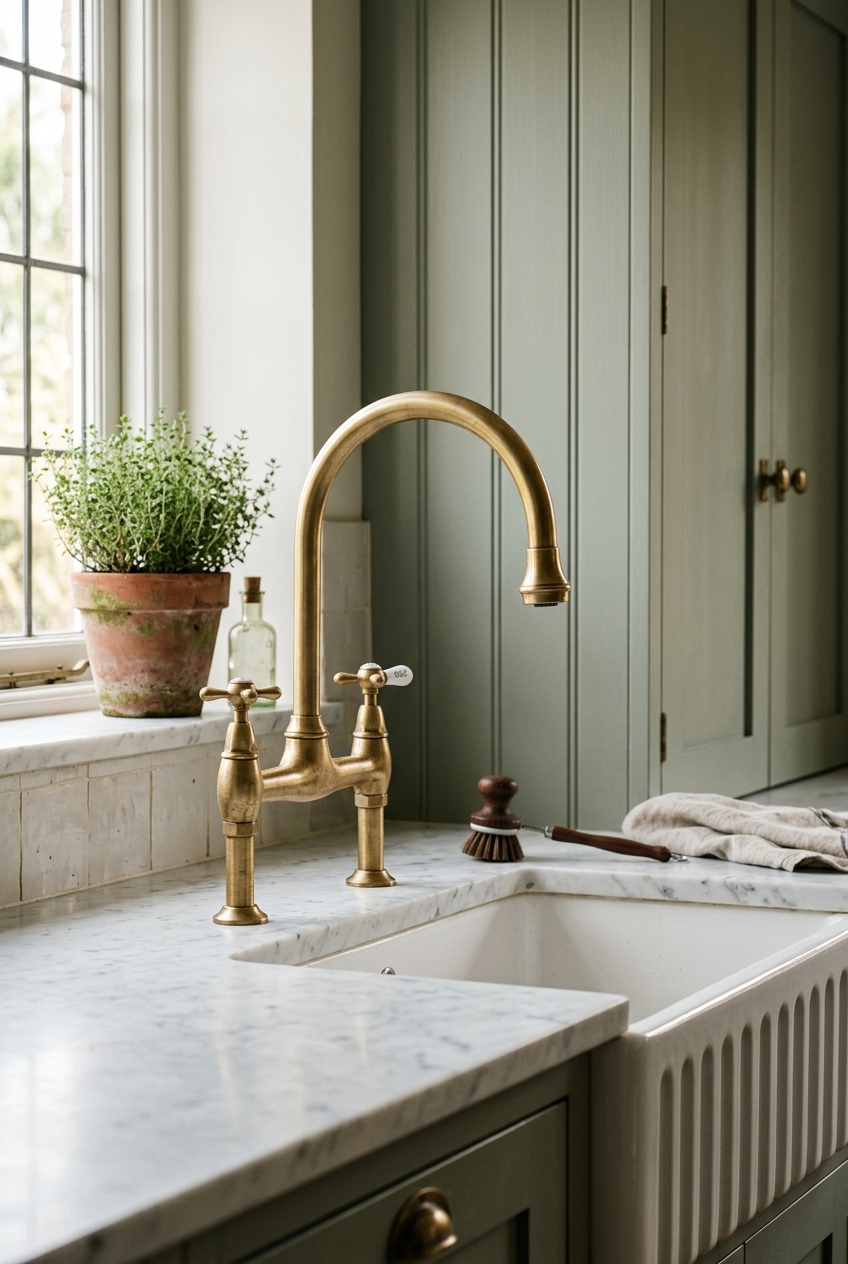
Handcrafted Unlacquered Brass Bridge Kitchen Faucet with Integrated Pull-Down Sprayer
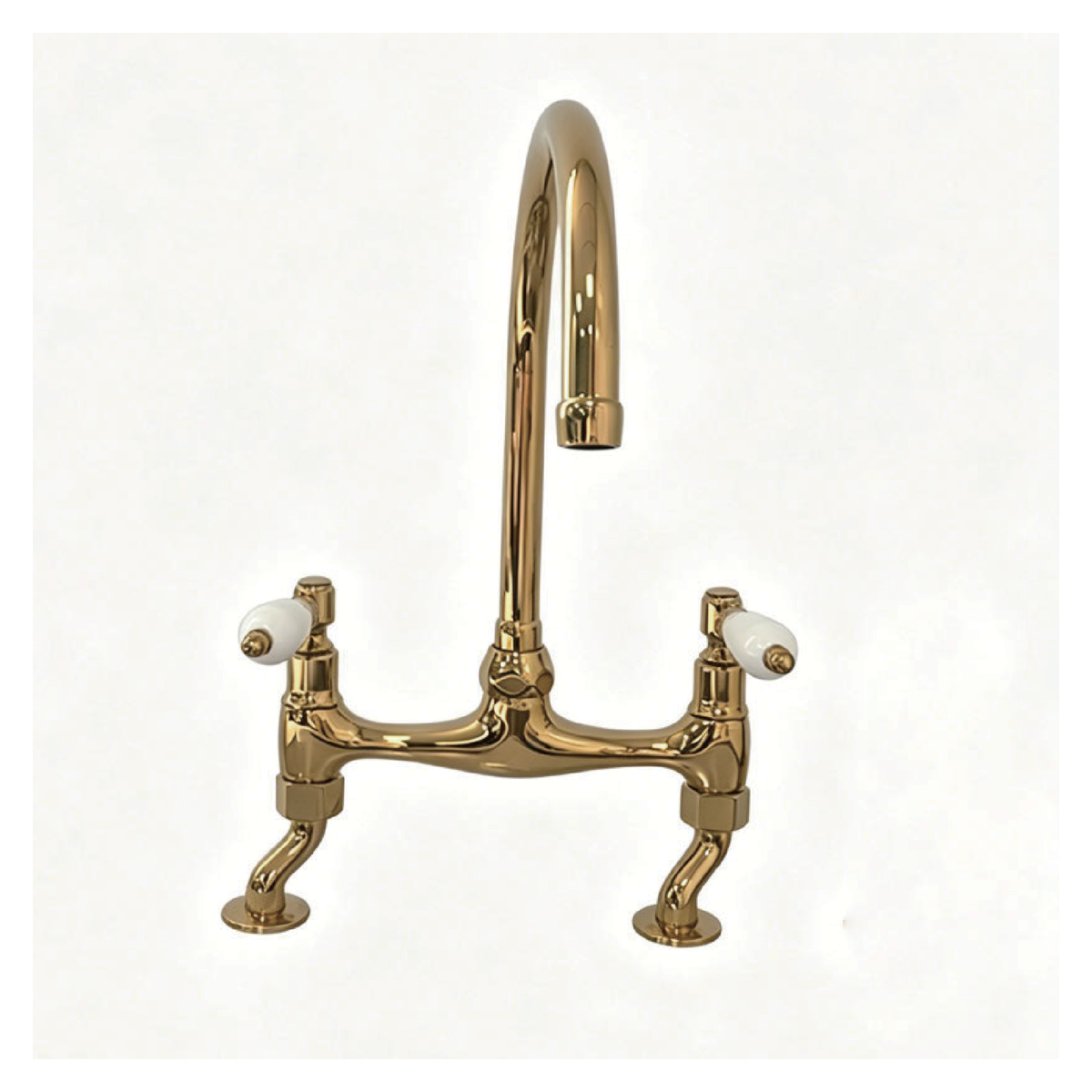
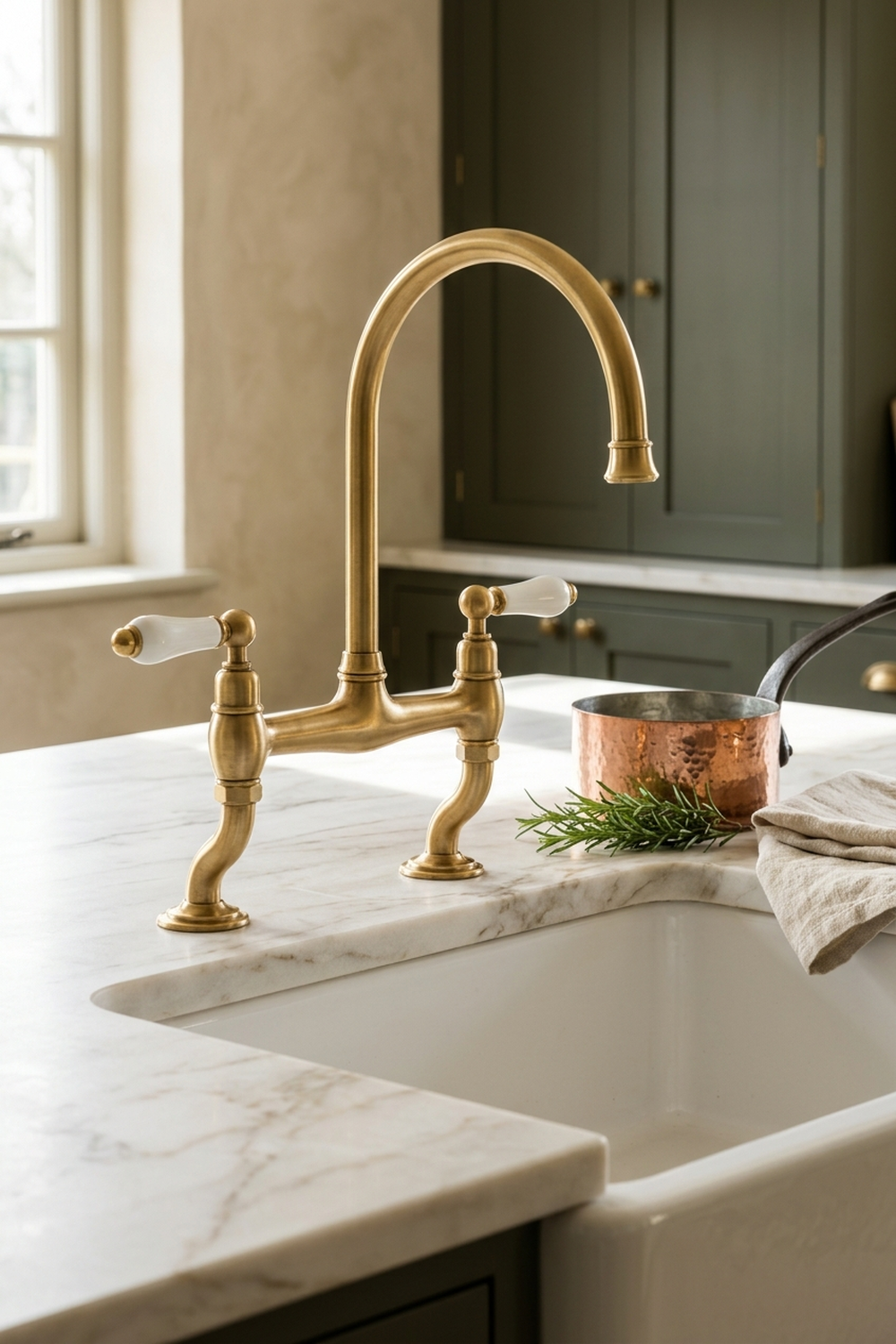
Handcrafted Solid Living Brass