Pull-Down vs. Side Spray Kitchen Faucets: The Architectural Unlacquered Brass Guide
When designing a luxury bespoke kitchen with unlacquered living brass fixtures, one of the most consequential functional decisions is choosing between an integrated pull-down spray wand and an independent deck-mounted side sprayer. This comprehensive monograph evaluates plumbing rough-ins, water pressure mechanics, countertop drilling footprints, and heirloom aesthetics.
Shop Featured Solid Unlacquered Brass Fixtures From This Study
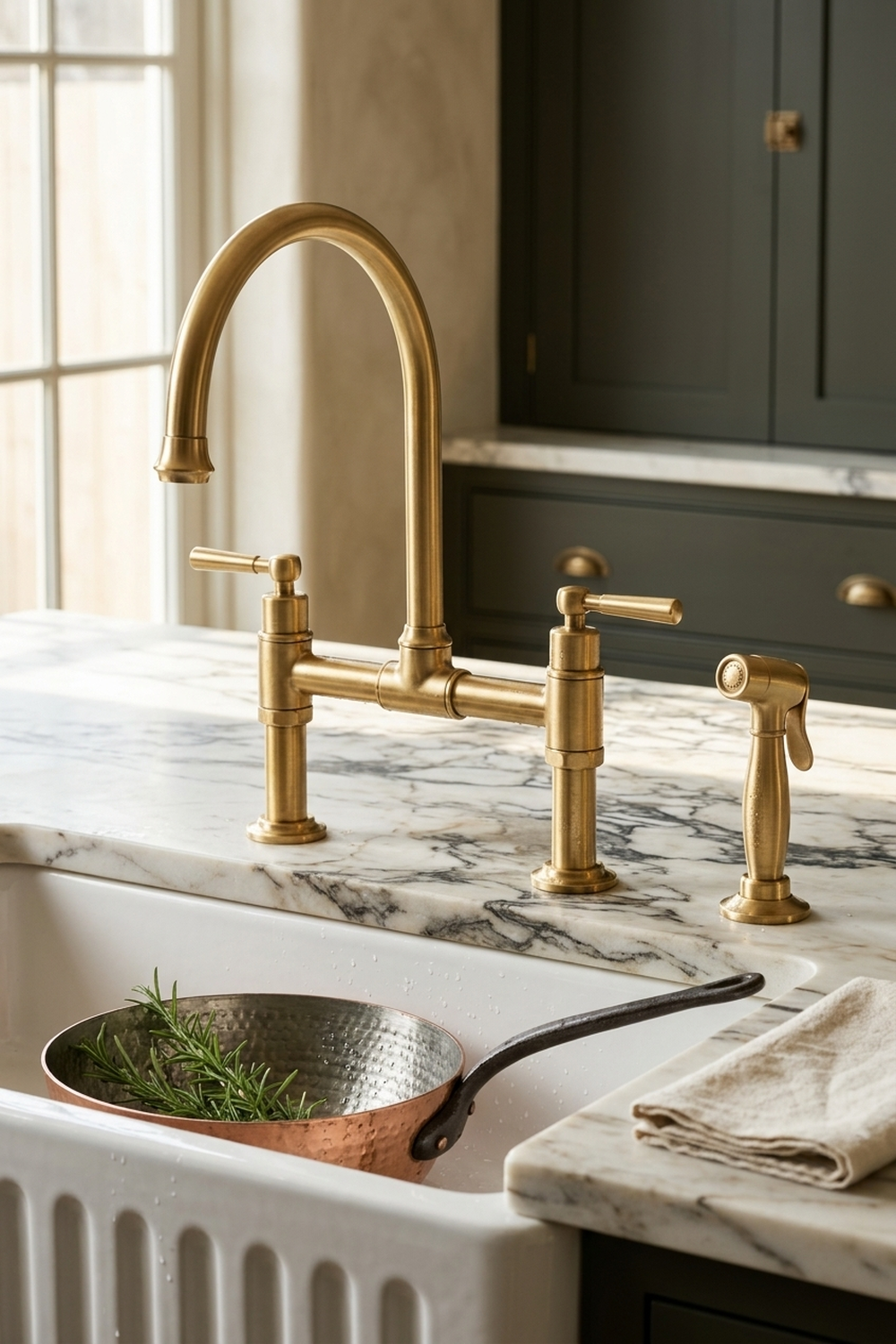
1. The Core Architectural Dilemma: Integrated Wand vs. Independent Spray
In bespoke scullery and open kitchen design, the plumbing fixture is not merely a utility; it is the primary visual centerpiece of the room. Homeowners selecting unlacquered living brass often struggle to balance historic European design authenticity with the rigorous daily demands of modern culinary cooking.
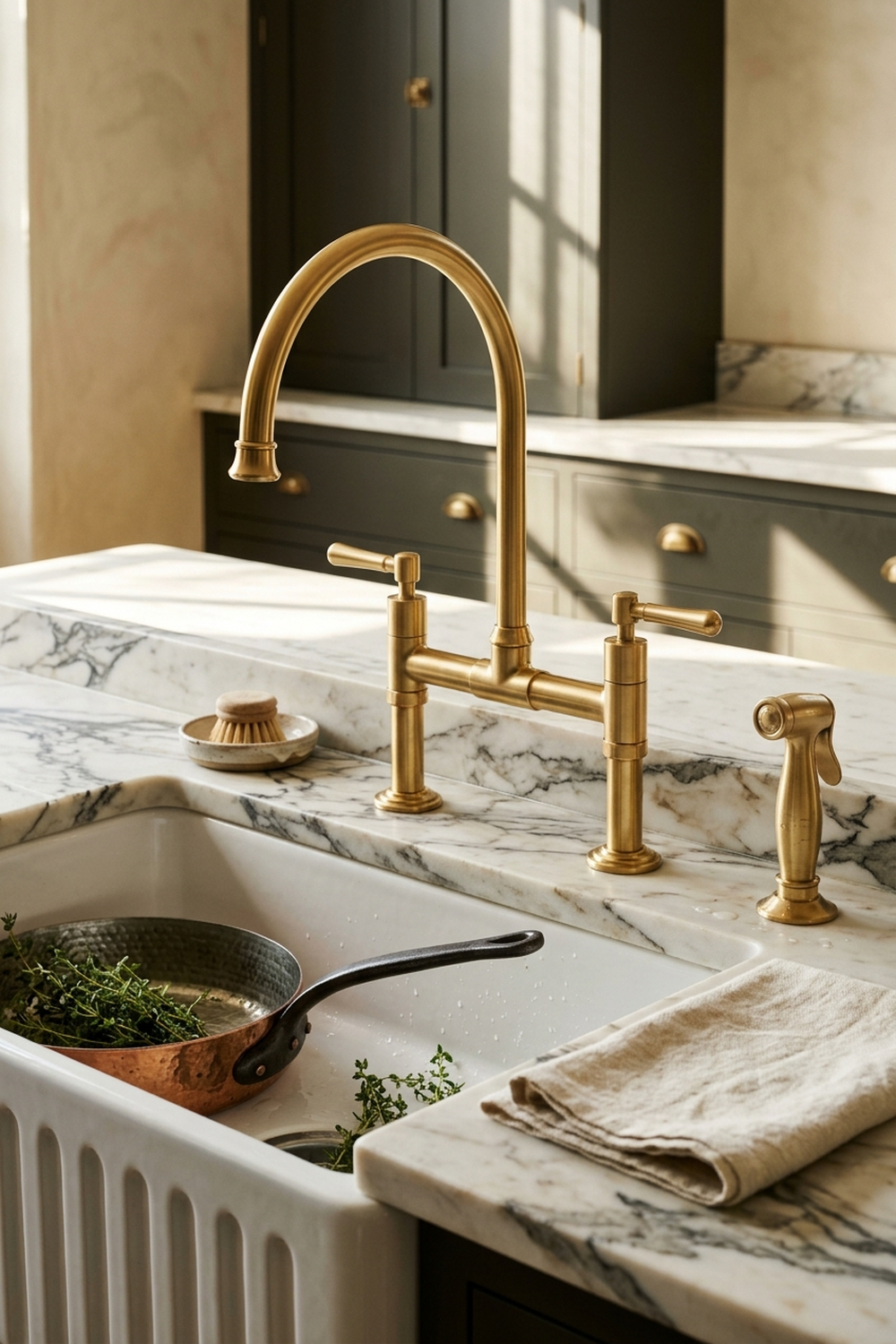
Historically, luxury brass fixtures either had no sprayer at all or utilized a separate 4-hole independent brass side spray mounted adjacent to the bridge mixer. Today, metallurgical advancements allow integrated pull-down spray heads concealed directly inside the cast brass spout tip, eliminating the need for extra countertop drillings.
Artisan Solid Living Brass Featured in This Study
2. Comparative Specification Matrix
| Feature | Integrated Pull-Down (MB-KBF-009 / MB-CUL-011) | Independent Side Spray (MB-SPR-030) | Glass Rinser (MB-RIN-033) |
|---|---|---|---|
| Countertop Holes | 1 Hole (Monobloc) or 2 Holes (Bridge) | Requires +1 Separate Hole | Requires +1 Dedicated Hole |
| Spray Modes | Dual (Aerated Stream & High-Velocity Needle) | Single High-Pressure Rinse Blast | 360-Degree Inverted Multi-Jet Blast |
| Hose Reach | 13.4" Extension with Gravity Counterweight | 48" Reinforced Braided Brass Hose | Countertop Flush Stationary |
| Aesthetic Mood | Modern Chef Scullery & Contemporary Farmhouse | Classic French Manor & Victorian Estate | Luxury Coffee Bar & Sommelier Station |
| Base Metallurgy | 100% Solid Unlacquered Living Brass | 100% Solid Unlacquered Living Brass | 100% Solid Unlacquered Living Brass |
3. When to Choose a Bridge Faucet with Pull-Down Sprayer
Choose Model MB-KBF-009 if you love the exposed architectural grandeur of an 8-inch bridge faucet over an apron-front fireclay or soapstone sink, but refuse to sacrifice the functional utility of rinsing deep roasting pans, Dutch ovens, and sink basin corners.
Because the pull-down wand docks seamlessly into the high-arc gooseneck spout, your countertop remains pristine and uncluttered, requiring zero auxiliary sprayer holes in your marble or quartzite slab.
4. When to Choose a Modern Monobloc Culinary Pull-Down Faucet
Choose Model MB-CUL-011 if your kitchen features a minimalist marble island, prep sink, or transitional scullery where clean sightlines are paramount. Requiring only a single 1-3/8" hole, this fixture delivers full commercial chef functionality with a forward-rotating single lever that prevents backsplash contact.
With 10 inches of unencumbered aerator clearance and a 13.4-inch pull-down reach, it handles oversized stockpots with effortless grace.
5. Living Brass Patina Evolution on Sprayer Fixtures
Unlike mass-market clear-coated faucets that peel when exposed to kitchen steam, true unlacquered living brass naturally oxidizes into a self-healing golden-bronze patina.
Because sprayer handles and wands receive direct contact from water and touch, they develop organic patina highlights where high-touch areas remain gleaming gold while recessed curves deepen into warm antique bronze.
Conservator's PrincipleNever introduce abrasive steel wool or caustic ammonia-based bathroom cleaners to raw unlacquered brass. Warm water with natural soap cleans dirt without stripping accumulated antique patina; a 30-second wipe with jeweler’s rouge or brass paste resets to Day 01 mirror gold anytime.
Frequently Addressed Inquiries
Which has higher water pressure: an integrated pull-down wand or an independent side sprayer?
Independent side sprayers typically deliver higher concentrated blast pressure because they utilize an under-sink mechanical diverter valve that routes 100% of line water pressure through a narrow, focused spray head orifice when the thumb trigger is depressed. Integrated pull-down wands offer superior versatility with instant push-button toggling between gentle aerated stream and wide spray pattern.
Can you add a pull-down sprayer to a traditional unlacquered brass bridge faucet?
Yes. While historic bridge faucets featured fixed spouts, Medina Brass engineered model MB-KBF-009 with a central column that routes a heavy-duty braided retraction hose directly through the cast gooseneck spout, providing full pull-down convenience while preserving authentic European 8-inch bridge aesthetics.
How many countertop holes are required for a bridge faucet with a side sprayer vs a pull-down faucet?
A standard bridge faucet with independent side spray requires 3 or 4 countertop holes (2 for bridge legs, 1 for side spray, and optionally 1 for a soap dispenser). In contrast, a modern monobloc culinary pull-down faucet (such as MB-CUL-011) requires only 1 single countertop hole, making it ideal for clean marble slabs and islands.
Will unlacquered brass pull-down hoses kink or fail over time?
Budget mass-market faucets use thin PVC hoses that harden and crack. Medina Brass uses multi-ply stainless steel and high-tensile braided nylon hose assemblies protected by an under-sink cast iron gravity weight ball, ensuring smooth retraction and 500,000-cycle durability.
Should I pair a glass rinser with a pull-down faucet?
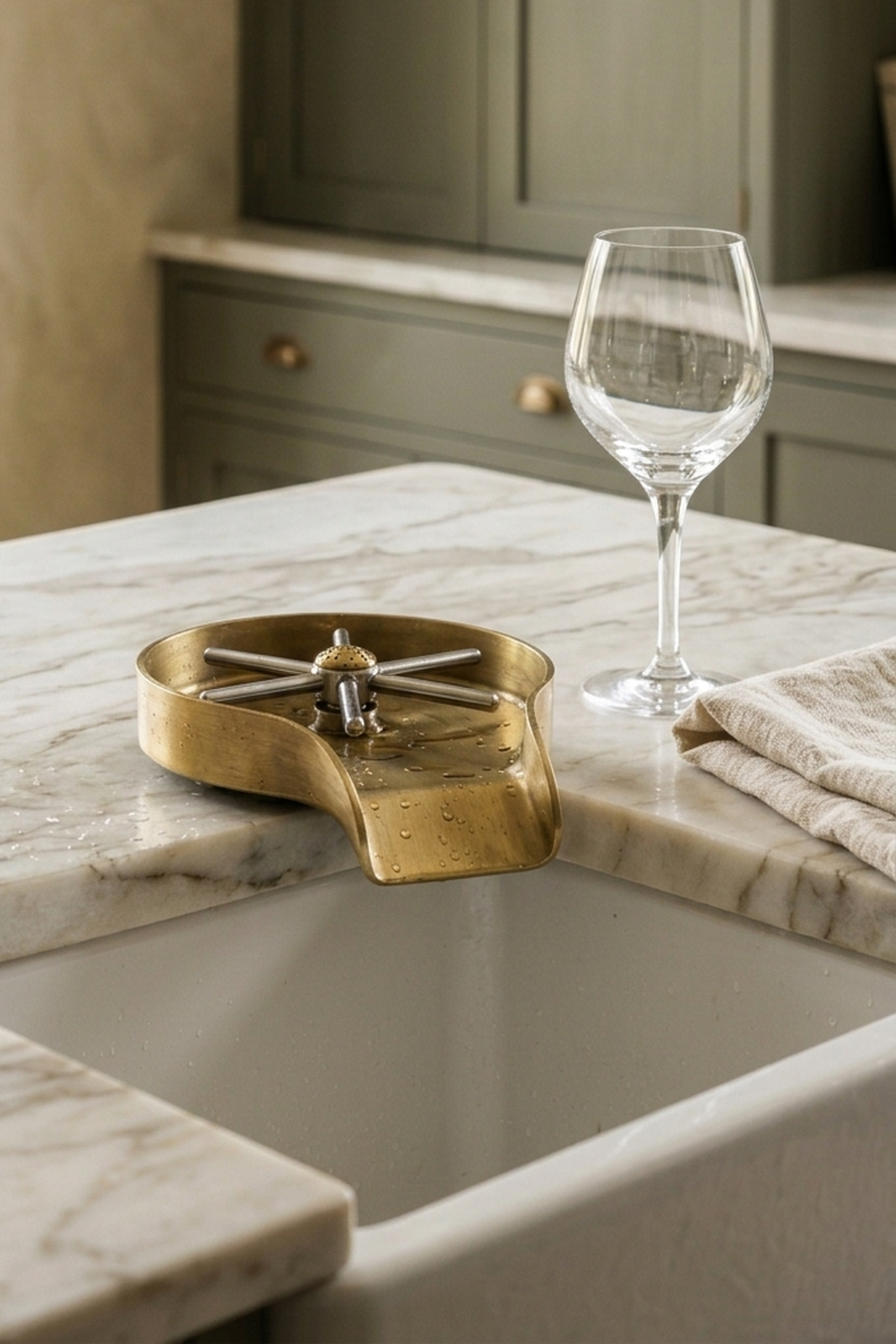
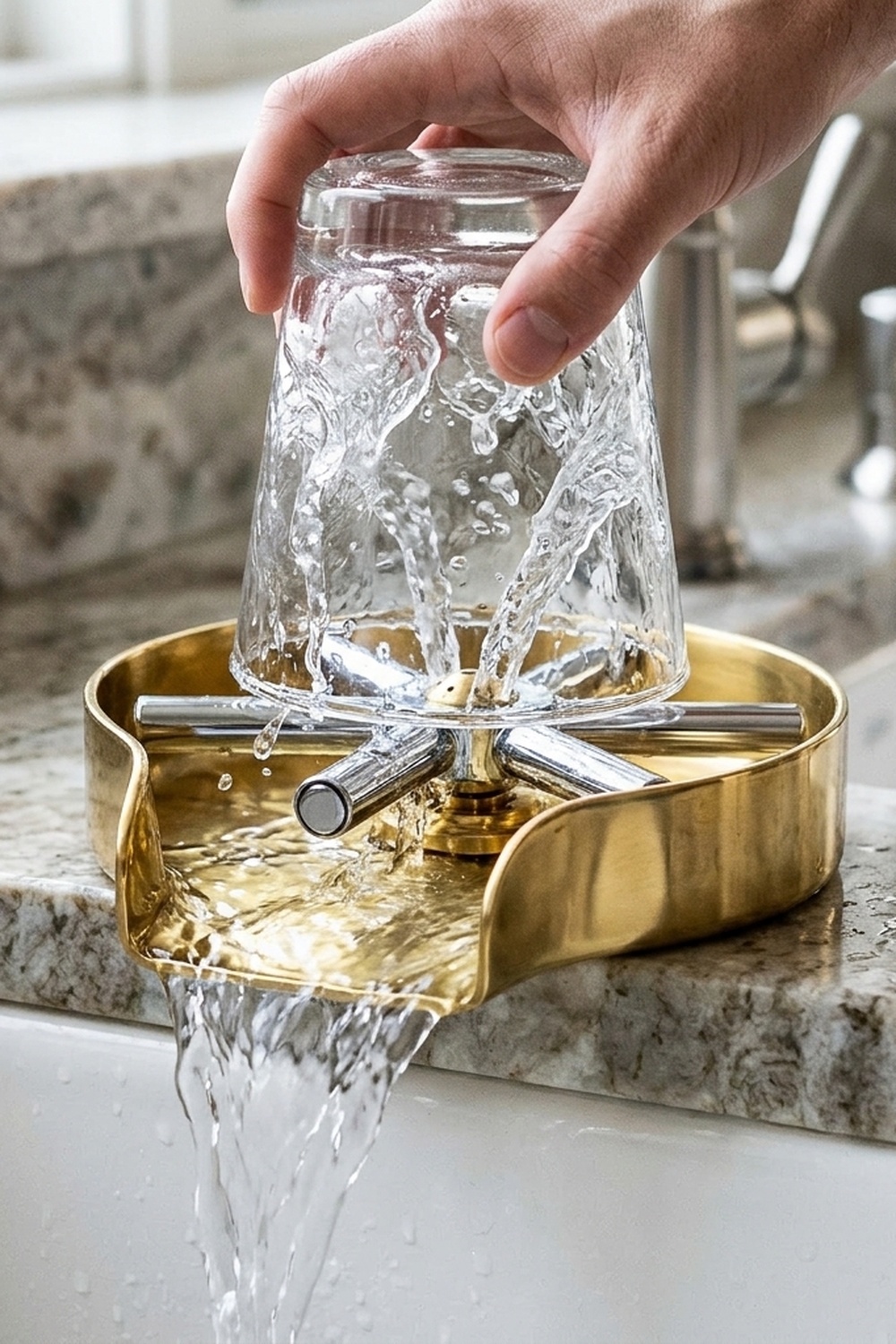
Yes. The ultimate culinary and beverage station combines a high-arc pull-down faucet (MB-CUL-011 or MB-KBF-009) with a solid brass countertop glass rinser (MB-RIN-033). The glass rinser provides instantaneous multi-jet cleaning for wine glasses, tumblers, and espresso cups, preserving the main sink for food prep.
Authoritative Standards, Codes & Technical References
Primary metallurgical benchmark for solid 65/35 copper-zinc binary alloy density (8.53 g/cm³), tensile yield, and natural cuprous oxide passivation.
North American mechanical engineering standard governing US 1/2" NPT thread geometry, hydrostatic burst pressure (500 PSI), and 500,000-cycle ceramic disc valve endurance.
Museum and historic preservation protocol for non-abrasive cleaning, microcrystalline wax sealing, and organic patina stabilization on unlacquered architectural brass.
Federal clinical registration confirming uncoated solid brass and copper alloys continuously eliminate 99.9% of surface bacteria within 2 hours.
Handcrafted Brass Featured in This Study
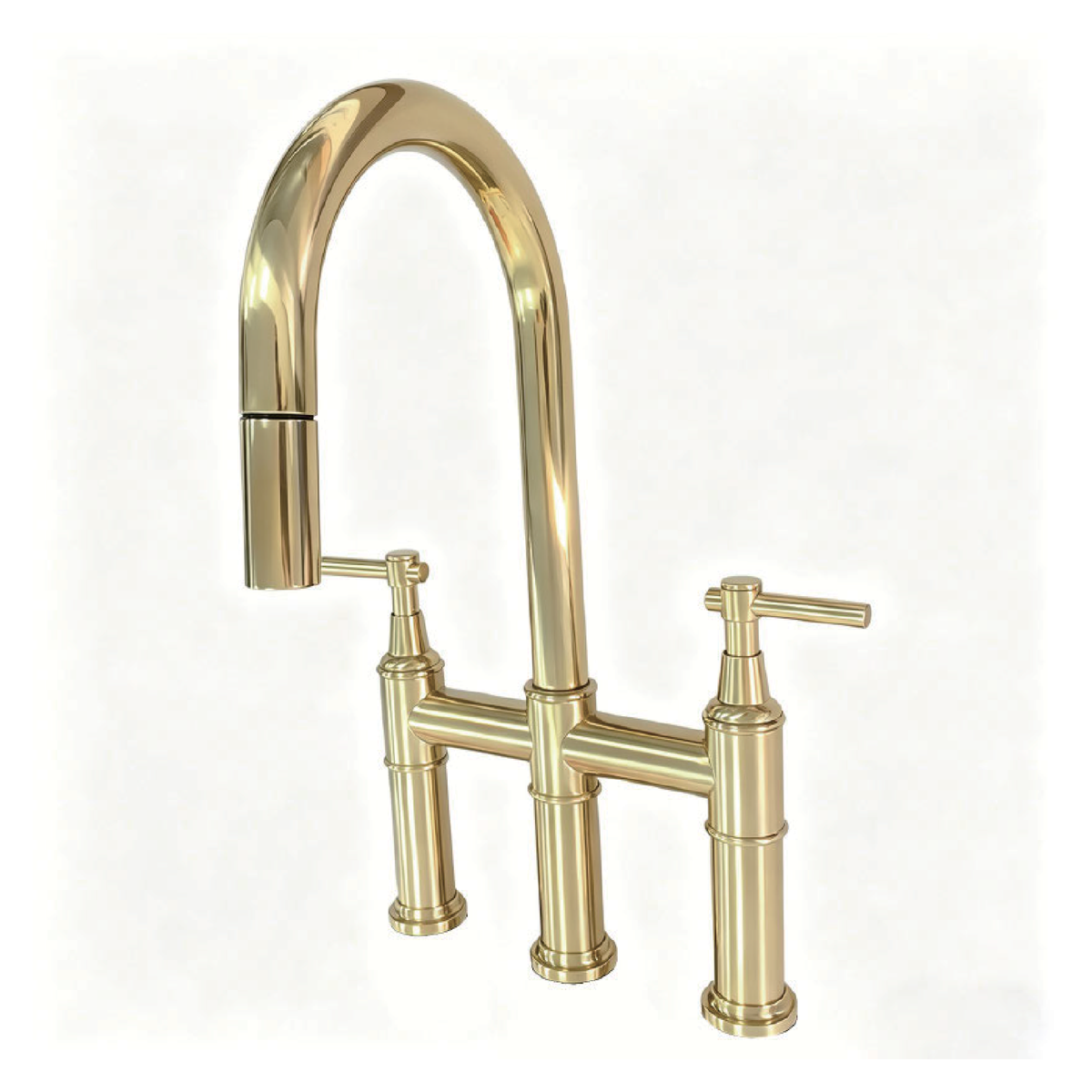
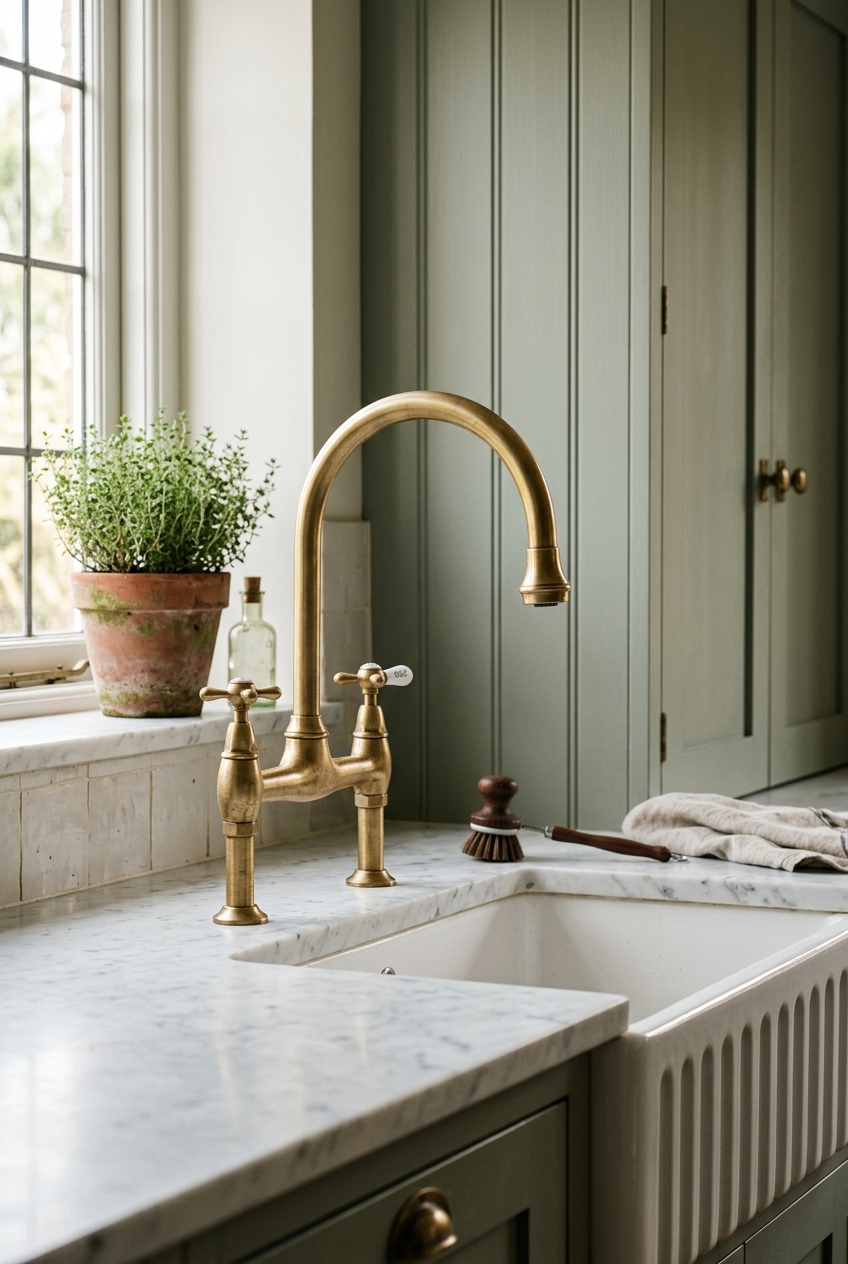
Unlacquered Solid Brass Bridge Kitchen Faucet — Antique Brass Straight-Leg Mixer
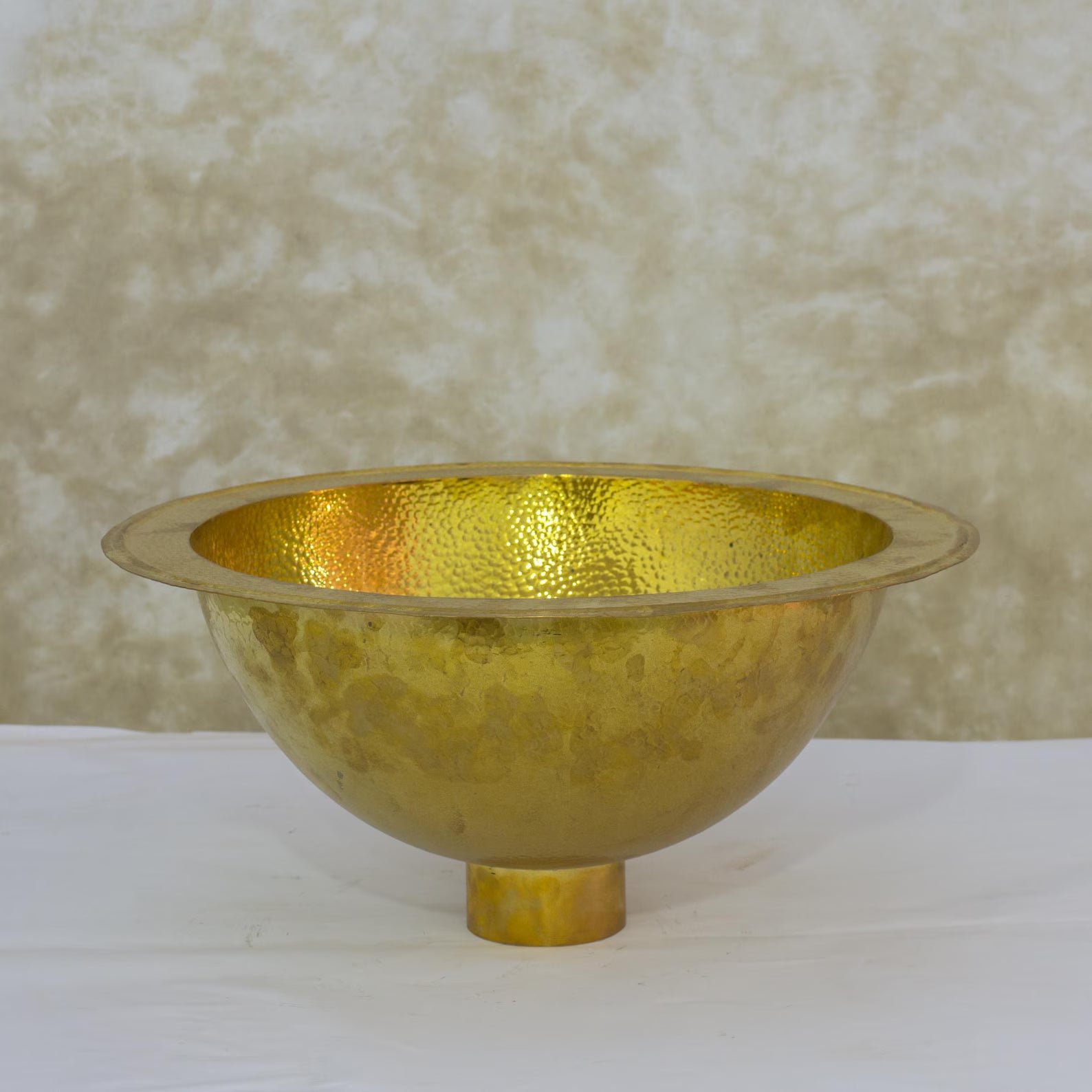
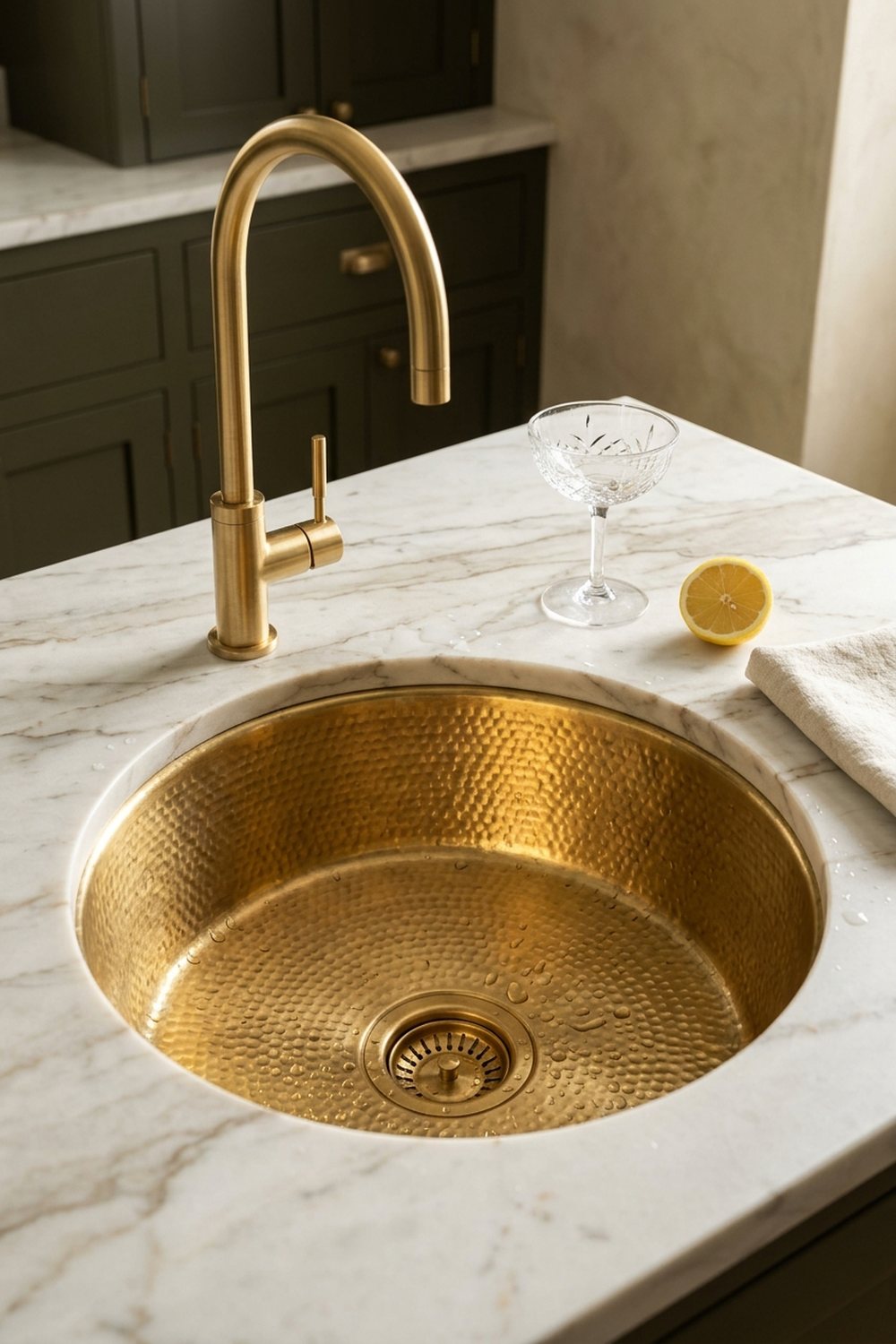
Solid Brass Kitchen & Bar Sink — 15" Hand-Hammered Unlacquered Prep Basin
Handcrafted Unlacquered Brass Bridge Kitchen Faucet with Integrated Pull-Down Sprayer
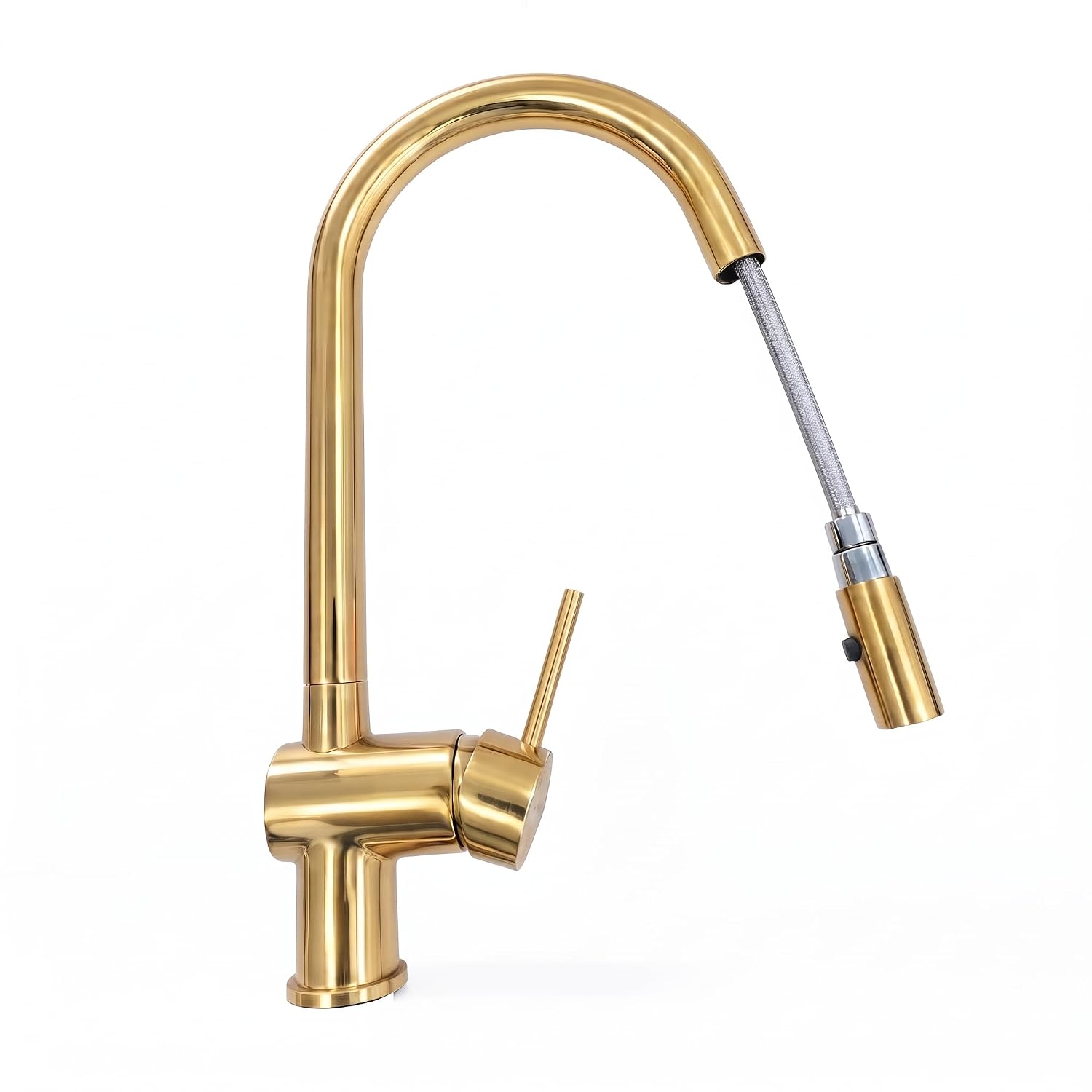
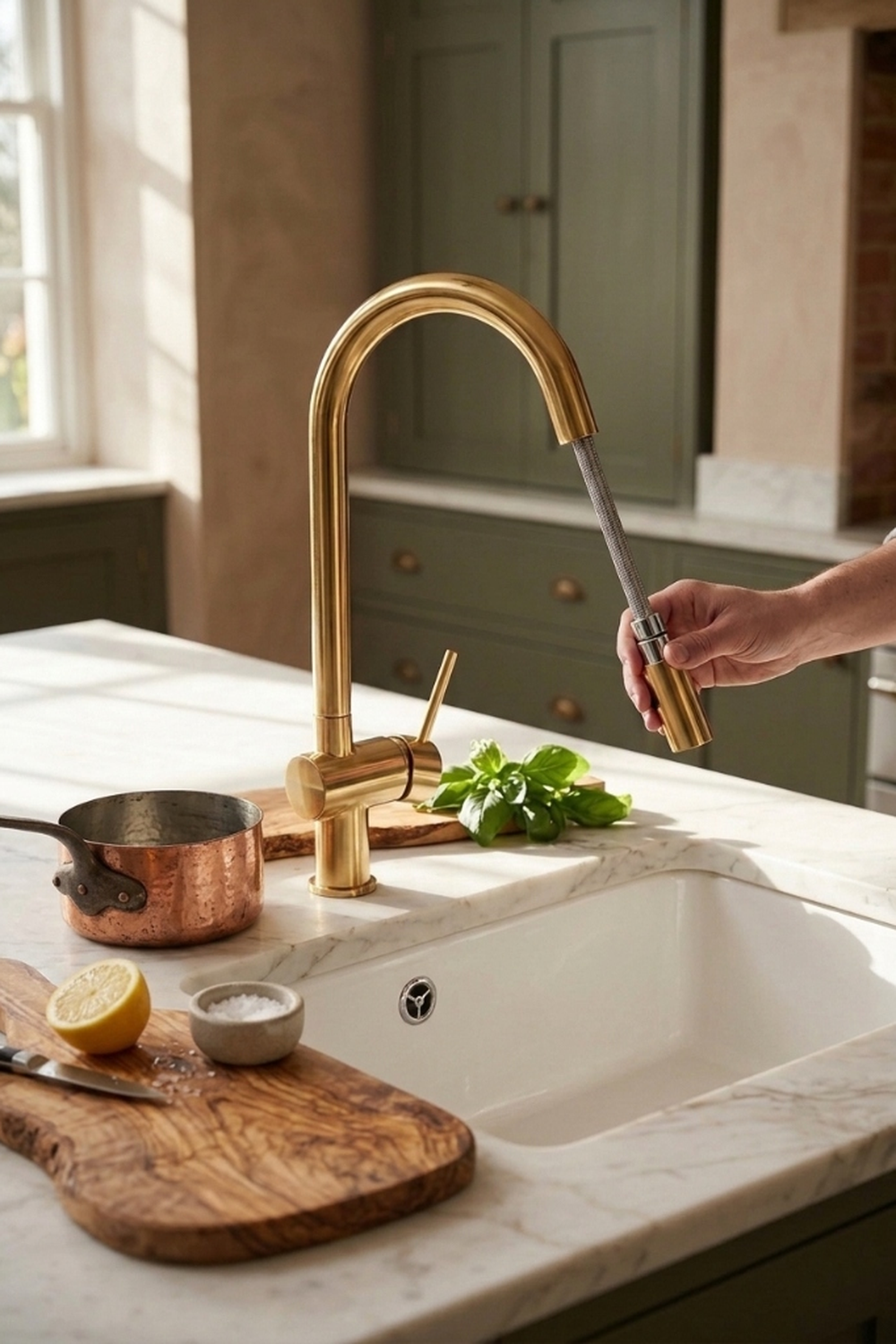
Modern Monobloc Culinary Pull-Down Kitchen Faucet in Solid Living Brass
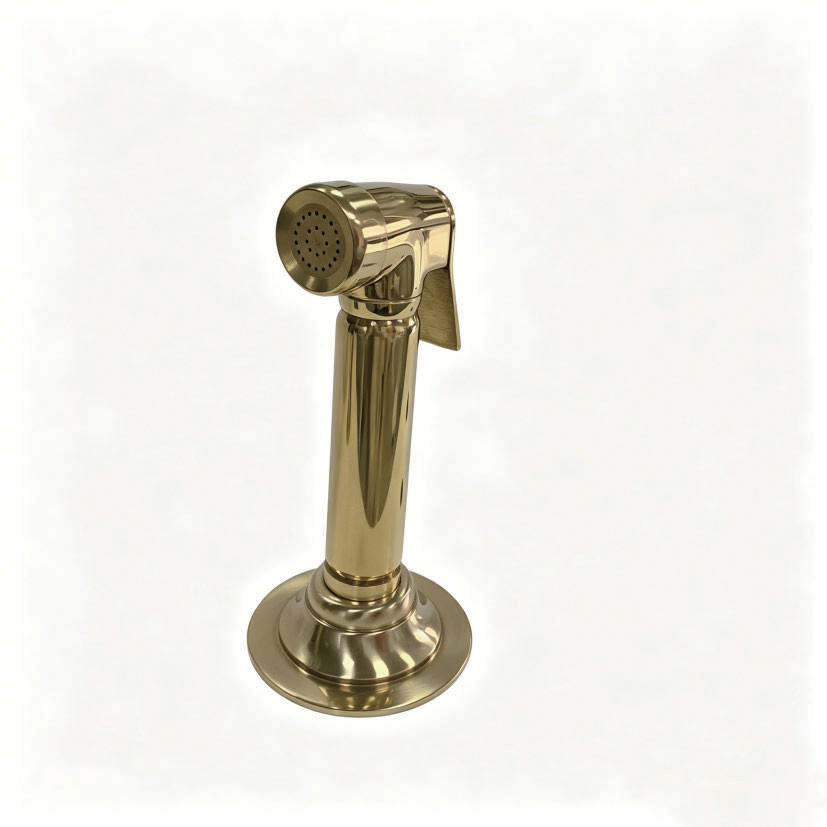
Handcrafted Solid Living Brass