The Architectural Pot Filler Faucet Guide: Specs, Rough-In Height & Living Brass Care
A stove-side pot filler faucet transforms kitchen culinary ergonomics by delivering high-flow water directly over cooking ranges. Specifying solid unlacquered brass pot fillers requires coordinating in-wall rough-in heights, dual-joint swing arm clearance, dual shutoff valve mechanics, and living metal patina development around high-heat cooking zones.
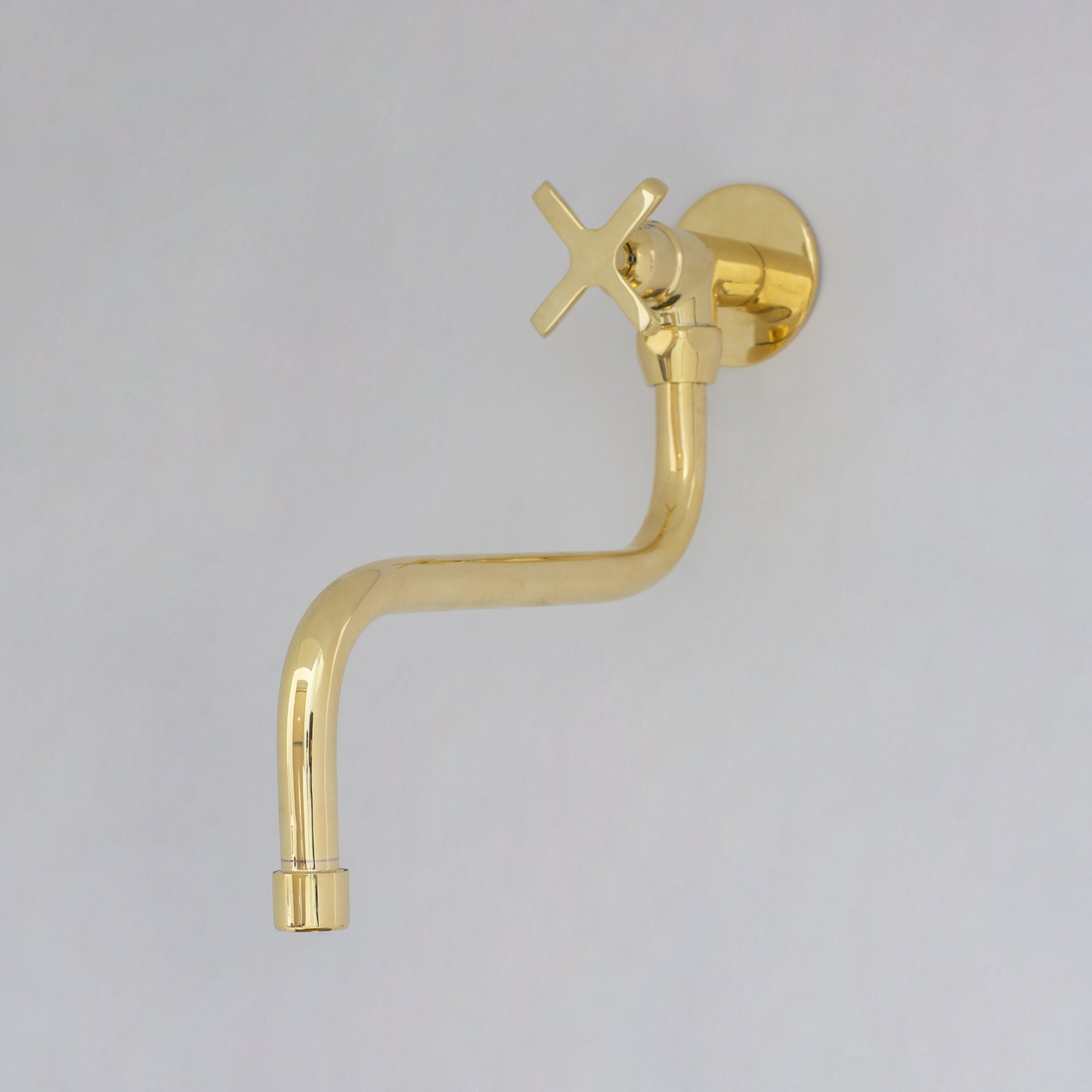
Culinary Ergonomics: Dual Articulating Arms & 24-Inch Spout Reach
In luxury kitchen architecture, the pot filler faucet is both a statement centerpiece and an essential culinary workhorse. Placed directly against the stove backsplash, an articulating pot filler eliminates the physical strain of carrying heavy 15-to-20-pound water-filled stockpots from the main sink to the range.
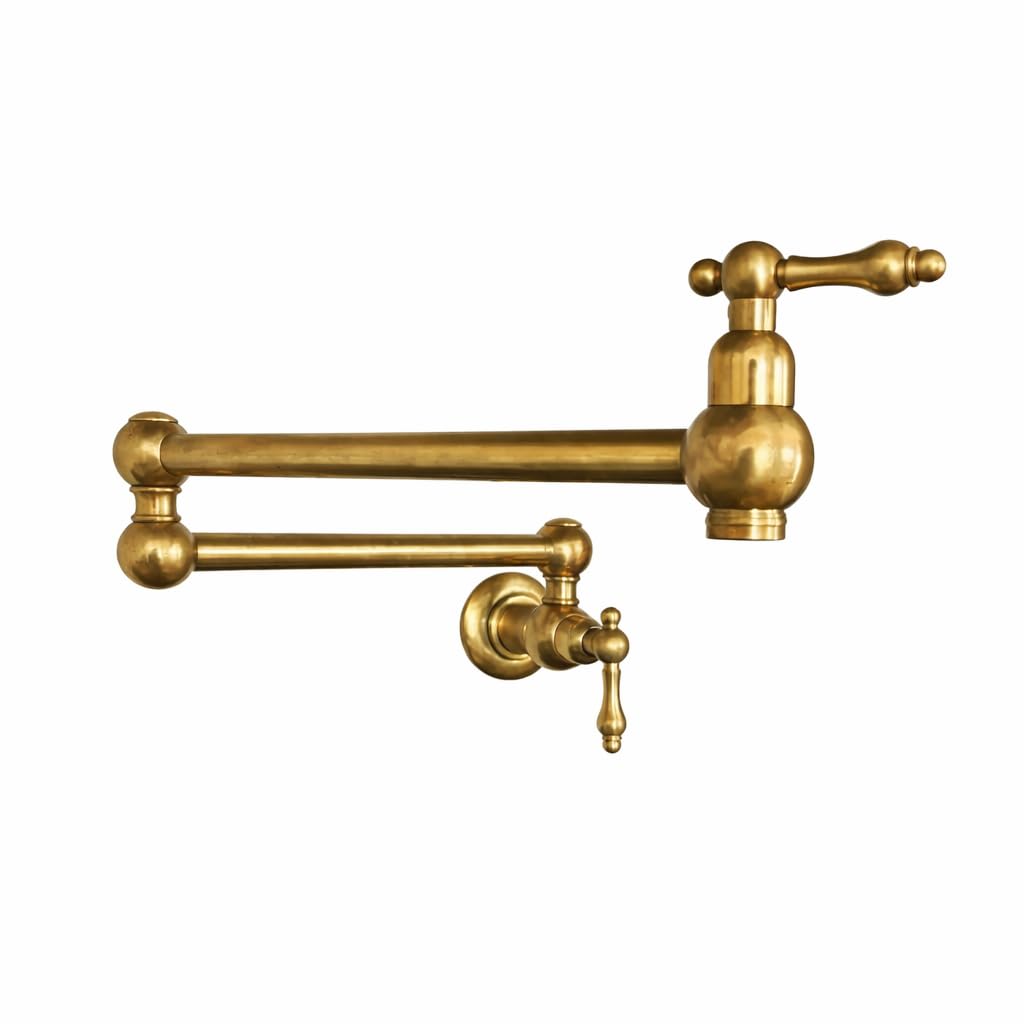
Our master-crafted Moroccan pot fillers feature a dual-jointed swing arm assembly lathed from solid 65/35 virgin brass tubing. With a full 24-inch horizontal radius, the spout smoothly extends across all 4 to 6 burners on professional 36-inch, 48-inch, and 60-inch culinary ranges.
Precision 360-degree swivel joints with internal double Viton O-rings ensure silky friction-free motion. When cooking is complete, the arm folds back completely flat against the backsplash, projecting less than 3 inches into the cooking envelope.
Rough-In Sizing: Exact Height Above Range Burners (12"–14")
Proper rough-in placement must be coordinated during wall framing before backsplash tiling or slab installation.
The universal specification standard is 12 to 14 inches above the cooking surface grates. Homeowners with specialty 16-to-20-quart stockpots or pressure canners should measure their vessel with lid removed, then position the cold-water rough-in 2.5 inches above that highest rim.
The wall supply requires a standard 1/2-inch NPT female brass drop-ear elbow secured to a horizontal 2x4 wood blocking brace behind the drywall. This rigid framing prevents any arm flex or sagging when the heavy brass spout is fully extended.
Dual Shut-Off Safety: Wall Flange Valve + Spout Tip Valve
Safety is paramount for fixtures mounted without a dedicated drainage basin. Medina Brass pot fillers incorporate dual independent 1/4-turn ceramic disc valves.
The primary valve sits at the wall mounting escutcheon, while the secondary valve rests at the dispensing spout head. Both valves must be opened to initiate water flow.
This dual-valve architecture guarantees that if a handle is accidentally brushed while stirring or sautéing, no water will discharge over hot grease or electrical burner controls. High-performance ceramic disc cartridges are rated for 500,000 smooth on/off cycles.
Deck-Mounted vs. Wall-Mounted Pot Fillers: Layout Selection
While backsplash wall-mounted pot fillers represent 85% of residential specifications, kitchen island cooktops demand a specialized approach.
For island ranges where no rear backsplash exists, a deck-mounted pot filler installs directly through the countertop or island ledge. Deck models feature a vertical stanchion (typically 8 to 12 inches high) supporting the articulating swing arm.
Whether wall-mount or deck-mount is selected, ensure the supply line is thoroughly flushed before screwing in the brass cartridge to clear construction debris and soldering flux.
Heat, Steam & Cooking Grease: Patina Evolution of Raw Living Brass
Because our Moroccan pot fillers are cast and lathed from solid unlacquered living brass, they react dynamically to ambient kitchen environments.
The radiant heat rising from stovetop burners, combined with moisture from boiling broths, accelerates surface patination. The lower casting and wall flange deepen into warm amber and antique bronze within 30 to 60 days.
Cooking splatters can be wiped clean with a dry microfiber cloth or warm soapy water. We apply zero synthetic lacquers, ensuring the metal breathes naturally and develops an authentic, rich European country house character.
Conservator's PrincipleNever introduce abrasive steel wool or caustic ammonia-based bathroom cleaners to raw unlacquered brass. Warm water with natural soap cleans dirt without stripping accumulated antique patina; a 30-second wipe with jeweler’s rouge or brass paste resets to Day 01 mirror gold anytime.
Frequently Addressed Inquiries
What is the correct rough-in height for a wall-mounted pot filler?
The standard installation height is 12 to 14 inches above the cooktop grates or burner elements. Measure your tallest stockpot or pasta cooker and allow at least 2 to 3 inches of clearance above its rim so it can slide easily under the spout.
Why do pot filler faucets require two shut-off valves?
Pot fillers operate directly over hot cooktops where unattended leaks could cause major water damage or boil-overs. Having two quarter-turn ceramic disc valves—one at the wall mounting flange and one at the tip of the articulating spout—provides dual-stage safety against accidental bump-starts and pressure surges.
Is a pot filler plumbed with hot water, cold water, or both?
Pot fillers are plumbed exclusively with a single cold-water supply line. Cooking water should always begin cold to prevent mineral leeching from home water heaters. Because the pot filler does not have a drain beneath it, single-line plumbing also simplifies in-wall rough-ins.
What water flow rate should I expect from a luxury brass pot filler?
Unlike standard sink faucets restricted to 1.5–1.8 GPM, architectural pot fillers provide unrestricted flow rates of 3.5 to 4.5 GPM at 60 PSI. This allows a 12-quart stockpot to fill in under 90 seconds.
How does cooking steam and oil splatter affect unlacquered brass pot fillers?
Hot steam and ambient airborne oils accelerate natural oxidation, imparting a gorgeous antique bronze tone to stationary joints within weeks. Splashes of pasta water or tomato sauce can leave temporary bright spots, which naturally harmonize into the patina within 10 to 14 days without chemical polishing.
Handcrafted Brass Featured in This Study