Does Brass Patina Green, Blue, or Black? Brass Patina vs. Copper & Bronze Patina Explained
Homeowners often wonder whether an unlacquered brass faucet will turn Statue-of-Liberty green or blue indoors. Explore the exact chemistry of brass patina colors over time—from honey amber and russet brown to coastal verdigris—and see how brass patina compares to pure copper and architectural bronze.
Shop Featured Solid Unlacquered Brass Fixtures From This Study
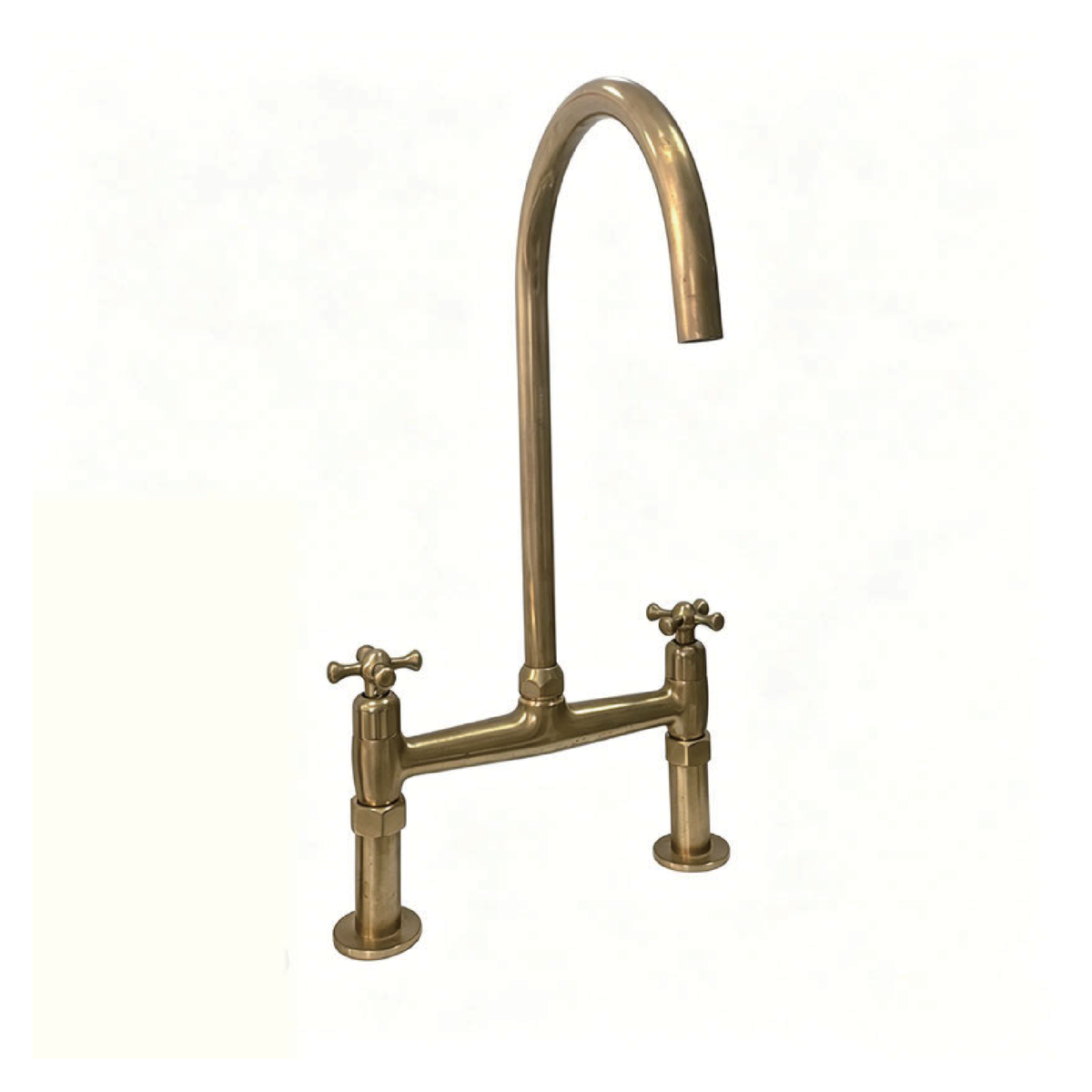
1. What Does Brass Patina Look Like Over Time? The Color Spectrum Explained
When freshly lathed in our Marrakech foundry, 65% copper / 35% zinc architectural brass gleams with a bright, mirror-warm yellow gold. Within 14 to 30 days of indoor exposure, atmospheric oxygen bonds with surface copper atoms to form a transparent microscopic layer of cuprous oxide (Cu2O), shifting the color to champagne honey and warm caramel.
Over 6 to 12 months in a kitchen or bathroom, areas untouched by fingers—such as the base escutcheon and upper gooseneck curve—deepen into a rich chestnut and espresso brown (cupric oxide), while the cross handles remain softly burnished gold from daily human touch.
Artisan Solid Living Brass Featured in This Study
2. Why Brass Turns Green or Blue Outdoors (Verdigris) vs. Warm Brown Indoors
Homeowners sometimes fear their indoor brass faucet will turn bright green like outdoor copper roofs. In reality, green verdigris (basic copper carbonate) and turquoise-blue patina (copper chloride/sulfate) require prolonged exposure to atmospheric carbon dioxide dissolved in rain, coastal sodium chloride mist, or stagnant hard water.
In an indoor kitchen or bathroom, your faucet will develop a smooth brown patina. If a tiny ring of green ever appears around the base where hard tap water was left pooling for weeks, a 15-second wipe with a cloth dipped in warm white vinegar dissolves the green carbonate immediately.
3. Brass Patina vs. Copper Patina vs. Bronze Patina: A Specifier’s Comparison
Understanding how the three noble copper alloys age helps designers coordinate mixed-metal interiors: Copper (100% Cu) is soft, salmon-pink when raw, and reacts aggressively with kitchen acids. Bronze (Copper + Tin) is dark reddish-brown and turns almost black. Solid 65/35 Brass (Copper + Zinc) offers the ideal middle ground: harder and more durable than pure copper, yet warmer and more luminous than dark statuary bronze.
Conservator's PrincipleNever introduce abrasive steel wool or caustic ammonia-based bathroom cleaners to raw unlacquered brass. Warm water with natural soap cleans dirt without stripping accumulated antique patina; a 30-second wipe with jeweler’s rouge or brass paste resets to Day 01 mirror gold anytime.
Frequently Addressed Inquiries
Does brass patina rub off on hands, clothes, or white towels?
No. Standard indoor brown cuprous-oxide patina on 65/35 solid brass is molecularly bonded to the metal surface and will never rub off onto hands or damp white bath towels.
What is the difference between brass patina vs. copper patina vs. bronze patina?
Pure copper (100% Cu) oxidizes rapidly through orange-red to dark chocolate and powdery green verdigris. Architectural bronze (90% copper, 10% tin) darkens to a uniform near-black "oil-rubbed" statuary tone. Solid 65/35 brass (65% copper, 35% zinc) develops the warmest, most variegated patina—combining burnished golden highlights on touched handles with rich chestnut-brown depth.
Are brass pipes and solid brass faucets safe for drinking water?
Yes, modern virgin 65/35 binary brass is 100% safe for drinking water. Unlike pre-2014 leaded red brass plumbing fittings, Medina Brass fixtures are cast from lead-free virgin copper-zinc alloy meeting US Safe Drinking Water Act Section 1417 (<0.25% weighted average lead on wetted surfaces) and NSF/ANSI 61 standards.
Authoritative Standards, Codes & Technical References
Primary metallurgical benchmark for solid 65/35 copper-zinc binary alloy density (8.53 g/cm³), tensile yield, and natural cuprous oxide passivation.
North American mechanical engineering standard governing US 1/2" NPT thread geometry, hydrostatic burst pressure (500 PSI), and 500,000-cycle ceramic disc valve endurance.
Museum and historic preservation protocol for non-abrasive cleaning, microcrystalline wax sealing, and organic patina stabilization on unlacquered architectural brass.
Federal clinical registration confirming uncoated solid brass and copper alloys continuously eliminate 99.9% of surface bacteria within 2 hours.
Handcrafted Brass Featured in This Study
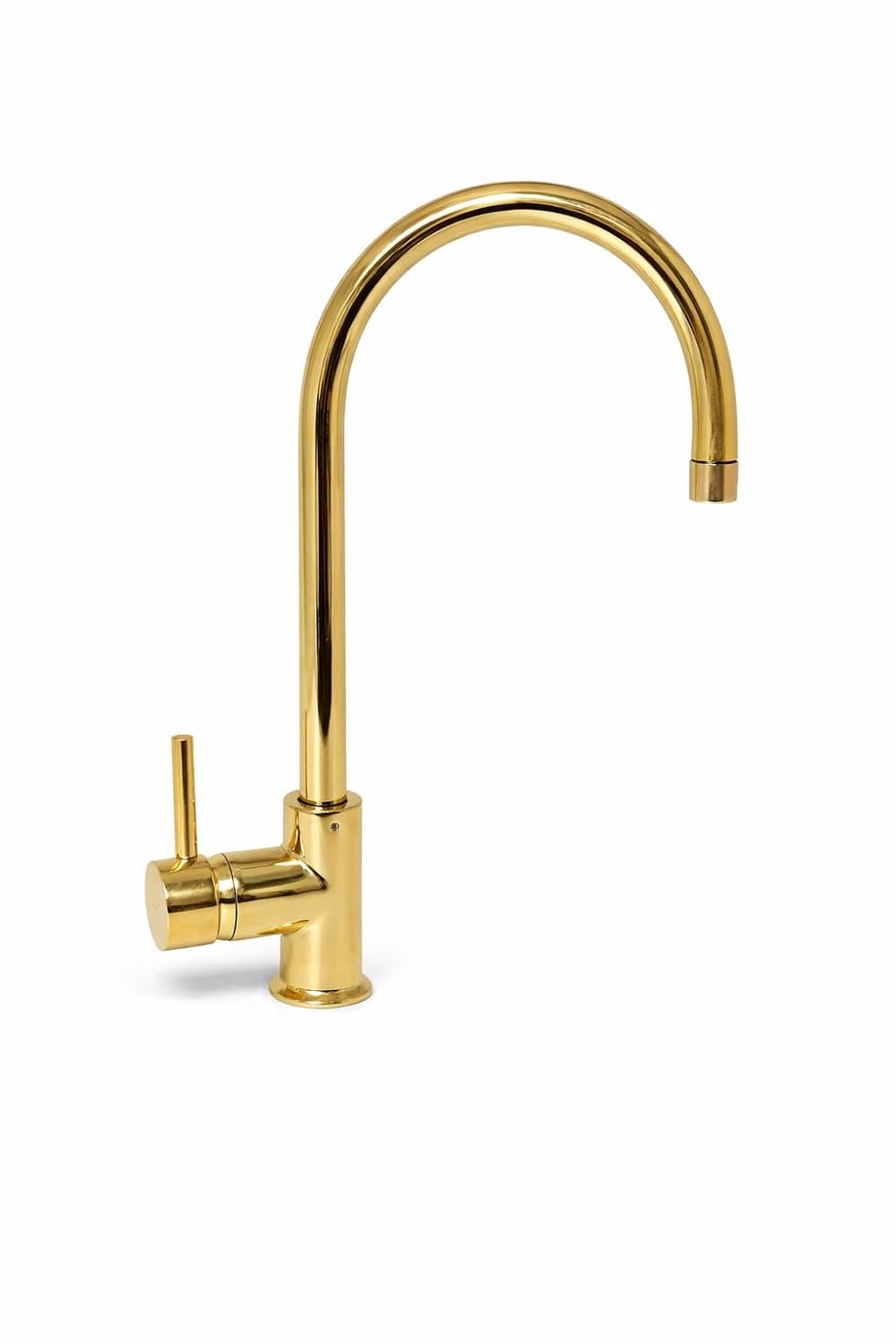
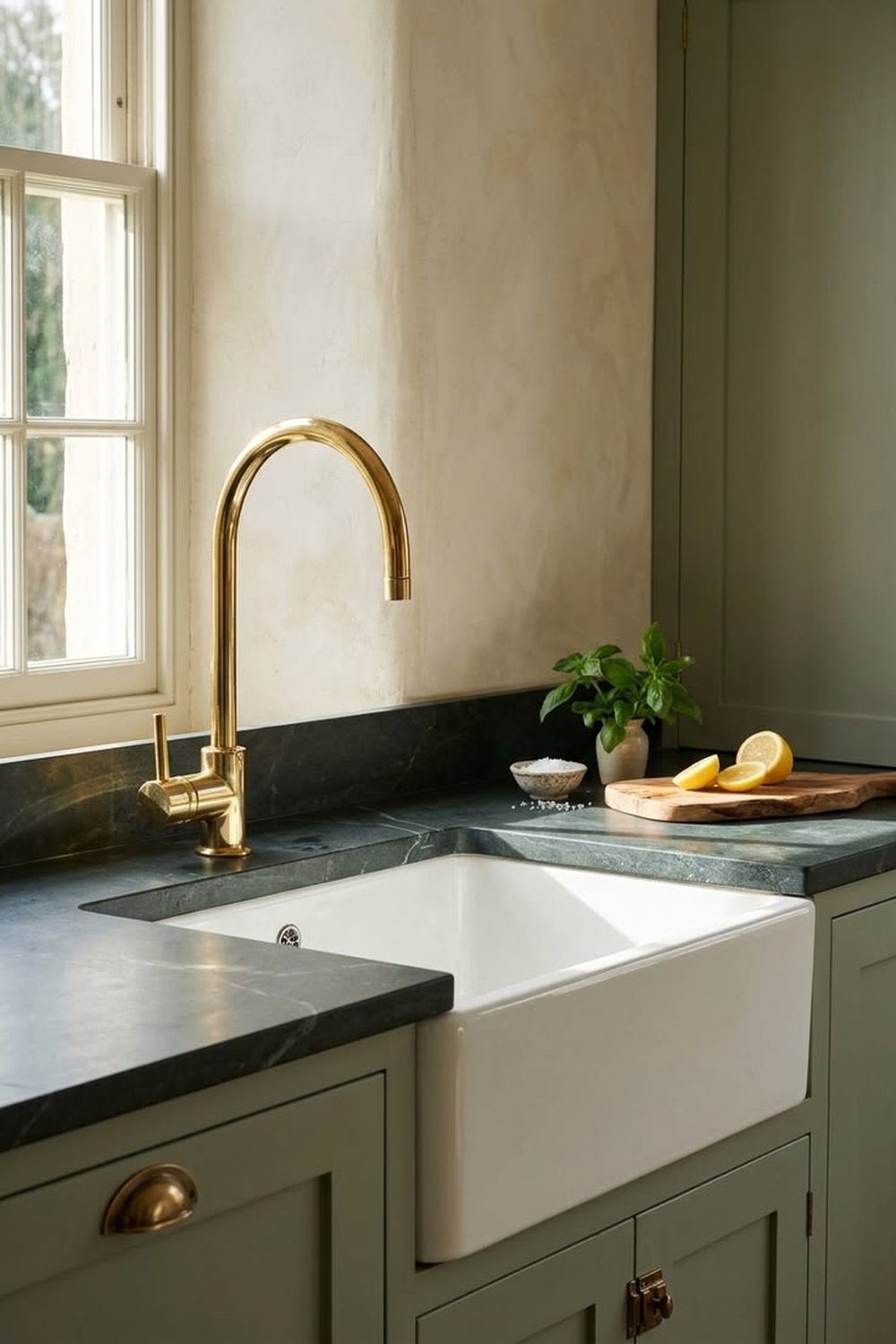
Unlacquered Brass Kitchen Faucet — Solid Brass Gooseneck Tap (Single Lever)
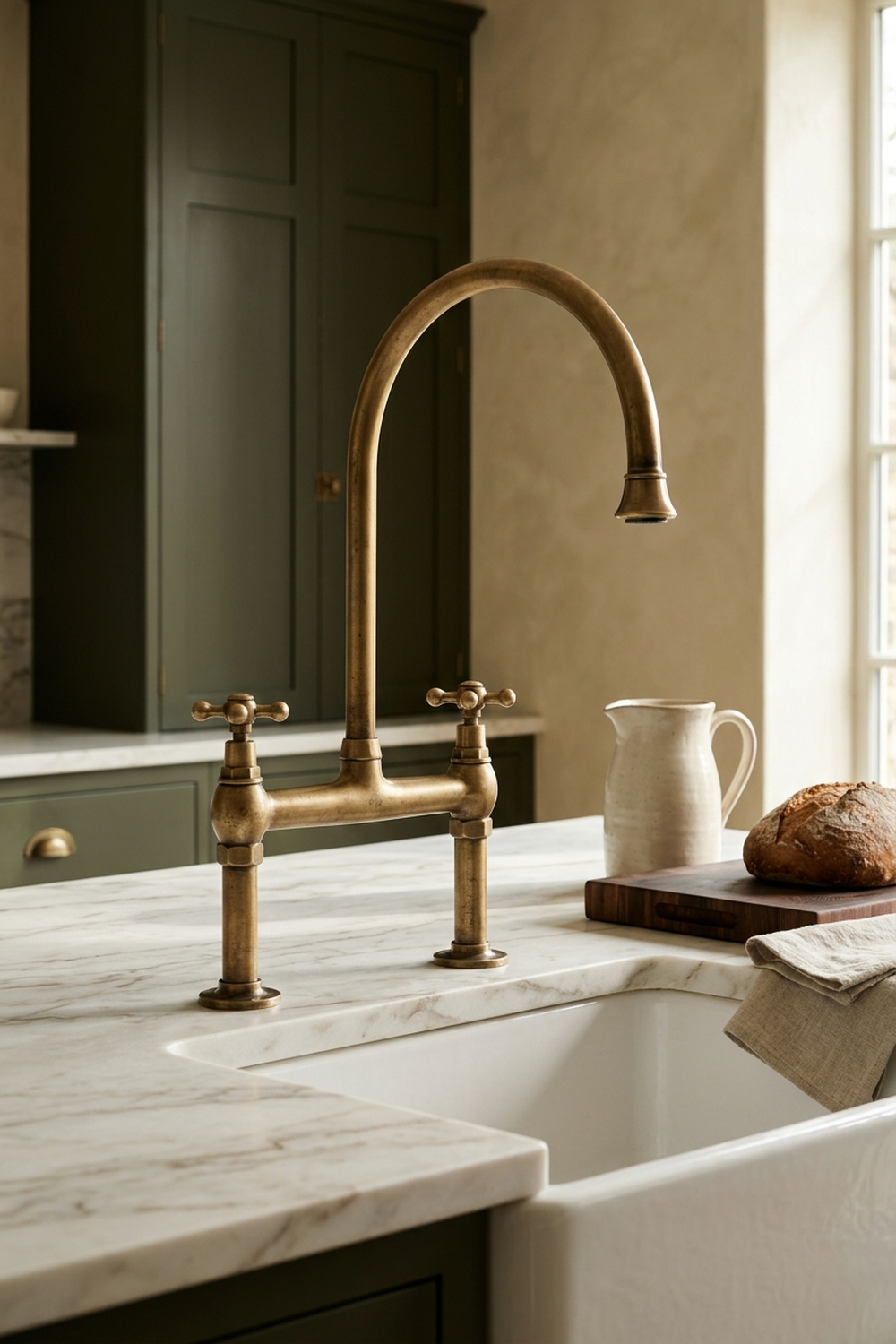
Architectural 18-Inch High-Clearance Bridge Kitchen Faucet in Aged Solid Brass
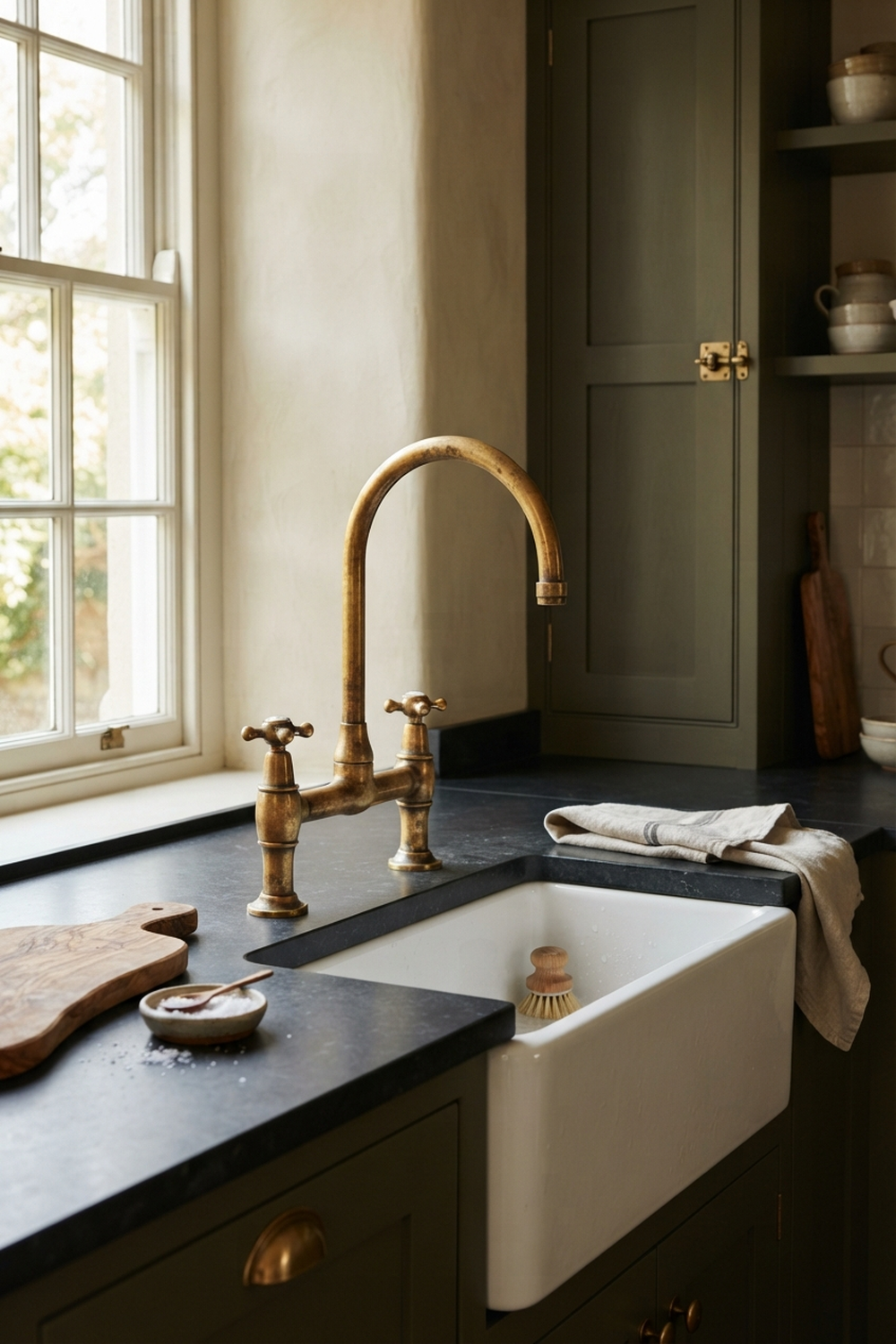
Antique Brass Bridge Kitchen Faucet with Side Sprayer — Hand-Aged Living Patina
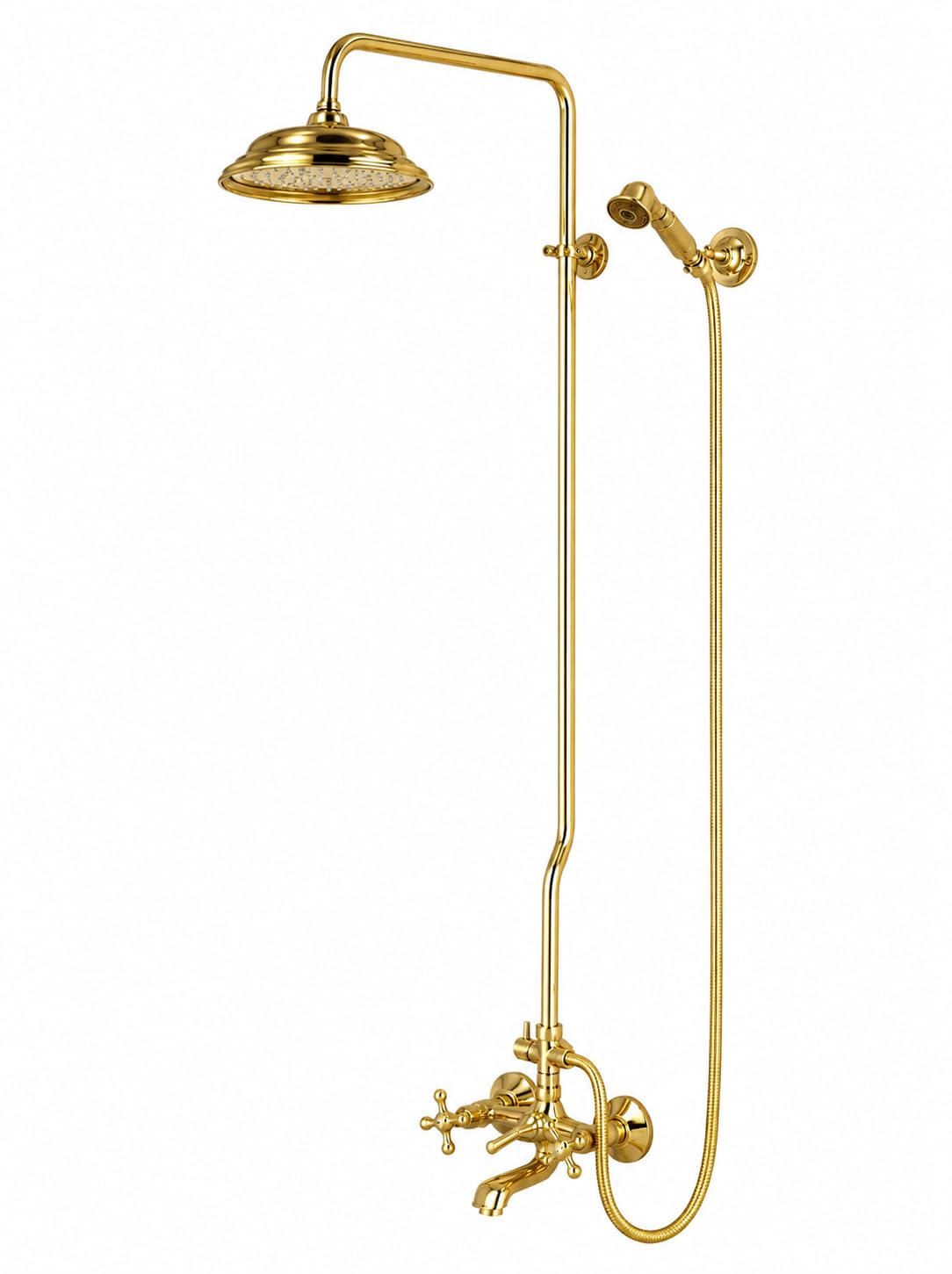
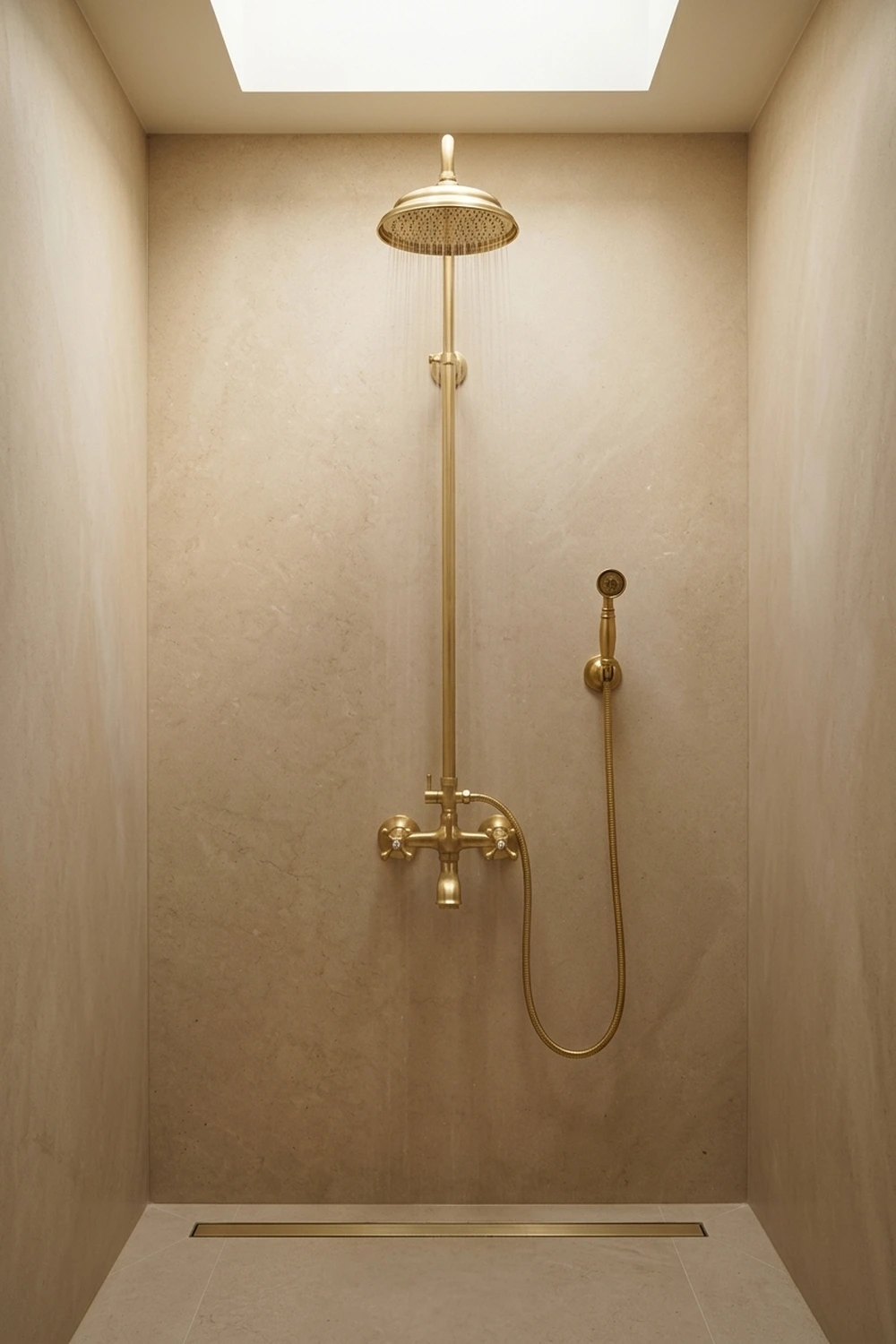
Exposed Solid Brass Shower System with Tub Spout, Rain Head & Sprayer
Handcrafted Solid Living Brass