Brass Faucet Finishes Explained: Unlacquered vs Lacquered vs PVD vs Antique Brass
Not all gold and brass faucets are created equal. Discover the metallurgical and visual differences between raw unlacquered living brass, hand-aged antique brass, factory clear-lacquered brass, PVD brushed gold, and electroplated zinc so you specify the right finish for your project.
Shop Featured Solid Unlacquered Brass Fixtures From This Study
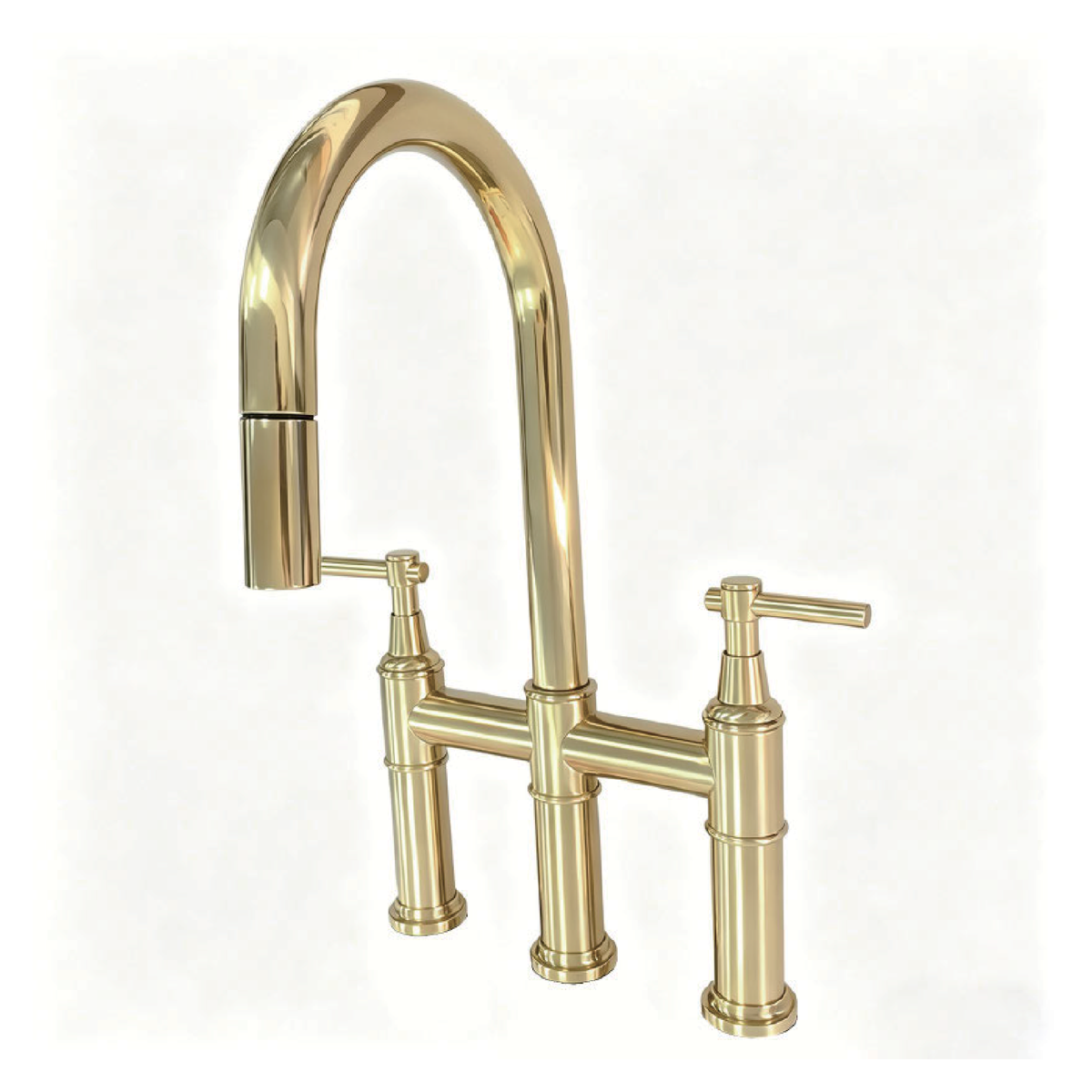
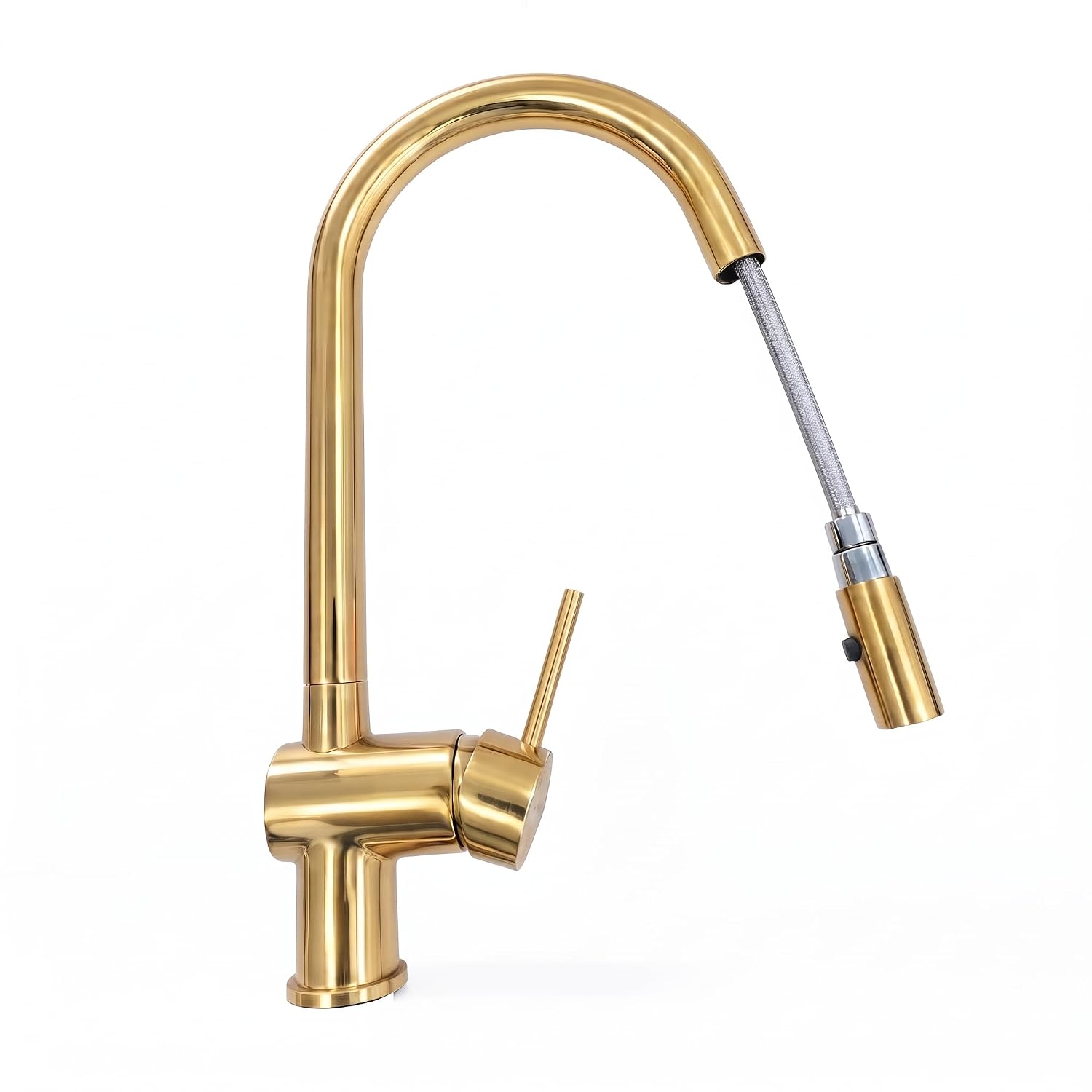
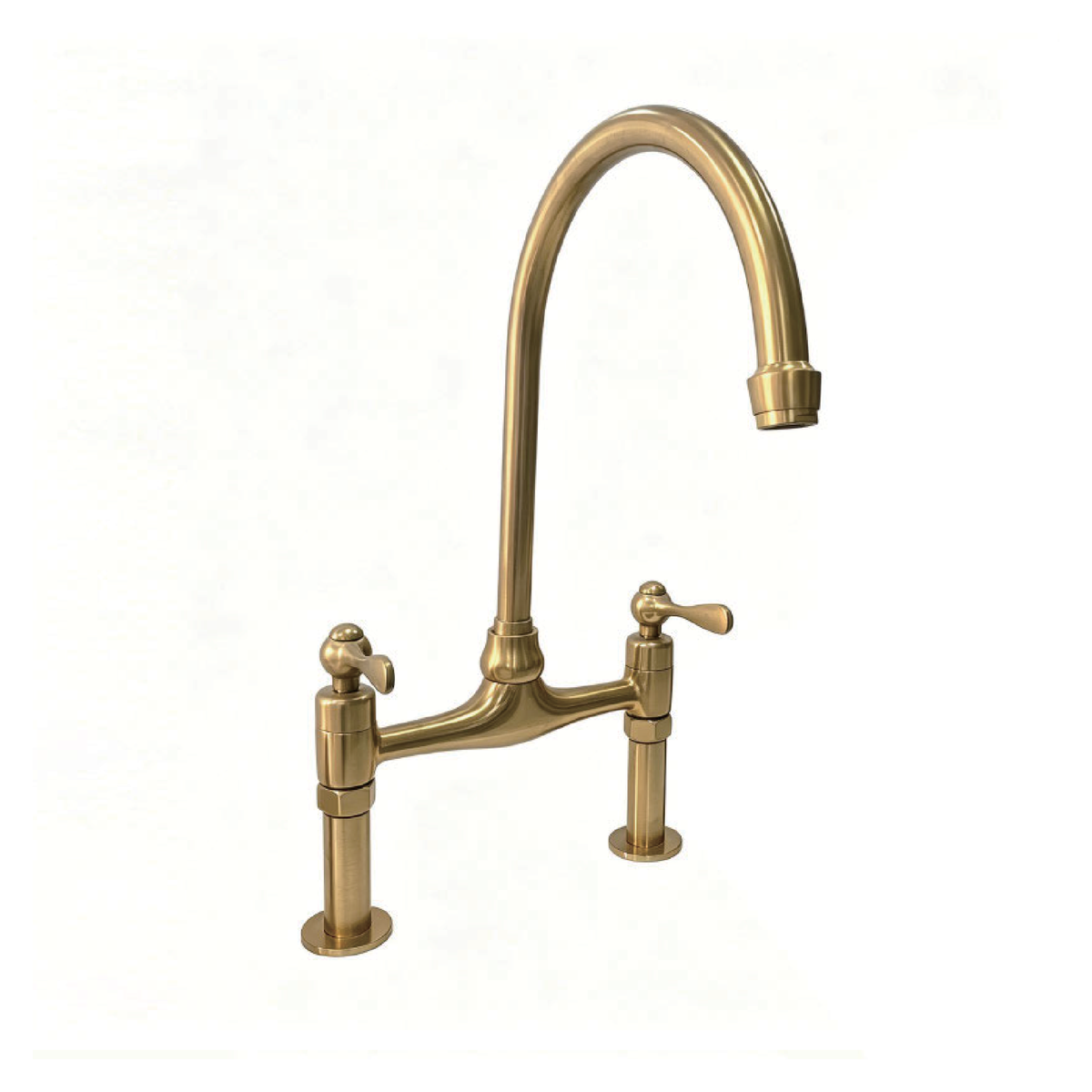
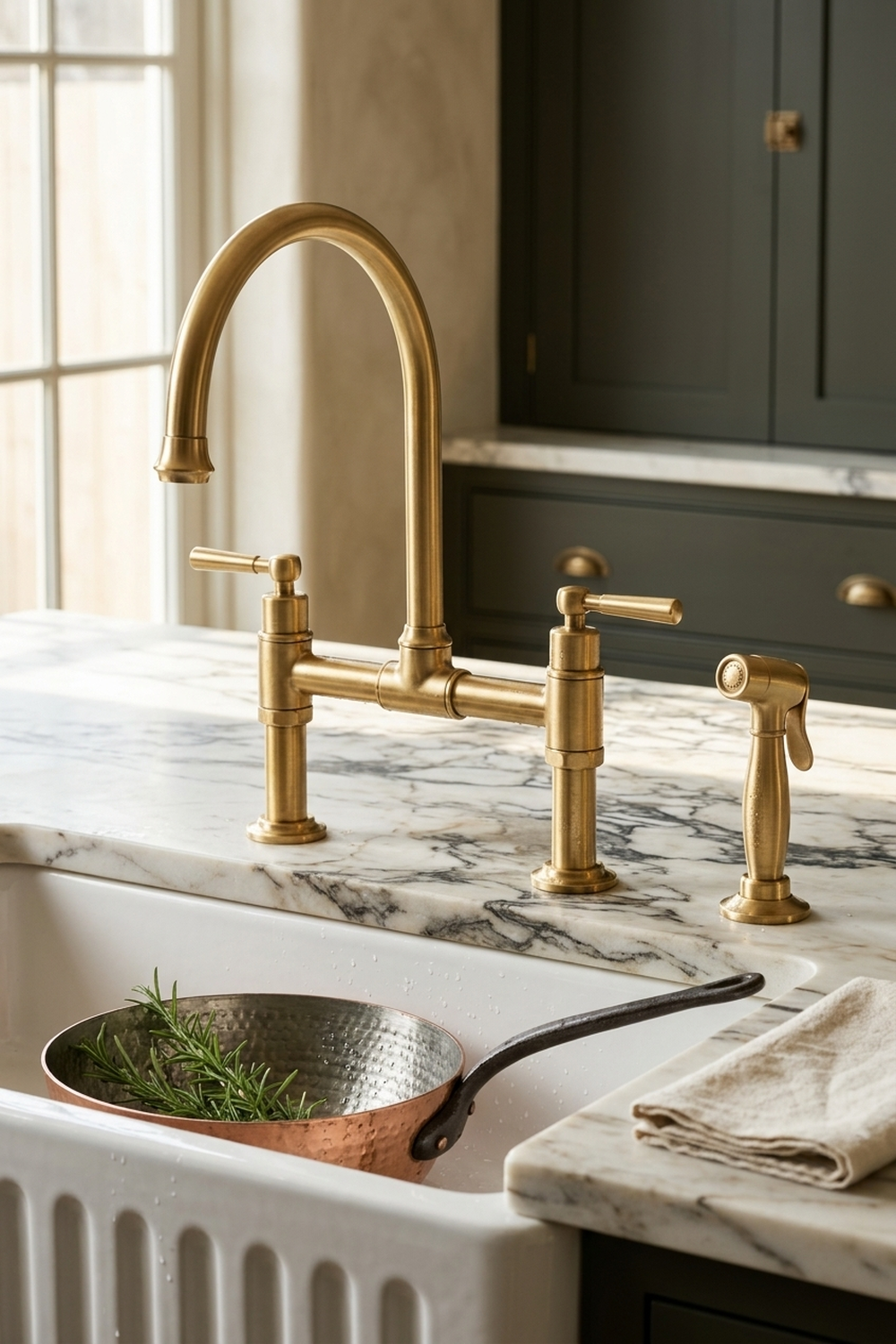
1. Raw Unlacquered Brass ("Living Finish"): The Architectural Purist’s Choice
When European scullery designers and restoration architects specify "living brass" or "raw brass," they are referring to solid 65% copper / 35% zinc alloy that leaves the lathe and buffing wheel with zero chemical sealants. Because the bare metal breathes, it records the story of the room—mellowing from a warm champagne gold on Day 1 to honey amber by Day 30, and rich antique chestnut along the base and neck by Year 1.
Crucially, raw unlacquered brass is the only plumbing finish on earth that improves with wear and can be completely reset at will. Whether you leave it to develop a century-old patina or buff it with Cape Cod cloths twice a year to keep it gleaming, the solid 8.53 g/cm³ wall thickness never wears through.
Artisan Solid Living Brass Featured in This Study
2. Hand-Aged Antique Living Brass: Instant Heritage Character on Day One
In historic brownstones, English country kitchens, and period bathroom restorations, waiting six months for bright raw brass to mellow may feel too flashy during initial move-in. Hand-aged antique brass solves this by accelerating nature inside the foundry.
At Medina Brass, we immerse our freshly cast 65/35 solid brass bridge faucets and side sprayers in a traditional mineral oxidizing bath, then hand-relieve the high edges with fine pumice wool. Because we never spray plastic lacquer over that antique patina, the fixture remains a true living finish that self-heals if scratched.
3. Why Factory Lacquered Brass & Electroplated Zinc Fail in Wet Environments
Traditional "Polished Brass" popular in the 1980s and 1990s earned a poor reputation for one reason: baked organic clear coats. Water vapor molecules inevitably penetrate microscopic pinholes in polyurethane lacquer around high-friction spout swivels and aerator threads. Once moisture gets trapped beneath the plastic film, dark spiderweb tarnish spreads underneath where no polish can reach it.
Even worse, budget electroplated faucets use die-cast zinc (Zamak) cores. When alkaline tap water breaches a 0.5-micron brass plating layer, galvanic corrosion causes the zinc core to swell into white powder and blister off.
4. PVD Brushed Gold vs. Solid Living Brass: Static Uniformity vs. Organic Soul
Physical Vapor Deposition (PVD) bombards a stainless steel faucet inside a vacuum chamber with vaporized zirconium or titanium ions. While PVD is hard and resists tarnish, it produces a flat, metallic-paint appearance with zero depth, zero oligodynamic copper hygiene, and zero repairability if gouged by a heavy stockpot. For homeowners seeking genuine warmth and heirloom permanence, 100% solid unlacquered brass remains unmatched.
Conservator's PrincipleNever introduce abrasive steel wool or caustic ammonia-based bathroom cleaners to raw unlacquered brass. Warm water with natural soap cleans dirt without stripping accumulated antique patina; a 30-second wipe with jeweler’s rouge or brass paste resets to Day 01 mirror gold anytime.
Frequently Addressed Inquiries
Which brass faucet finish is best for a timeless, heirloom kitchen?
Raw unlacquered living brass or hand-aged antique unlacquered brass are the gold standard for heirloom kitchens. Because there is no synthetic coating to peel or go out of style, the solid 65/35 metal develops depth alongside natural stone, wood, and zellige tile.
What is the difference between raw unlacquered brass and antique unlacquered brass?
Both are 100% unsealed solid living brass. Raw unlacquered brass arrives freshly hand-buffed in a warm, luminous golden tone and darkens over 30 to 90 days in your home. Hand-aged antique brass is pre-oxidized by our Marrakech artisans using natural mineral baths so it arrives on Day 1 with a rich, muted heritage bronze tone.
Can I mix unlacquered brass faucets with satin brass cabinet hardware?
Yes. Interior designers routinely pair an unlacquered living brass bridge faucet or pot filler as the dynamic focal point of the kitchen alongside satin solid brass cabinet pulls. As the faucet develops high-and-low caramel and bronze tones, it bridges warm and cool metals effortlessly.
How can I tell if a faucet is solid unlacquered brass or PVD brushed gold?
Touch a drop of lemon juice or brass polish to an inconspicuous spot underneath the spout for 15 seconds. Authentic unlacquered brass will immediately brighten and leave a black oxide trace on a white cloth during polishing; synthetic PVD coatings will show zero chemical reaction.
Authoritative Standards, Codes & Technical References
Primary metallurgical benchmark for solid 65/35 copper-zinc binary alloy density (8.53 g/cm³), tensile yield, and natural cuprous oxide passivation.
North American mechanical engineering standard governing US 1/2" NPT thread geometry, hydrostatic burst pressure (500 PSI), and 500,000-cycle ceramic disc valve endurance.
Museum and historic preservation protocol for non-abrasive cleaning, microcrystalline wax sealing, and organic patina stabilization on unlacquered architectural brass.
Federal clinical registration confirming uncoated solid brass and copper alloys continuously eliminate 99.9% of surface bacteria within 2 hours.
Handcrafted Brass Featured in This Study
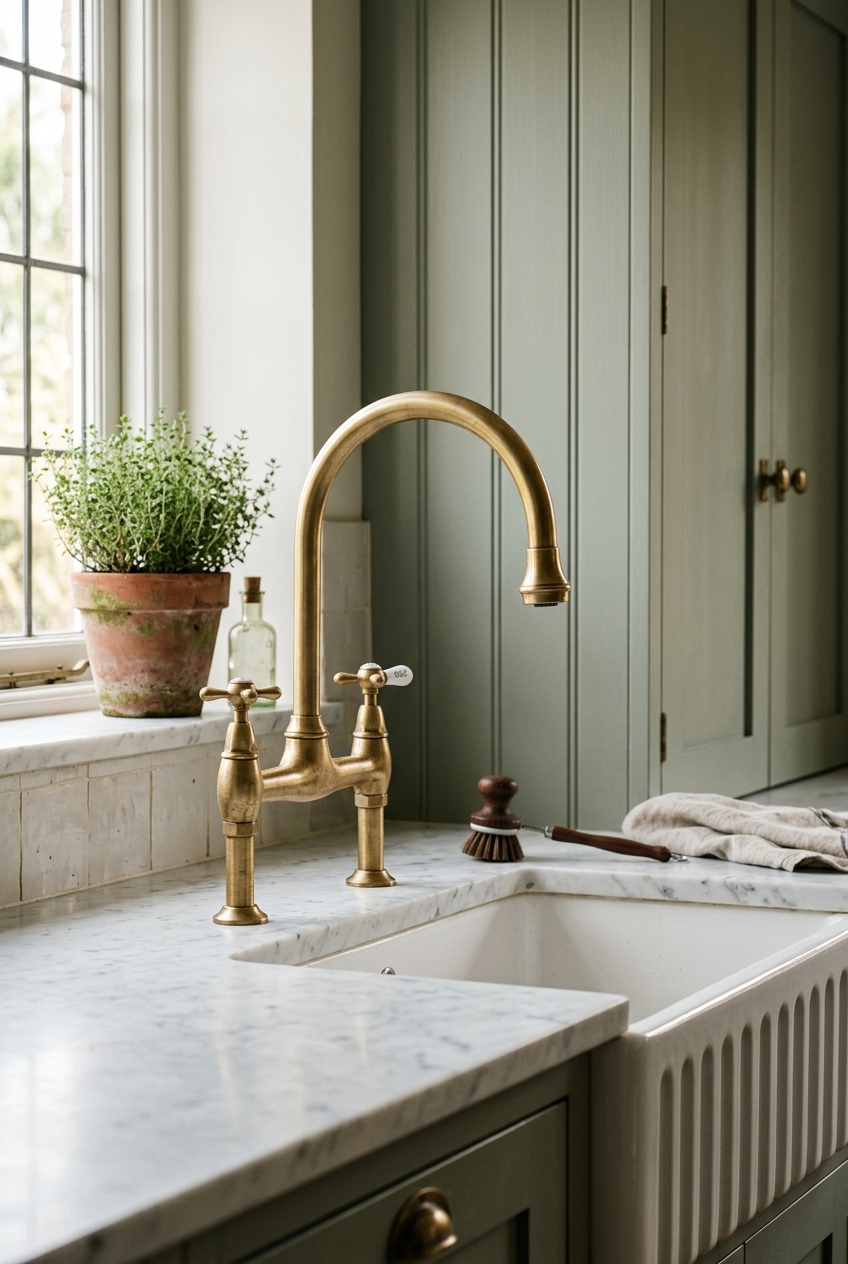
Handcrafted Unlacquered Brass Bridge Kitchen Faucet with Integrated Pull-Down Sprayer
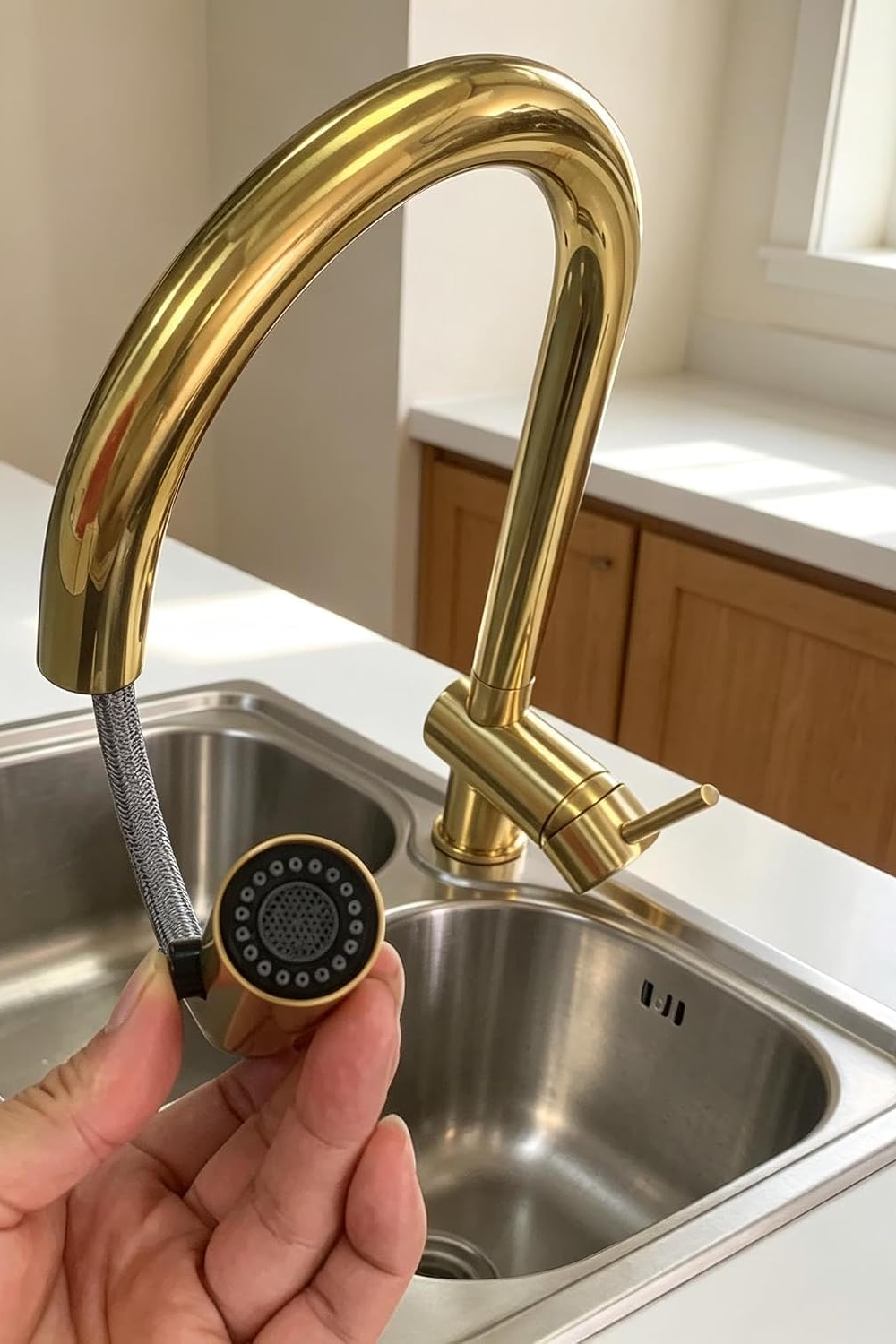
Raw Brass Kitchen Faucet with Pull-Out Spray — Solid Unlacquered Living Finish Mixer
Living Finish Brass Kitchen Faucet — High-Arc Gooseneck Mixer with Side Sprayer
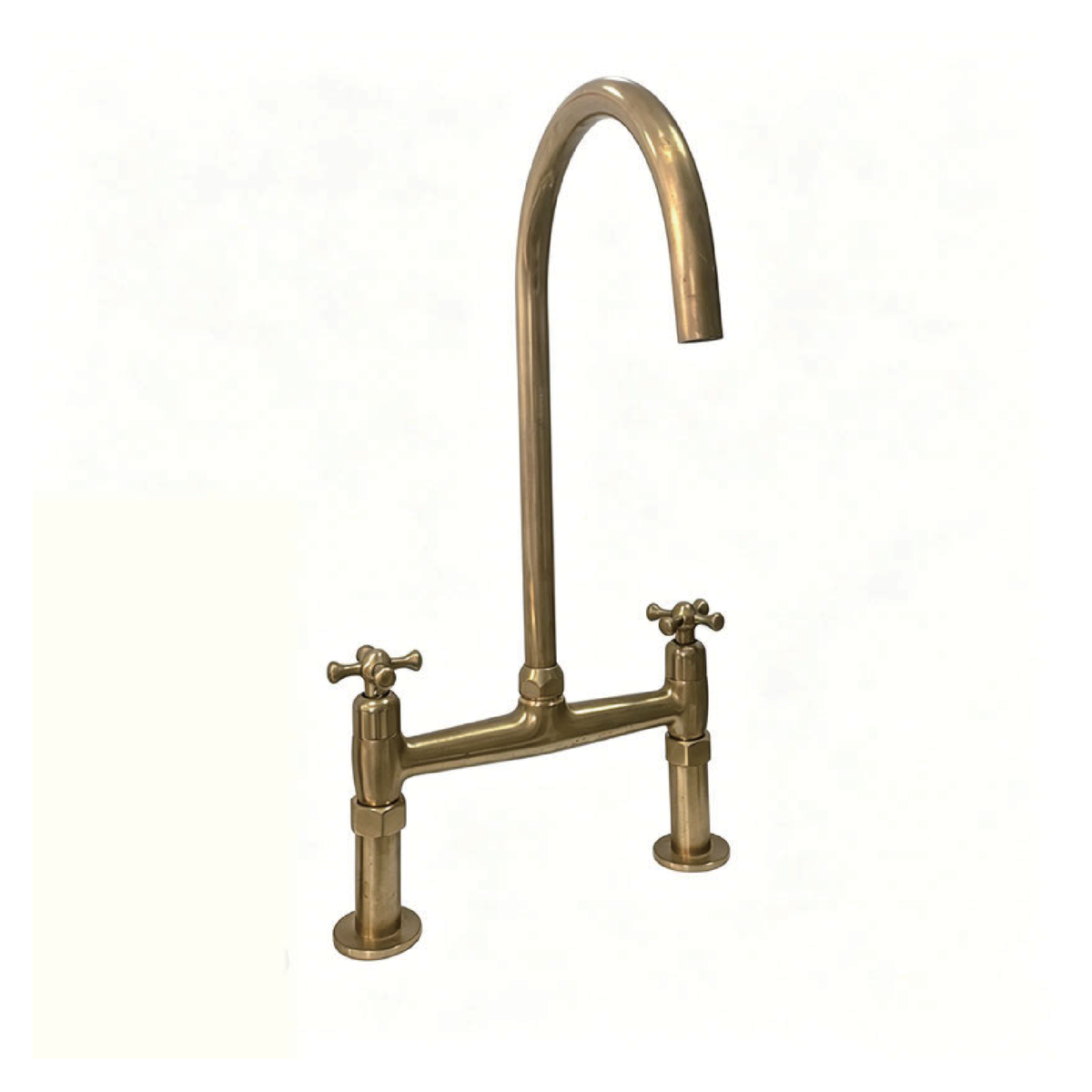
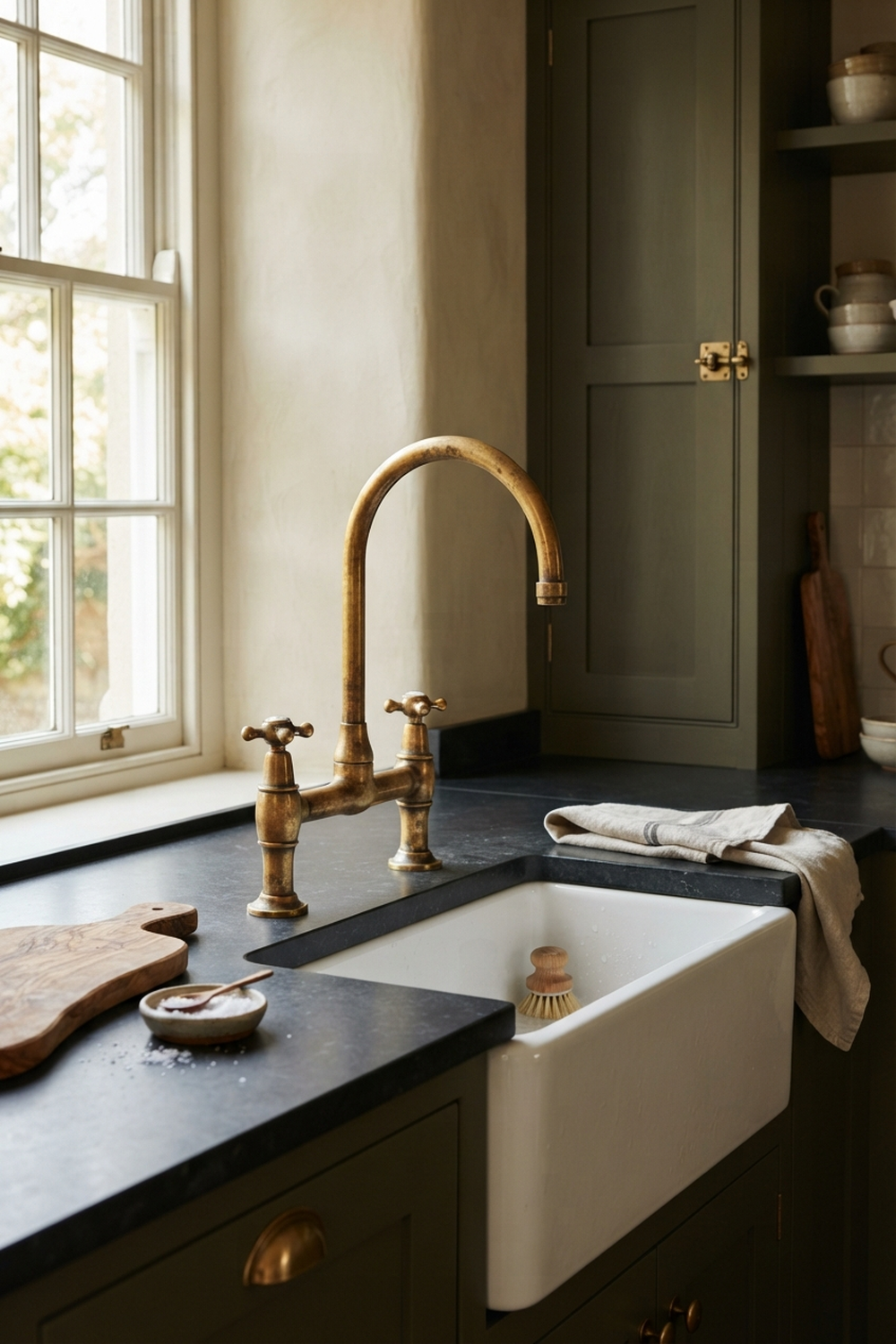
Antique Brass Bridge Kitchen Faucet with Side Sprayer — Hand-Aged Living Patina
Handcrafted Solid Living Brass