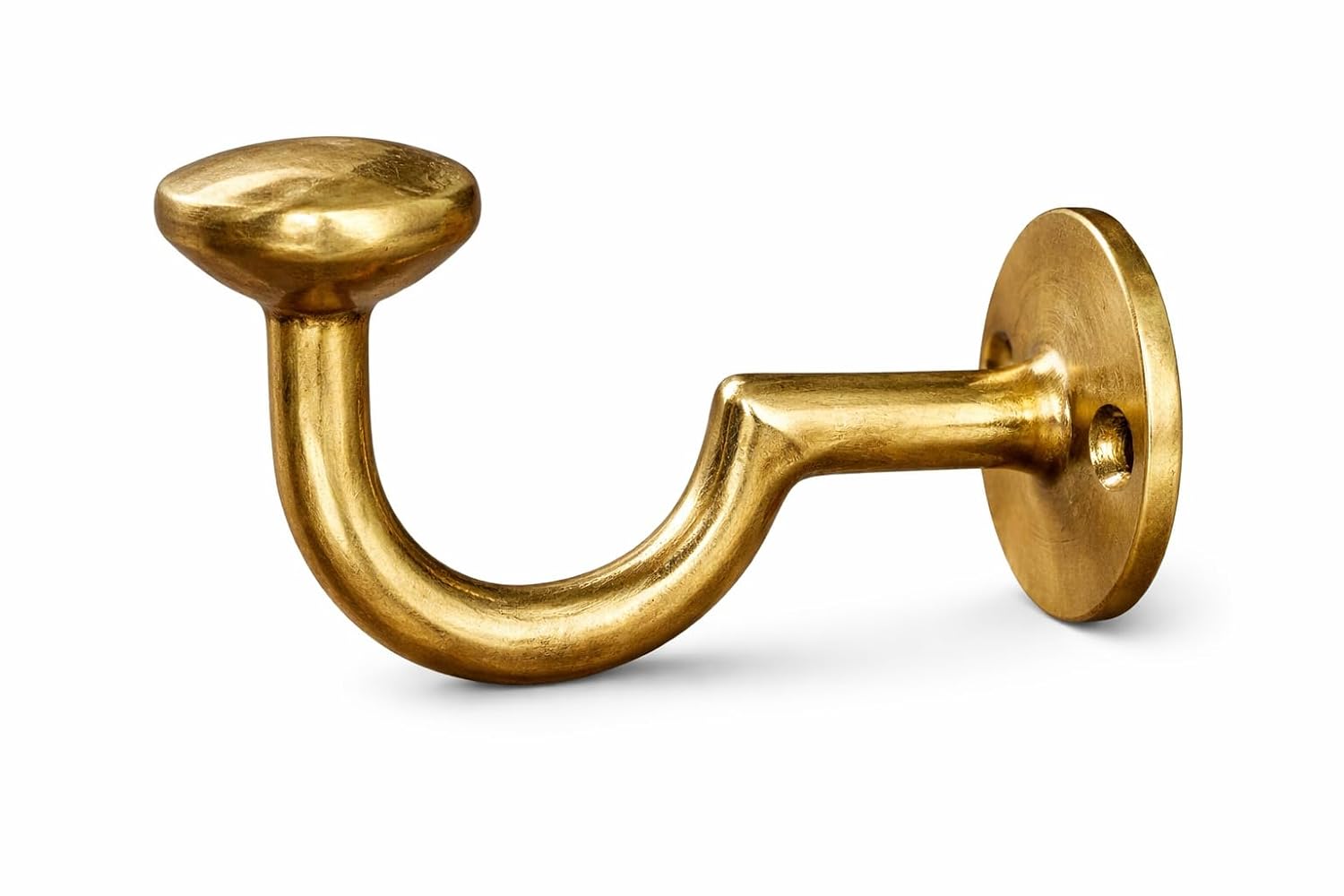
How to Space and Hang Brass Coat Hooks: Complete Architectural & Mudroom Installation Guide (2026)
Wall-mounted coat hooks and mudroom hooks represent one of the most hardworking yet under-engineered elements in residential architecture. From bearing 35-pound soaking wet wool trench coats to withstanding active school backpack pulls, hanging solid brass hooks requires exact vertical geometry, correct shear load anchoring, and an understanding of living metallurgy. Here is the definitive specification guide for interior architects, historic homeowners, and luxury renovators.
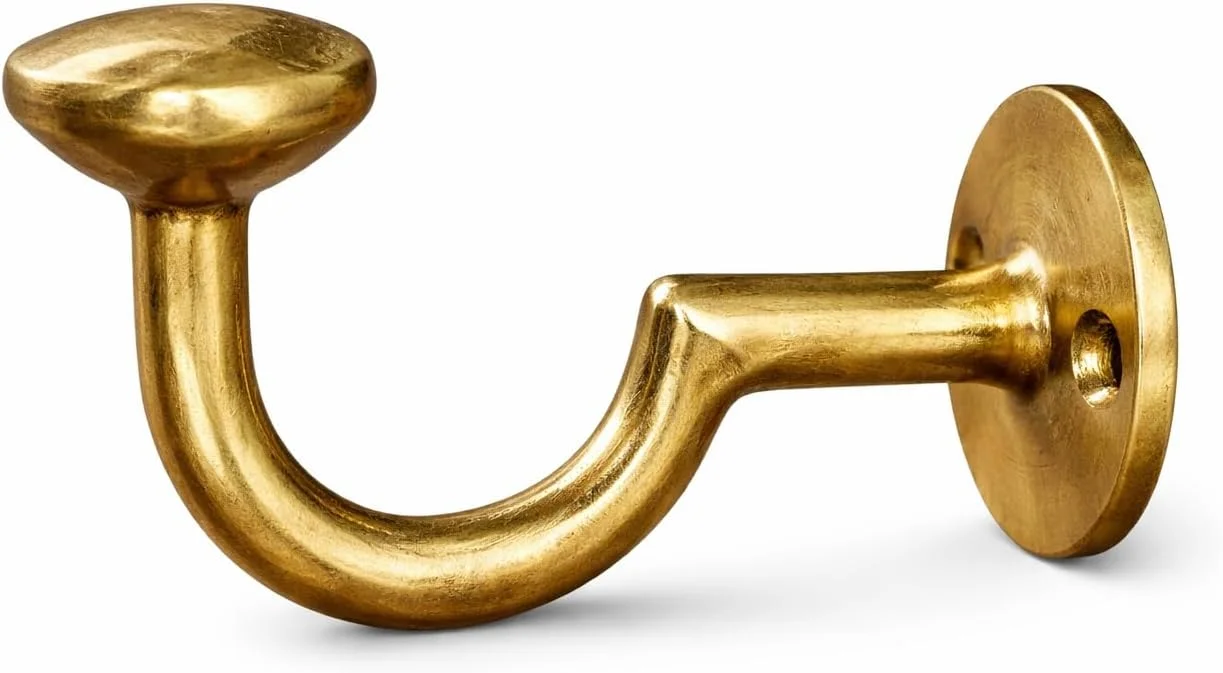
1. Spatial Ergonomics: Calculating Hook Heights for Entryways, Mudrooms & Bathrooms
Few architectural details experience higher daily repetitive mechanical stress than wall hooks for coats. In high-traffic mudrooms, entry halls, and luxury master baths, a properly hung brass hook balances ergonomic accessibility, garment drape clearance, and visual rhythm along the wall.
To establish the correct elevation, always measure from the finished floor level (FFL), factoring in any rugs, floor runners, or base shoe mouldings.
Standard Adult Overcoat Elevation (60" to 66" FFL)
For general residential entryways, foyers, and commercial coatrooms, mount the center point of the hook baseplate between 60 inches (5 feet) and 66 inches (5 feet 6 inches) above the floor. At 66 inches, a full-length winter wool trench coat or formal raincoat hanging from its collar loop has 16 to 20 inches of clean bottom clearance, well above any floor-level dirt, winter boot slush, or automated vacuum cleaners.
If your foyer incorporates wainscoting, board-and-batten, or tongue-and-groove beadboard, align the hooks directly onto the top horizontal rail (the plate rail), which traditionally sits between 54 and 64 inches from the floor.
The Dual-Tier Family Mudroom System (Upper: 66" / Lower: 36" - 42")
Modern mudroom design frequently suffers from overcrowded single-rail hooks where children's school bags, adult parkas, and pet leashes collide into an untidy heap. The architectural solution is an offset staggered dual-tier installation.
Install the primary upper rail at 66 inches on-center for heavy adult coats, wide-brim fedoras, and umbrellas. Directly beneath, stagger the lower tier at 36 to 42 inches on-center. This lower height matches the natural reaching elevation for school-age children, providing dedicated anchor points for heavy nylon backpacks, sports equipment bags, lunchboxes, and dog walking harnesses.
When staggering two tiers, space the lower hooks horizontally halfway between the upper hooks (forming a zig-zag or diamond array) so hanging jackets do not drape over lower bags.
Bathroom, Dressing Room & Powder Room Elevations (48" to 56" FFL)
In luxury master ensuites and powder rooms, solid brass wall hooks serve primarily as robe hooks and bath sheet hangers. Because bath sheets and Turkish cotton waffle towels measure 58 to 70 inches when folded lengthwise, hang the hooks at 54 to 60 inches above the finished tile.
Ensure hooks are positioned within arm's reach of the shower enclosure or freestanding soaking tub (18 to 24 inches from the shower glass hinge or curtain), keeping towels warm and dry while preventing puddle drips across marble or limestone floors.
2. Horizontal Spacing Mathematics: Avoiding Cluster Clutter
One of the most frequent mistakes in millwork and mudroom installation is placing hooks too close together. While compact 4-inch spacing looks proportional on an empty showroom display, it fails immediately when loaded with realistic three-dimensional winter wardrobes.
Calculate your total wall run and apply the following spacing standards depending on the intended garment volume and aesthetic goal.
Everyday Entryway Spacing: 6 to 9 Inches On-Center
For lightweight trench coats, windbreakers, denim jackets, umbrellas, and brimmed hats, 6 to 9 inches (15 to 23 cm) measured center-to-center between mounting screws provides adequate clearance without garment collision.
For instance, an 8-foot (96-inch) mudroom bench can comfortably accommodate an 8-hook or 10-hook continuous solid brass rail with 8.5-inch spacing, leaving 5 to 6 inches of balanced visual margin at each wall termination.
Heavy Winter & Mudroom Spacing: 10 to 12 Inches On-Center
In cold-climate regions where heavy down parkas, fleece-lined snow gear, and multiple layers dominate six months of the year, individual garments expand to 10 to 14 inches in profile. In these installations, space hooks at 10 to 12 inches (25 to 30 cm) on-center.
This generous spacing allows damp outerwear to hang flat against the wall, promoting 360-degree air circulation for rapid drying without creating musty odor pockets between pressed garments.
Bathroom Multi-Towel Airflow Clearance: Minimum 8 Inches
When hanging damp bath sheets, maintaining fabric separation is essential to prevent mold and bacterial growth. Never space bathroom towel hooks closer than 8 inches apart. Staggering towels across a dedicated 3-hook or 5-hook Moroccan solid brass hook set ensures adequate air permeability even in steam-dense wet rooms.
3. Structural Engineering: Load-Bearing Mechanics & Anchoring Protocols
A solid brass hook is only as resilient as the substrate it is anchored to. Consider the physics of a loaded coat hook: when an overcoat weighing 10 lbs is placed on a hook with a 3-inch projection, the downward gravitational force generates a rotational torque (moment arm) that acts as a lever against the wall fasteners.
The upper screw experiences intense outward tension (pull-out force), while the lower portion of the hook baseplate exerts inward compression against the drywall or timber.
To achieve a lifetime load rating of 35 to 40+ lbs per hook, adhere to these professional structural mounting methods.
Method A: Direct Stud Anchoring (The Benchmark Standard)
The most secure installation method is fastening directly into vertical wood wall studs (traditionally 2x4 or 2x6 timber spaced 16 inches on-center in US construction).
Use an electronic stud finder to locate the center of the timber stud. Mark the centerline with a light pencil tick. Fasten the hook using 1.75" to 2" solid brass wood screws. A single solid brass hook anchored into a sound timber framing member will easily sustain over 50 pounds of vertical shear force without slightest flex or loosening over decades of use.
Method B: Architectural Wood Backer Rail (Building a Vintage Brass Coat Rack)
Because wall studs are fixed at 16-inch intervals, installing individual hooks at pleasing 7" or 8" increments across an open drywall bay is impossible with direct stud anchoring alone. The master carpenter's solution is crafting a custom vintage brass coat rack using a hardwood backer rail.
Mount a 1x4, 1x5, or 1x6 unlacquered white oak, quarter-sawn walnut, or tongue-and-groove shiplap board directly to the wall, securing the board into at least two or three framing studs using heavy structural screws counterbored and plugged.
Once the timber backer board is rigidly integrated into the house frame, you can mount your unlacquered brass hooks (such as our 5-pack, 7-pack, or 10-pack solid brass hook bundles) at any exact fractional spacing desired. This creates an authentic antique brass coat rack or wall-mounted coat rail capable of supporting over 200 lbs of total load, while permanently protecting painted drywall from the relentless scuffing of zippers, wet wool fibers, and metal buckles.
Method C: Hollow Drywall Anchoring (When Studs Are Unavailable)
If hooks must be installed directly into hollow 1/2" or 5/8" drywall without rear backing timber, never rely on cheap plastic push-in sleeve anchors. Heavy wet coats will cause conical drywall failure within months.
Instead, install all-metal spring toggle bolts (rated for 50 lbs shear) or heavy-duty die-cast zinc threaded self-drilling wall anchors. Drill clean pilot holes, seat the anchor flush with the gypsum paper face, and hand-tighten the mounting screws to avoid stripping the anchor core.
Method D: Glazed Ceramic, Zellige & Natural Marble Installation
In tiled bathrooms and entryway mudroom wainscoting, drilling through vitreous tile requires specialized masonry technique. Apply two layers of crossed blue painter's masking tape over the drill mark to prevent drill wander.
Use a diamond-tipped or carbide spearhead glass/tile drill bit at low RPM (300 to 500 RPM) with light, continuous pressure. Periodically dip the bit in cold water to dissipate frictional heat. Once the bit penetrates the tile glaze and enters the backer board, switch to a standard masonry or wood bit to complete the anchor hole. Insert ribbed masonry anchors and fasten with solid brass screws.
4. Working with Solid Architectural Brass: Preventing Fastener Shear
Mass-produced modern hardware relies on electroplated mild steel screws that can be violently driven with pneumatic or cordless impact drivers. Solid brass fasteners, however, require traditional artisan metalworking techniques.
Solid architectural brass contains approximately 65% copper and 35% zinc. While structurally rigid and completely corrosion-proof, brass is softer than carbon steel. Excessive installation torque will twist off the screw head or burr the pristine hand-cut slotted drive.
Mandatory Pilot Hole Sizing
Never attempt to drive a solid brass screw without pre-drilling a dedicated pilot hole. For standard #6 brass screws (commonly used in our decorative single and multi-pack hooks), drill a pilot hole using a 7/64-inch bit in softwoods (pine, fir) or a 1/8-inch bit in dense hardwoods (white oak, walnut, maple).
Drill the pilot hole to the full depth of the screw shank. For extra-clean countersinking, use a pilot bit with an integrated countersink chamfer to seat the screw head perfectly flush with the hook's decorative rosette.
The Wax Lubrication Secret
Before driving the brass screw into the pilot hole, rub the screw threads across a block of natural beeswax, paraffin candle wax, or standard bar soap. This microscopic coating reduces frictional driving resistance by over 60%, allowing the threads to bite cleanly into timber grain without thermal binding or head shear.
Use Flat-Blade Cabinet Screwdrivers, Never Impact Guns
Put aside high-torque cordless impact drivers. Solid brass screws feature authentic single-slot drives that honor period architectural integrity. Use a precision flat-head cabinet screwdriver whose blade width matches the exact length and thickness of the screw slot.
Turn the screwdriver with smooth, controlled manual force. Stop turning the instant the screw head contacts the hook casting. Over-tightening will distort the decorative brass casting or fracture the gypsum core beneath drywall.
5. Living Metallurgy & Natural Antimicrobial Properties in Transit Zones
An entryway coat rack or mudroom hook rail is an active transit portal where the outdoors meets the inner sanctuary of the home. Outerwear carries road dust, rain droplets, pet fur, and environmental microbes.
Choosing unlacquered, living solid brass rather than chemically sealed synthetic coatings or plastic-plated metal provides distinct metallurgical advantages.
The Oligodynamic Effect: Natural Pathogen Elimination
Solid unlacquered architectural brass possesses documented oligodynamic properties. The copper ions within the alloy matrix interact with the cellular membranes and viral coatings of microorganisms, neutralizing bacteria, mold spores, and viruses on the metal surface within 2 to 4 hours of contact.
Unlike synthetic painted hooks or plastic-laminated knobs where bacteria linger for days, unlacquered living brass actively cleanses itself through natural metallic ionic action, creating a hygienic transit station for family jackets, backpacks, and dog leashes.
The Organic Living Patina Journey
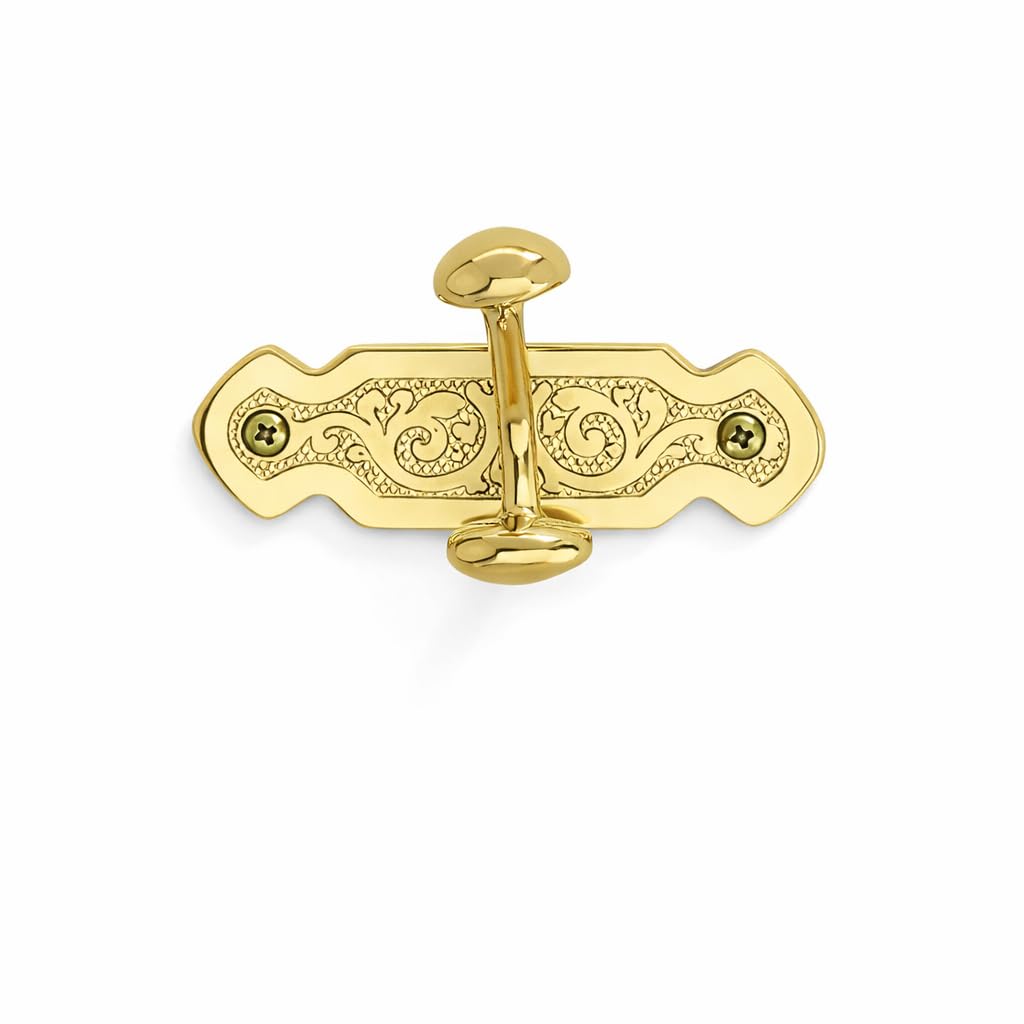
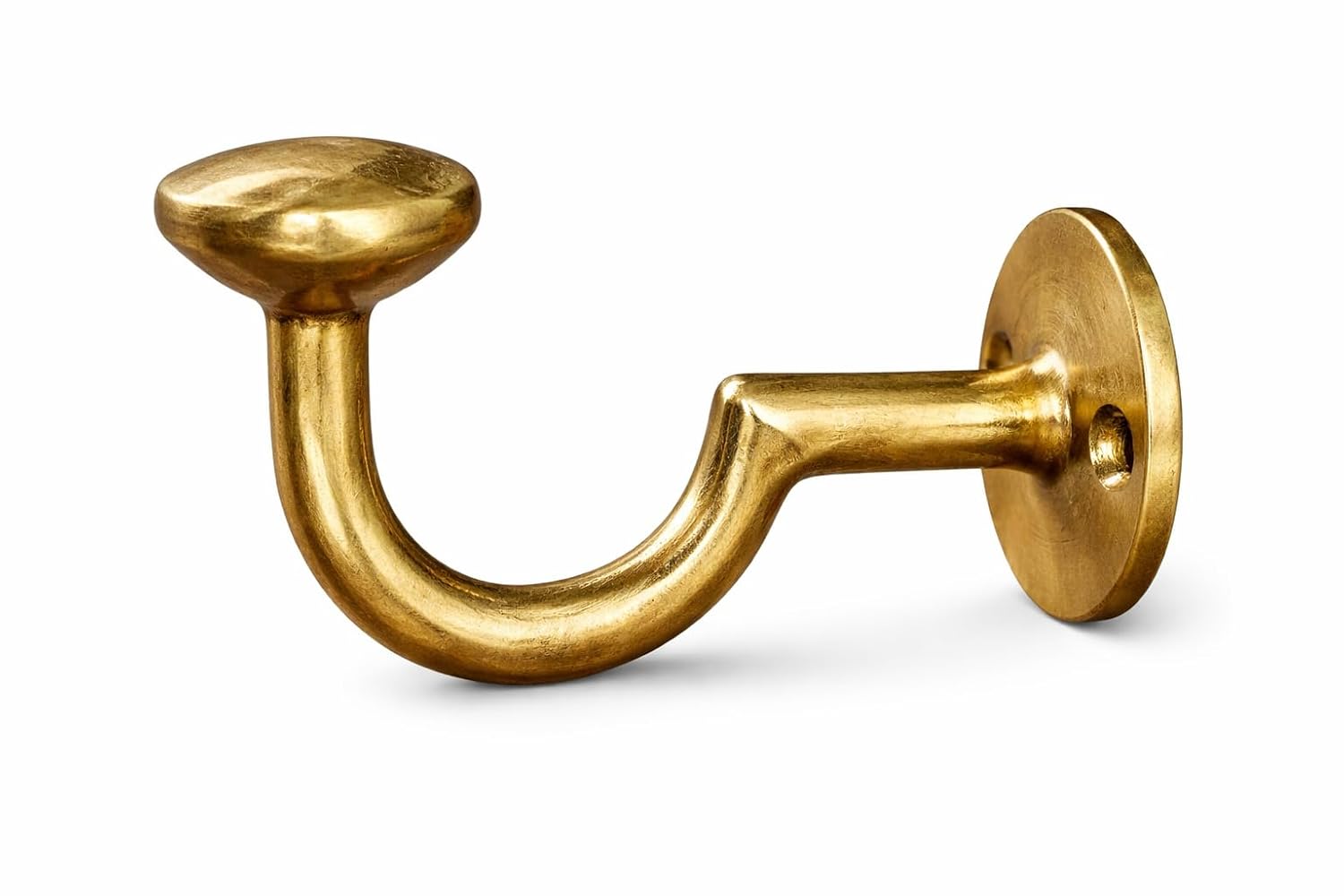
Our hooks are sand-cast in the historic foundries of Marrakech from pure virgin brass and shipped raw, with zero lacquer or chemical clear coats. Over months of handling, the areas touched by hands, leather straps, and damp coat loops develop an organic patina.
Areas that receive frequent friction maintain a bright, golden honey highlight, while recessed scrollwork, fluted stems, and shadow grooves deepen into rich antique amber, cinnamon, and dark bronze. This hand-rubbed finish cannot be replicated in a commercial paint spray booth—it is the authentic hallmark of living architectural heritage.
Preservation vs. Restoration Protocols
If you love the aged antique aesthetic, simply allow your hooks to age naturally. To lock in a specific level of patina and resist water spots in damp mudrooms, buff the brass lightly once a year with Renaissance Micro-Crystalline Wax or organic beeswax paste.
If you ever wish to restore the bright, radiant mirror gold luster of day-one casting, apply a pea-sized dab of metal polishing paste (such as Flitz or Cape Cod Brass Polish) with a soft cotton flannel cloth. Buff gently for 30 seconds and wipe clean. Because the metal is solid sand-cast brass throughout its entire body, it can be polished an infinite number of times without fear of wearing through thin electroplate.
6. Artisan Sand-Casting vs. Mass-Market Pot Metal: An Architectural Comparison
When selecting wall hardware for high-end residential interiors, understanding the difference between sand-cast solid brass and commercial die-cast alloy is crucial to preventing premature failure.
Commercial big-box hardware is almost universally made from die-cast zinc alloy (commonly known in the manufacturing trade as 'pot metal' or zamak). Pot metal is inexpensive to inject into high-speed steel moulds, but it is fundamentally brittle and porous. Under repeated impact or dynamic pulling (such as a teenager violently snatching a 25-pound bookbag off a peg), pot metal hooks snap cleanly at the neck with zero warning.
Furthermore, pot metal cannot take a living patina. It must be coated with thin electroplated chemical bronze or painted with tinted urethane lacquer. When coats and keys inevitably scratch through this micrometer-thin plating, the exposed zinc reacts with ambient humidity to form unsightly grey powdery corrosion that blisters and flakes off.
In contrast, Medina Brass hooks are individually cast in sand moulds using dense, solid copper-zinc brass ingots. Each piece is hand-chiseled, deburred on spinning abrasive wheels, and hand-finished by master Maâlems in Morocco. Solid sand-cast brass possesses remarkable ductility and mechanical shear strength—it will never snap, peel, blister, or rust, serving multiple generations as an heirloom fixture.
Conservator's PrincipleNever introduce abrasive steel wool or caustic ammonia-based bathroom cleaners to raw unlacquered brass. Warm water with natural soap cleans dirt without stripping accumulated antique patina; a 30-second wipe with jeweler’s rouge or brass paste resets to Day 01 mirror gold anytime.
Frequently Addressed Inquiries
What is the standard architectural height to hang coat hooks?
The universal architectural standard for adult coat hooks is 60 to 66 inches (152 to 168 cm) from the finished floor to the top of the hook. This height allows standard trench coats, wool overcoats, and formal wear (typically 42 to 50 inches in length) to hang freely without sweeping the floor or dragging across lower shoe benches. In family mudrooms, a dual-tier setup is recommended: upper hooks at 66 inches for adults and lower hooks at 36 to 42 inches for children.
How far apart should brass coat hooks be spaced on a wall?
Standard horizontal spacing is 6 to 9 inches (15 to 23 cm) on-center for multi-hook runs. If the wall will frequently accommodate heavy winter outerwear, oversized puffer coats, backpacks, or wide-brim hats, increase spacing to 10 to 12 inches (25 to 30 cm) to eliminate bulky bunching and allow garments to air-dry naturally.
How much weight can a solid brass coat hook hold?
A Medina Brass sand-cast unlacquered solid brass hook is structurally rated for up to 35 to 40 lbs (16 to 18 kg) of vertical shear weight when anchored directly into a timber wall stud or secured using heavy-duty hollow wall toggle anchors. Because solid brass has high tensile strength and ductility, it will never snap, crack, or shear like cheap hollow die-cast pot metal (zinc alloy).
Can you hang solid brass hooks in high-humidity bathrooms?
Yes, absolutely. Solid architectural brass (65% copper, 35% zinc) contains zero iron and is completely impervious to rust, peeling, or water corrosion. In humid bathroom environments, raw unlacquered brass simply develops a deep protective caramel and antique bronze living patina. Furthermore, brass naturally exhibits oligodynamic antimicrobial properties, actively killing airborne bacteria and mold spores on contact.
Should I install hooks directly into drywall or use a wood backer board?
While individual hooks can be safely installed into drywall using heavy-duty zinc or steel toggle bolts (rated for 50+ lbs), mounting hooks onto a solid wood backer cleat (such as 1x4 or 1x6 unlacquered white oak, walnut, or pine) anchored directly into two wall studs is the gold standard for high-traffic mudrooms. A backer rail distributes all mechanical leverage across the building frame, allows precise custom hook spacing independent of stud intervals, and shields painted drywall from coat and backpack scuffs.
Why do brass mounting screws strip or break during installation, and how do I prevent it?
Solid brass is an alloy prized for its beauty and living patina, but it is softer than hardened steel. Driving a brass screw directly into dense hardwood without a pilot hole will snap the screw head or strip the slotted drive. Always pre-drill a pilot hole using a 7/64" drill bit for #6 screws or 1/8" bit for #8 screws, rub a dab of beeswax or paraffin onto the screw threads, and use a manual slotted screwdriver with moderate hand torque rather than an electric impact driver.
Handcrafted Brass Featured in This Study